
MacBook Air
Lightweight laptop in Apple’s MacBook line, introduced in 2008. Known for thin aluminum unibody design, portability, and later transitions to Retina displays and Apple Silicon.
Overview
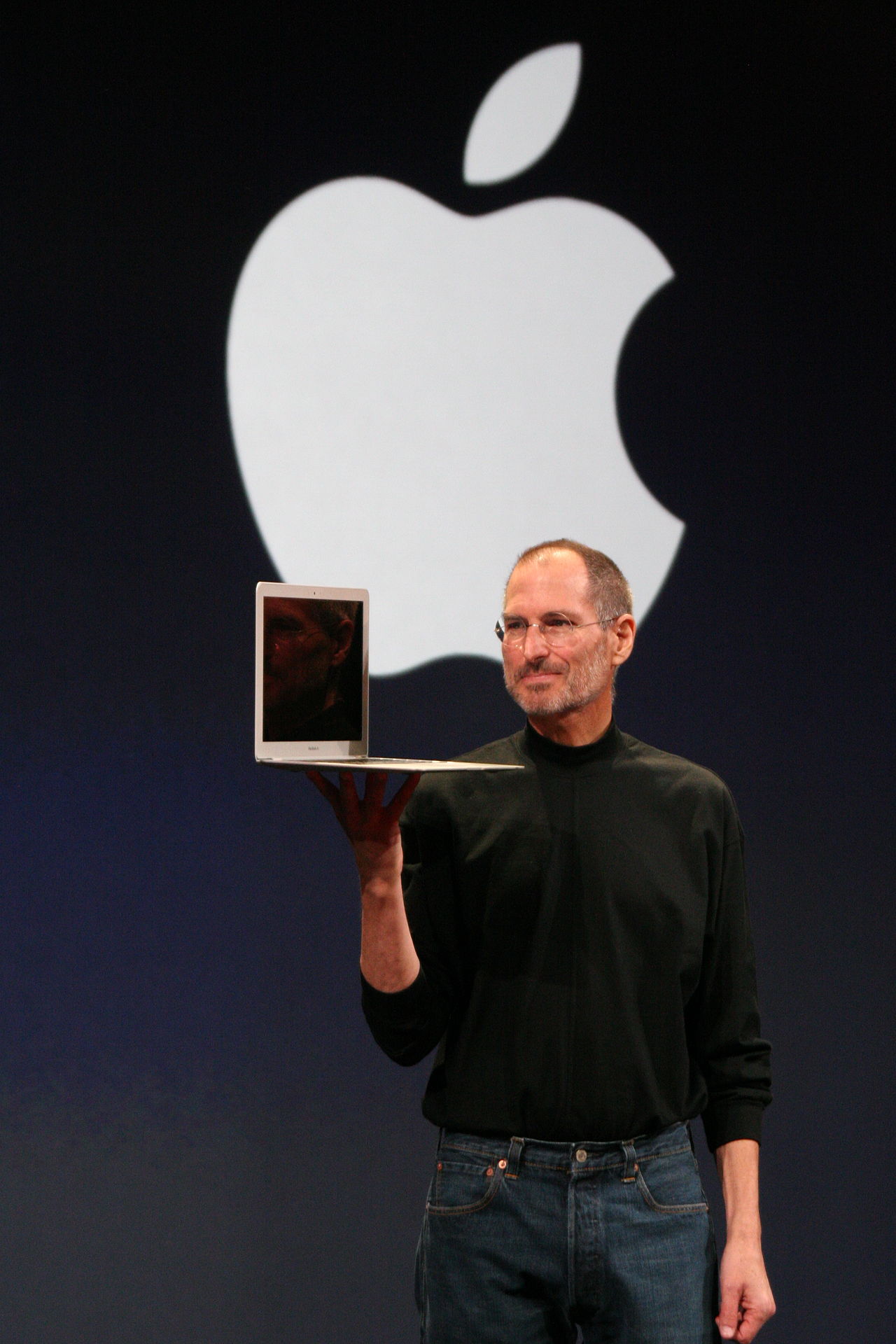
The MacBook Air is a line of laptop computers in Apple’s Macintosh family that emphasizes thinness, light weight, and everyday portability. First shown in January 2008, the model established a distinctive wedge-shaped aluminum unibody that set a direction for many future laptops. Apple has positioned the MacBook Air as the most portable option in its MacBook range, targeting students, mobile professionals, and general consumers who prioritize mobility over workstation-level expandability.
Image gallery
7 Images



Design and key characteristics
From the start the MacBook Air focused on compact packaging and long battery life. Early models popularized a precision-milled aluminum unibody case and a tapered profile that became a visual hallmark. Over subsequent revisions Apple changed displays, keyboards, storage, and internal components while keeping the portable ethos. Notable characteristics across generations include:
- Thin, tapered chassis with an aluminum unibody construction.
- Progression from traditional hard drives to flash-based solid-state storage for faster responsiveness and lower power draw.
- Display size variations—Apple shipped both 11.6-inch and 13.3-inch options in some years, and later models adopted higher-resolution Retina panels.
- Evolution of connectivity: from legacy ports and a magnetic power connector to modern Thunderbolt/USB-C interfaces.
- Integration of convenience features over time such as backlit keyboards and biometric login.
History and development
The original Air was unveiled as an extreme example of thin notebook engineering and carried marketing claims about being the "world's thinnest notebook" at the time. Apple iteratively updated the product: improvements to processors and storage, changes to the exterior design, and expanded battery life. In the late 2010s Apple refreshed the Air with a higher-resolution Retina display and a fingerprint sensor, and it also discontinued the smaller 11-inch option to standardize around a single size.
In 2020 Apple introduced its own Apple Silicon processors to the Mac lineup, and the MacBook Air became one of the first laptops to ship with the M1 chip, a change that markedly increased efficiency and sustained performance compared with earlier Intel-based models. This transition reinforced the Air’s reputation as a capable everyday machine that can handle many demanding tasks while retaining long battery life.
Uses, audience, and importance
The MacBook Air is commonly chosen by students, writers, office workers, and frequent travelers who value light weight and long runtimes. While not aimed at high-end professional users who require maximum CPU/GPU power or large internal expandability, recent Apple Silicon models blurred that distinction by offering much-improved performance for photo editing, coding, and media consumption without sacrificing portability.
Models and notable changes
- Initial release (2008): introduced the thin aluminum unibody and novel design language for consumer laptops. See historical notes via Macintosh laptop references.
- Subsequent revisions: incremental increases in performance and storage capacity and the addition of a mini DisplayPort on early updates to support external monitors.
- Design refreshes: a later redesign introduced a smaller 11.6-inch variant (offered for several years) and then returned to a single-screen strategy.
- Retina era: Apple added a higher-resolution display, a backlit keyboard, and a fingerprint sensor in a major refresh; details on these changes are highlighted in Apple’s product notes about the keyboard and about Touch ID.
- Apple Silicon: the move to Apple-designed chips brought significant gains in energy efficiency and performance, and extended the Air’s relevance for heavier workloads.
Distinctions and notable facts
Compared with the MacBook Pro line, the Air prioritizes light weight and battery life over modular expandability and peak thermal performance. Throughout its lifetime the MacBook Air has served as an accessible entry point into the macOS ecosystem and helped define modern expectations for thin, fanless, and highly portable laptops. For corporate and consumer purchasers interested in historical product positioning or technical changes such as battery-life improvements, see manufacturer resources and product briefs on power and runtime and general company information at Apple.
Overall, the MacBook Air’s blend of compact design, reliable construction, and continual hardware updates has kept it popular for everyday computing tasks while Apple’s platform shifts have broadened its capabilities beyond the original vision.
Questions and answers
Q: What is the MacBook Air?
A: It is a kind of Macintosh laptop computer designed by Apple, known as the "world's thinnest notebook."
Q: When was the MacBook Air introduced?
A: It was introduced at the Macworld Conference & Expo on January 15, 2008.
Q: What is the precision aluminum unibody enclosure for the MacBook Air?
A: It is a design feature that was first implemented in the MacBook Air and allows for a thin and lightweight body while still maintaining durability.
Q: How many updates has the MacBook Air had?
A: It has been updated over four times since the original release.
Q: What were some of the improvements made in the second update of the MacBook Air?
A: The second update featured a lower price, better performance, and a longer-lasting battery.
Q: When was the fifth revision to the MacBook Air released?
A: It was released in October 2018.
Q: What are some of the new features introduced in the fifth revision of the MacBook Air?
A: The fifth revision introduced a fingerprint scanner, a larger Retina screen, and a backlit keyboard.
Related articles
Author
AlegsaOnline.com MacBook Air Leandro Alegsa
URL: https://en.alegsaonline.com/art/60285
Sources
- apple.com : "MacBook Air Technical Specifications"
- wired.com : "Jobs Unveils 'World's Thinnest Notebook'"
- apple.com : "MacBook Air Now Shipping"
- images.apple.com : "MacBook Air Environmental Report"
- apple.com : "Apple Introduces MacBook Air—The World's Thinnest Notebook"
- apple.com : "Apple - MacBook Air - Remarkably thin, yet full size"
- support.apple.com : Apple's knowledge base
- everymac.com : EveryMac.com
- apple.com : "Apple Updates MacBook Pro Family with New Models & Innovative Built-in Battery for Up to 40% Longer Battery Life"
- events.apple.com.edgesuite.net : "October 2010 Macintosh Keynote - "Back to Mac""
- bloomberg.com : "Bloomberg - Are you a robot?"
- news.cnet.com : news.cnet.com/8301-17938_105-20020201-1.html
- apple.com : "Apple - MacBook Pro design - The breakthrough aluminum unibody"