
M14 rifle
American 7.62×51mm NATO battle rifle introduced in 1959, developed from the M1 Garand and later adapted into designated marksman and sniper variants.
The M14 is an American gas-operated rifle chambered for the 7.62×51mm NATO cartridge that entered U.S. service in the late 1950s. It was officially adopted in 1959 as a standard-issue rifle intended to replace several older weapons types. The M14 combined semi-automatic fire with a detachable 20-round magazine and a design lineage that traces back to earlier U.S. service rifles.
Image gallery
10 Images
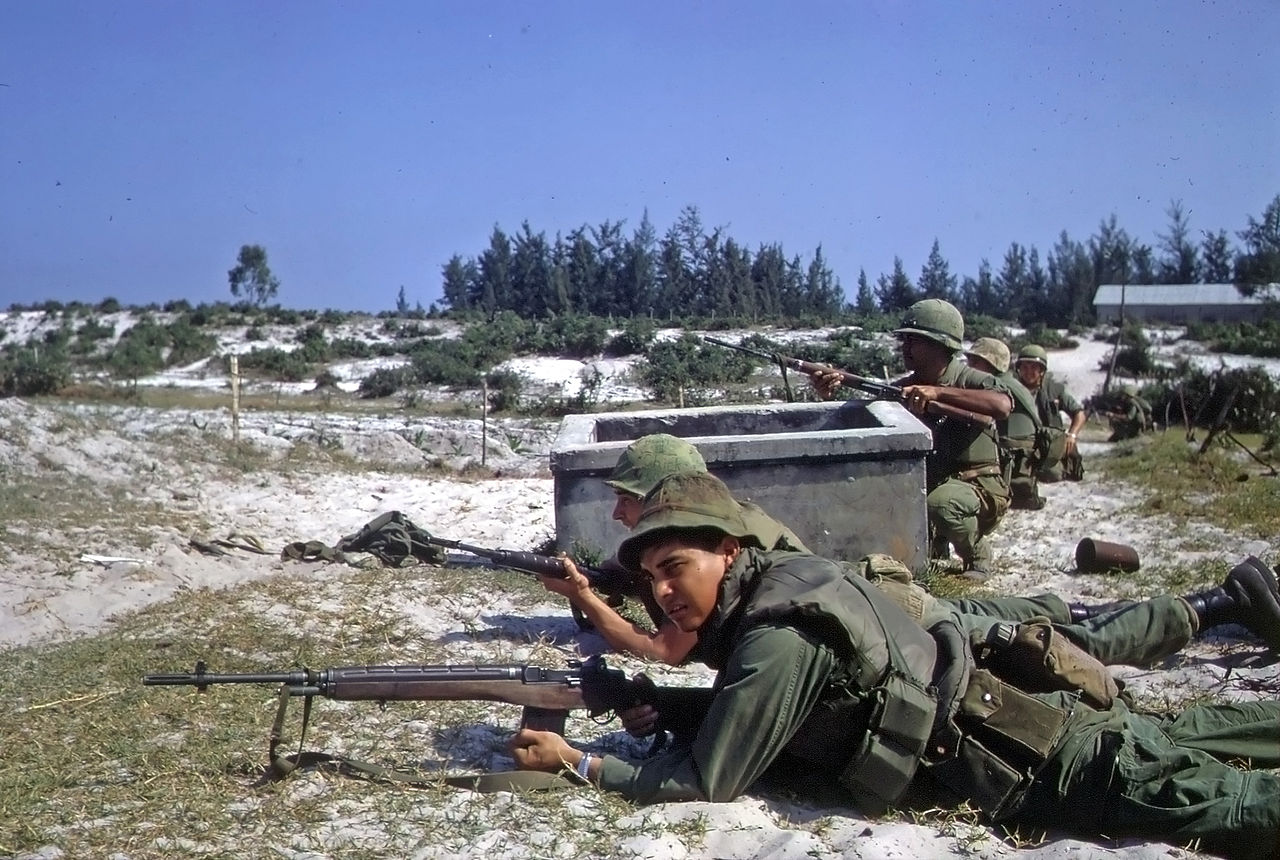




Design and characteristics
The M14 uses a long-stroke gas system with a rotating bolt and is capable of semi-automatic fire and, in some configurations, selective full-auto. It fires the full-power 7.62×51mm NATO cartridge, giving it longer effective range and greater terminal performance than contemporary intermediate-caliber rifles. Typical characteristics include:
- 20-round detachable box magazine for ammunition feeding.
- Wooden or synthetic stock on various production and retrofit models.
- Iron sights with provision for optics on later marksman and sniper variants.
- Relatively heavy recoil and weight compared with later 5.56mm designs, affecting full-auto controllability.
The combination of power and accuracy made the M14 suitable as a general-purpose battle rifle as well as a platform for designated marksman and sniper conversions. For its role as a battle rifle it is often discussed in contrast to later service rifles such as the 5.56mm family (battle rifle role).
History and development
The M14 evolved from post-World War II efforts to replace several U.S. small arms, including the boltless semiautomatic designs that succeeded the M1 Garand. Its basic layout took inspiration from the proven M1 Garand design heritage and incorporated a detachable magazine to meet new tactical requirements. Production runs were concentrated in the late 1950s and early 1960s, with primary manufacture concluding in the mid-1960s. During the Vietnam era the rifle was gradually superseded in frontline U.S. infantry units by lighter, smaller-caliber designs such as the M16A1 in Vietnam, driven by differences in weight, ammunition load, and controllability in automatic fire.
Variants, roles, and legacy
Although replaced as the standard infantry rifle, the M14 platform has seen extended service in other roles. Notable adaptations include designated marksman and sniper versions (for example the M21 and later systems) and modernized builds used by special operations units. Many of these are documented as sniper or precision configurations based on the original M14. Other modernization efforts have produced chassis-based versions and enhanced battle rifles intended to improve handling and modularity.
Because of its powerful cartridge and robust design, the M14 remains in ceremonial, training, and select operational roles in several armed forces and organizations. Its influence is seen in debates over caliber, rifle role specialization, and the trade-offs between stopping power and soldier load — themes that continued to shape small arms development after its initial service life.
For further technical and historical details, contemporary accounts and retrofits are available from specialist resources and official publications documenting U.S. small arms history M1 Garand connections and post-war rifle programs development background. Additional material on operational replacement and lessons learned is summarized in studies of the Vietnam period and the transition to newer rifle family members replacement studies.
The M14's mixed legacy — a powerful, accurate rifle with limitations in automatic fire — illustrates the changing priorities of military small arms design in the mid-20th century and the continuing value of adaptable platforms used in marksman and support roles battle rifle context and specialized sniper applications sniper variants.
Author
AlegsaOnline.com M14 rifle Leandro Alegsa
URL: https://en.alegsaonline.com/art/60206