
Luis Nishizawa — Mexican painter and muralist (1918–2014)
Overview of Luis Nishizawa, a Mexican painter and muralist of Japanese descent known for landscape work, blending Mexican and Japanese influences, and for teaching at UNAM.
Overview
Luis Nishizawa (February 2, 1918 – September 29, 2014) was a prominent Mexican artist noted for his landscapes and public murals. Born in Cuautitlán, Mexico, he became known for a body of work that combined elements of traditional Mexican painting with aesthetic influences from Japan. Across decades he produced easel paintings and large-scale murals while also teaching fine arts at the Universidad Nacional Autónoma de México (UNAM).
Image gallery
5 Images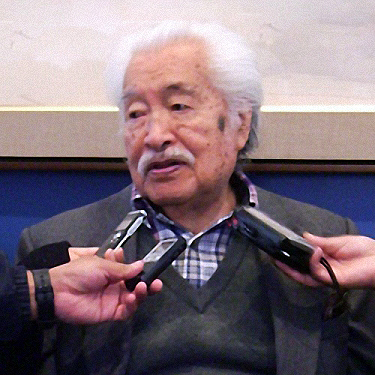


Early life and training
Nishizawa began formal artistic training around 1942 during the high point of the Mexican muralism movement. His formative years coincided with influential Mexican muralists, yet he extended his studies beyond that dominant current. He explored diverse painting techniques and absorbed aspects of Japanese visual culture through study and ancestry, shaping a hybrid sensibility that would recur in his landscapes and compositions.
Artistic characteristics
Much of Nishizawa's reputation rests on his landscape work. His paintings often emphasize serenity of line, harmonious color fields and a careful attention to natural forms. Observers note a dialogue in his work between Mexican subjects—mountain ranges, rural scenes, urban vistas—and compositional or brushwork approaches that recall East Asian ink and wash traditions. He worked in a variety of formats, from intimate canvases to expansive murals, adapting scale and technique to the subject.
Career and teaching
Beyond producing artworks, Nishizawa had a long career as an educator. He served as a professor of fine arts at UNAM, where he influenced generations of students. His dual role as practitioner and teacher positioned him as a bridge between artistic traditions and younger artists seeking formal instruction in both national and international approaches to painting.
Notable works and public commissions
- Large murals executed for public and institutional spaces that reflected social and natural themes.
- Series of landscape paintings that studied Mexican topography with a contemplative, often lyrical approach.
- Works that received recognition in exhibitions, publications and public collections across Mexico.
Legacy and distinctions
Luis Nishizawa is remembered for blending cultural influences into a distinct visual language and for his contribution to Mexican art both as a creator and an educator. His career illustrates how mid-20th-century Mexican art could interact with global traditions without losing local identity. He died in Mexico City on September 29, 2014, at the age of 96. His works remain part of Mexico's artistic heritage and continue to appear in exhibitions and public collections.
For an introduction to his life and a sampling of his work, consult museum catalogs and exhibition summaries that discuss Mexican muralism, postwar painting, and cultural exchange between Mexico and Japan. These sources place Nishizawa within broader currents of 20th-century art while highlighting the features that make his work recognizable and influential.
Related articles
Author
AlegsaOnline.com Luis Nishizawa — Mexican painter and muralist (1918–2014) Leandro Alegsa
URL: https://en.alegsaonline.com/art/59854
Sources
- sdpnoticias.com : Fallece el pintor mexicano Luis Nishizawa a los 96 años de edad