
Luís Vaz de Torres
Luís Vaz de Torres (c.1565–c.1607) was an Iberian navigator credited with the first recorded European passage through the strait separating Australia and New Guinea, later named Torres Strait.
Overview
Luís Vaz de Torres was an early 17th‑century mariner whose name is attached to the narrow channel between the northern tip of the Australian continent and the island of New Guinea. Biographical detail about his life is limited and partly uncertain: contemporary sources give only approximate dates and few personal records. Scholars generally describe him as an Iberian navigator active around 1606–1607, and best known for a voyage that became the first recorded European transit of the waterway now called the Torres Strait.
Image gallery
2 Images
Voyage and historical context
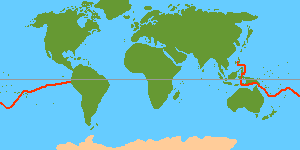
The voyage that made Torres notable occurred in the early 1600s during a period of intensified Spanish and Portuguese exploration of the Pacific. Surviving references to his passage are sparse, but they indicate that he navigated the channel separating two large landmasses. The movement was significant at the time because European geographic knowledge of the region was incomplete and reports from such passages fed into contemporary charts and imperial planning. For a concise statement of the achievement, some modern sources refer to his trip as the first recorded European navigation of this strait.
Geography and significance
The waterway Torres traversed separates the northern coast of what is now called Australia from the southern shores of New Guinea. It links the Coral and Arafura seas and contains numerous islands and complex tides that present navigation challenges. The feature itself is commonly named the Torres Strait in modern cartography, and it forms an important ecological and cultural boundary between Melanesian and Australian regions.
Legacy, naming, and later importance
Because few primary documents survive, historians debate precise details of Torres’s origin, rank, and the full course of his voyage. Nevertheless, his name has been memorialized on maps and in regional toponymy: the channel is now widely known by the name that honors him. The passage he reported contributed to European mapping of the South Pacific and influenced later voyages of exploration and charting. The strait remains strategically and environmentally important for shipping, biodiversity and the distinct maritime cultures of local island communities.
Notable facts and references
- The strait that bears his name links two major bodies of water and contains many small islands and reefs; contemporary references to the area appear in later European charts and logs.
- Modern summaries of Torres’s life and voyage are cautious about precise personal details because archival evidence is fragmentary.
- For further reading on the passage and its cartographic consequences see general historical summaries and specialist studies of early Pacific navigation (Torres Strait).
Although the record is incomplete, Luís Vaz de Torres remains an important figure in the history of Pacific exploration because his passage identified a clear navigable connection between two great landmasses and left a persistent name on maps and in regional geography.
Questions and answers
Q: Who was Luís Vaz de Torres?
A: Luís Vaz de Torres was a Spanish explorer born around the year 1565.
Q: How is Luís Vaz de Torres' name sometimes spelled?
A: Luís Vaz de Torres' name is sometimes spelled Luis Váez de Torres.
Q: What is Luís Vaz de Torres noted for today?
A: Luís Vaz de Torres is noted for the first recorded European navigation of the strait which separates the continent of Australia from the island of New Guinea.
Q: What is the name of the strait that Luís Vaz de Torres first navigated?
A: The strait that Luís Vaz de Torres first navigated is now named after him and is called the Torres Strait.
Q: When did Luís Vaz de Torres die?
A: Luís Vaz de Torres died in 1607.
Q: What was Luís Vaz de Torres' nationality?
A: Luís Vaz de Torres was a Spanish explorer.
Q: How significant was Luís Vaz de Torres' exploration?
A: Luís Vaz de Torres' exploration was significant because he was the first European to navigate the strait that separates Australia and New Guinea, and the strait is now named after him.
Related articles
Author
AlegsaOnline.com Luís Vaz de Torres Leandro Alegsa
URL: https://en.alegsaonline.com/art/59860
Sources
- acms.sl.nsw.gov.au : acms.sl.nsw.gov.au/album/ItemViewer.aspx?itemid=824242&suppress=N&imgindex=2
- books.google.com : Estensen, M. (2006) Terra Australis Incognita: The Spanish Quest for the mysterious Great South Land, p. 115. Allen & Unwin, Australia.
- primo-slnsw.hosted.exlibrisgroup.com : Journal of Diego de Prado y Tobar, State Library of New South Wales
- books.google.com : Alan Villiers, The Coral Sea, Whittlesey House, 1949, p. 99.
- books.google.com : William A. R. Richardson, Was Australia charted before 1606? The Java la Grande inscriptions, National Library Australia, 2006, p. 20.
- books.google.com : Kenneth Gordon McIntyre, The secret discovery of Australia: Portuguese ventures 250 years before Captain Cook, Pan Books, 1987, p. 181.
- books.google.com : search results