
Louie L. Wainwright: Florida corrections leader and respondent in landmark cases
Louie L. Wainwright (1923–2021) led Florida corrections (1962–1987), promoted rehabilitation, accreditation, and was respondent in Gideon v. Wainwright and Ford v. Wainwright.
Overview
Louie Lee Wainwright, Sr. (September 11, 1923 – December 23, 2021) was a prominent American corrections administrator who directed the Florida Division of Corrections for a quarter century. Appointed in the early 1960s, he served as secretary from 1962 until 1987. During his tenure he steered the department through substantial changes in philosophy and practice, emphasizing rehabilitation, professional standards, and institutional transparency. He is also widely known in legal history as the named respondent in two significant United States Supreme Court cases that shaped the rights of criminal defendants and the laws governing execution.
Image gallery
2 Images
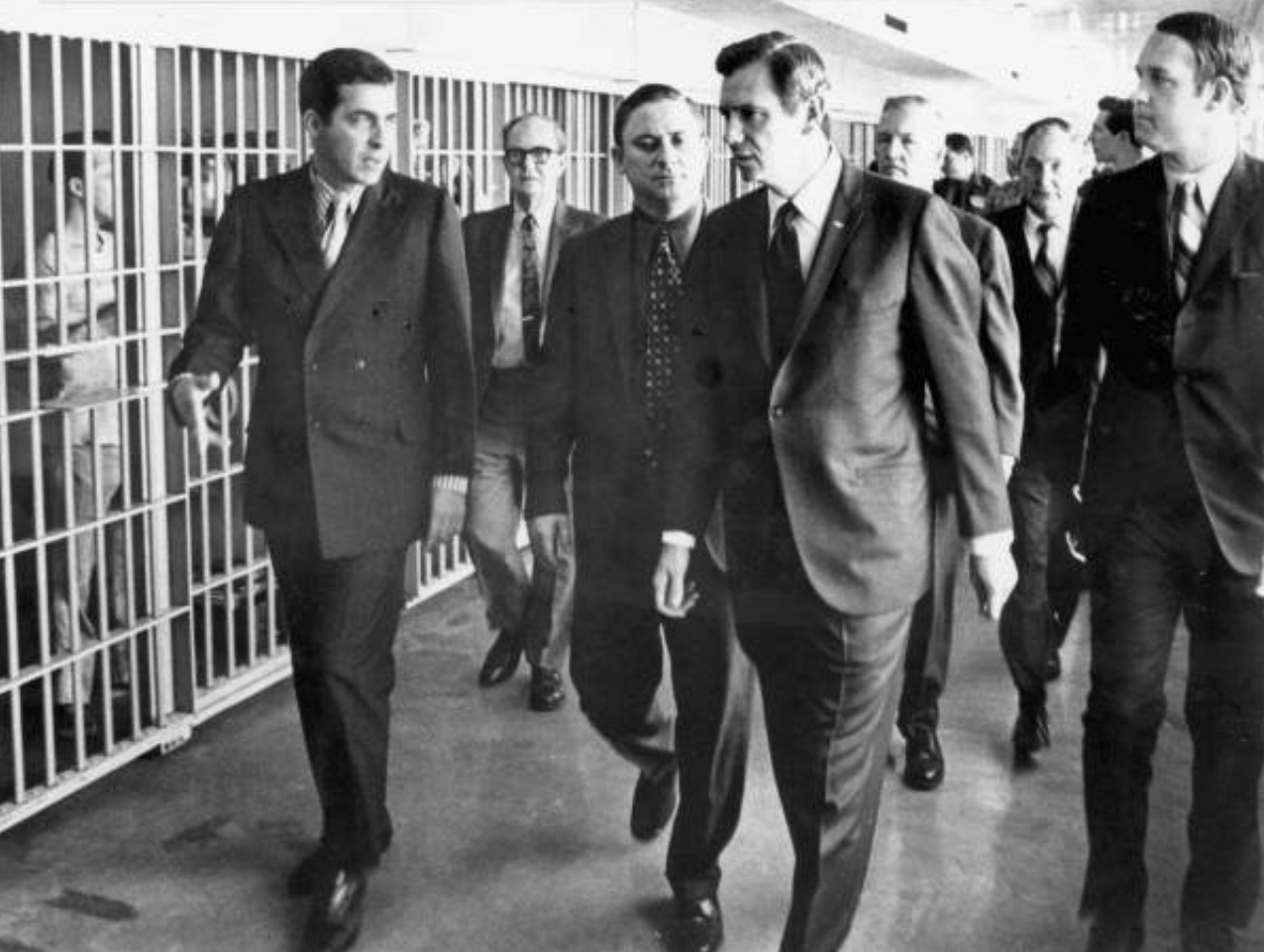
Administrative philosophy and reforms
Wainwright is remembered for shifting Florida's corrections policies away from punitive traditions toward a more rehabilitative model. He advocated for prisoner education, vocational training, and programs designed to ease reentry into the community. Under his leadership the department expanded services intended to reduce recidivism and improve inmate health and safety. He also pushed for greater accountability within the corrections system, supporting inspections, record-keeping, and public reporting so that citizens and policymakers could better understand operations and outcomes.
Central to his approach was professionalization of the workforce. Wainwright emphasized staff development, better working conditions for correctional employees, and the adoption of standards intended to make institutions safer and more consistent. He believed that improving employee training and morale was essential to carrying out humane and effective correctional practice.
Accreditation and national leadership
One of Wainwright’s enduring achievements was his role in promoting accreditation for correctional institutions. He worked with peers in the American Corrections Association (ACA) and related bodies to establish national standards and encourage agencies to pursue formal recognition. Through these efforts many Florida facilities were evaluated and accredited, and the state’s central administration later earned accreditation as well. These milestones helped position Florida among the first states to adopt organized, externally verified correctional standards.
- Leadership roles: active participation in professional associations and national campaigns for standards and accreditation.
- Institutional outcomes: expansion of education and vocational programs, attention to inmate health and safety, and improved staff training.
- Recognition: recipients of major honors from correctional associations, and often described by contemporaries as a leading figure among American correctional administrators.
Legal significance: Gideon and Ford
Wainwright’s name appears in American constitutional law because of his role as the official respondent in two Supreme Court cases. The first, Gideon v. Wainwright, addressed the right to counsel for criminal defendants. In that landmark 1963 decision the Court held that states must provide counsel to indigent defendants charged with serious offenses, an interpretation of the Sixth and Fourteenth Amendments that reshaped criminal procedure across the country. The decision is widely taught as a foundational expansion of the right to counsel.
The second major case, Ford v. Wainwright, involved the constitutionality of executing a person who is insane. The Supreme Court’s ruling in that line of cases reaffirmed longstanding common law prohibitions and required consideration of a condemned person’s mental competency before an execution could proceed. Because Wainwright was the named state official responsible for carrying out death sentences at the time, his name became attached to the litigation.
Legacy and later life
Wainwright’s impact extended beyond policy into institutional culture. He helped make accreditation and programmatic quality central features of state corrections in Florida and influenced national conversations about correctional professionalism. Colleagues and observers often credited him with combining administrative skill and an expressed commitment to the humane treatment of people in custody. He received honors from national correctional organizations in recognition of his long service and leadership.
After retiring from active administration, Wainwright remained a respected elder statesman within the field. He died in Tallahassee on December 23, 2021; contemporary notices of his death and reflections on his career highlighted both his administrative accomplishments and the legal significance of the cases that bore his name. For further reading on the Supreme Court decisions associated with his tenure, see Gideon v. Wainwright and related opinions. Local remembrances and archival materials pertaining to his career may be found in repositories and news coverage related to Tallahassee and Florida government history.
Notable distinctions
- Longest-serving correctional secretary or director in the United States during his period of service.
- Awarded high honors by professional correctional associations for contributions to standards and accreditation.
- Named respondent in seminal Supreme Court cases that shaped rights to counsel and protections against executing the insane.
Louie L. Wainwright’s career illustrates how corrections administrators can influence policy, practice, and law. Whether remembered for program innovations, efforts to raise professional standards, or for being centrally placed in cases that altered constitutional law, his record remains a reference point in the history of American corrections.
Related articles
Author
AlegsaOnline.com Louie L. Wainwright: Florida corrections leader and respondent in landmark cases Leandro Alegsa
URL: https://en.alegsaonline.com/art/59409