
Liquid Paper (correction fluid)
Liquid Paper is a correction fluid used to mask typed or handwritten errors. Invented in 1951 by Bette Nesmith Graham, it later became a commercial product and declined in use with digital editing and correction tape.
Overview
Liquid Paper, commonly called correction fluid or white-out, is an opaque quick-drying coating applied over mistakes on paper so new text can be written or typed on top. Developed for use with typewriters and fountain or ballpoint inks, it forms a thin, whitish layer that conceals errors rather than erasing them. The term Liquid Paper is associated with a specific commercial product and brand, but similar formulations are sold by many manufacturers.
Image gallery
3 Images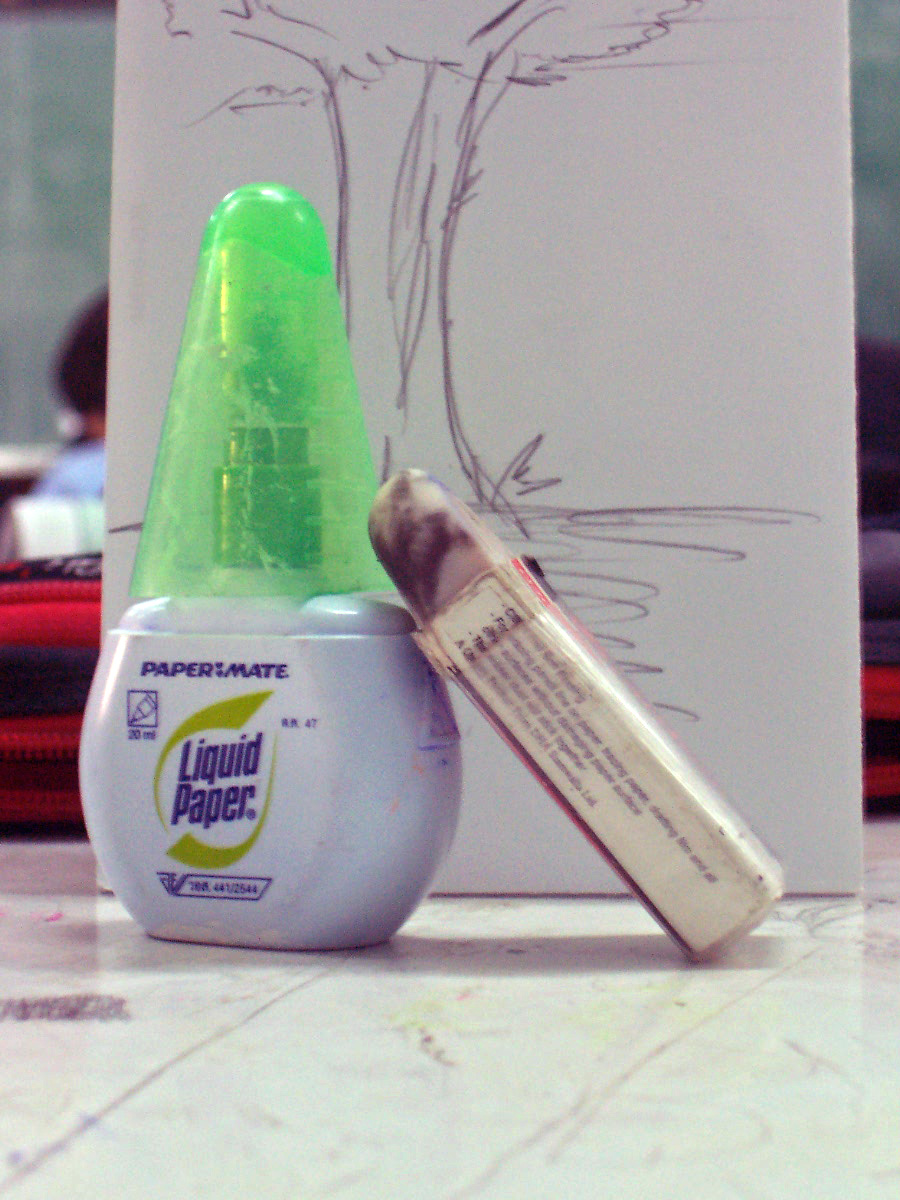


Composition and common forms
Correction fluids are typically formulated from pigments (to provide opacity), a binder (to form a film), and a solvent (to keep the mixture liquid until it dries). Solvents evaporate after application, leaving a flexible, white film. Variants differ mainly in drying time, finish (matte or satin), and solvent type, which affects odor and flammability.
- Brush-on bottles: classic form where a small brush is mounted in the cap.
- Correction pens: resemble markers and offer fine control for small errors.
- Correction tapes: a dry adhesive strip applied to paper that covers mistakes without liquid.
History and development
The product traces to the early 1950s. Its inventor was Bette Nesmith Graham, a secretary who experimented with a homemade mixture initially called Mistake Out. She developed her formula while working in Texas and reportedly used a household appliance, such as a blender, to mix small batches. Beginning in the mid-1950s she sold the fluid to acquaintances and gradually expanded distribution; she began marketing the product more broadly around 1956.
Liquid Paper grew into a recognizable office supply brand. In 1979 the company and its trademarks were acquired by a larger consumer goods firm, Gillette, in a deal reported at approximately 47.5 million US dollars. After Bette Nesmith Graham's death, the business proceeds benefited her family; her son, Michael Nesmith, who was known as a member of the pop group The Monkees, inherited part of that legacy.
Uses, procedure and modern alternatives
Using correction fluid is straightforward: shake the container to re-suspend pigments, apply a thin coat over the error, wait for it to dry (usually seconds to a few minutes), then write or type over the dried film. For larger or multiple corrections, multiple thin coats are preferred to avoid cracking. Correction tape serves the same purpose without solvent odor or drying time, and correction pens allow detailed work.
Safety, environmental and cultural notes
Because many traditional correction fluids contain volatile solvents, they can be flammable and produce strong odors; ventilation is recommended during use. In the past, solvent-containing products were sometimes abused as inhalants, which has led manufacturers to reformulate some products to reduce abuse potential. Disposal should follow local waste guidelines for solvent-containing liquids. Culturally, Liquid Paper and similar products became iconic office items in the late 20th century but have seen reduced everyday use with the rise of word processors and digital editing, and with the wider availability of dry correction tapes and pens.
Quick facts
- Primary purpose: conceal typographical or handwritten errors so corrections can be made.
- Forms: fluid (brush), pen, tape.
- Advantages: fast coverage, writable surface once dry.
- Limitations: drying time, smell, potential flammability, less suited to glossy or coated papers.
Related articles
Author
AlegsaOnline.com Liquid Paper (correction fluid) Leandro Alegsa
URL: https://en.alegsaonline.com/art/58378