
Blender (kitchen appliance)
A countertop electric appliance for mixing, chopping, puréeing and emulsifying foods and drinks; types, components, uses, history, safety and maintenance.
Overview
A blender is a countertop electric appliance used to chop, mix, purée and emulsify food and liquids. It is commonly found in the kitchen and is designed for tasks such as making smoothies, preparing sauces, crushing ice and blending soups.
Image gallery
6 Images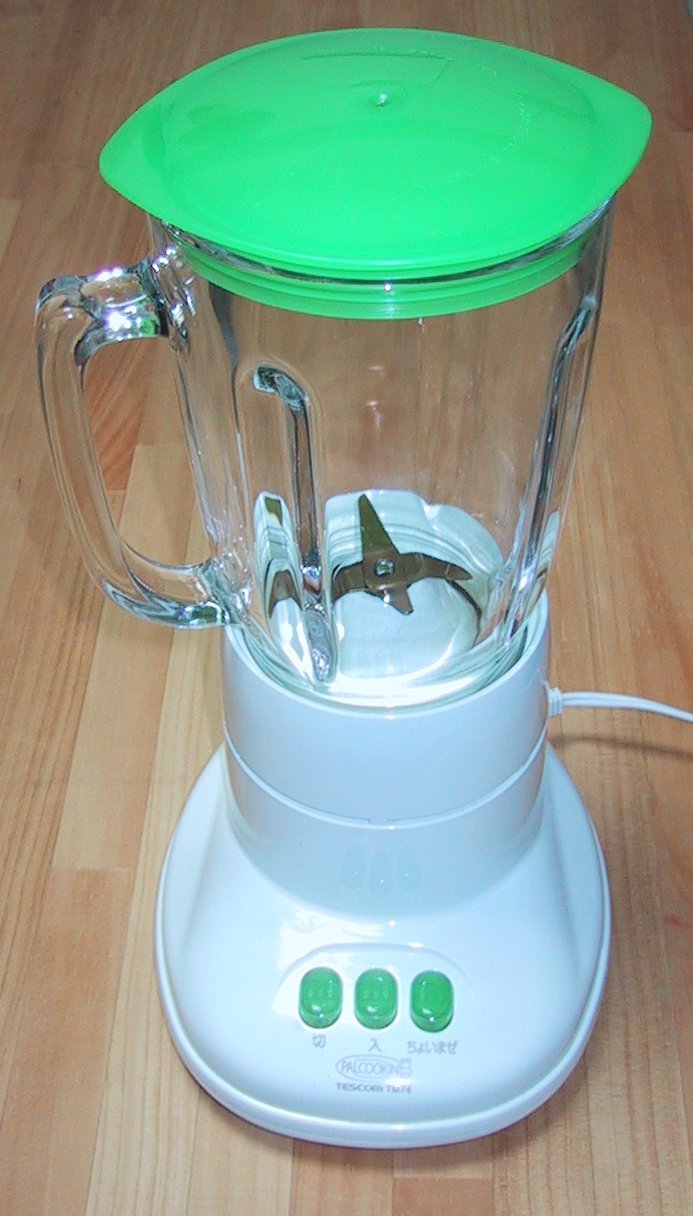


Main parts and how it works
Most blenders consist of a motorized base, a removable container (jar or pitcher), and rotating blades attached to a drive coupling. When the motor runs it turns the blades, creating shear and turbulence that break down solids into smaller particles and distribute liquids evenly. Control panels provide variable speeds and pulse settings for different textures.
Types and features
- Countertop blenders – larger jars for family-sized batches and high-powered motors.
- Immersion (hand) blenders – a wand-style unit for blending directly in a pot or bowl.
- Personal blenders – compact units and single-serve cups for quick drinks.
- High-performance blenders – powerful motors for nut butters, frozen desserts and fine purées.
History and development
Blenders evolved during the 20th century alongside electric motor and food-processing technology. Early models focused on simple mixing; later innovations added safer blade assemblies, sealed couplings, glass or BPA-free containers, and specialized programs for ice-crushing or heating by friction.
Common uses and examples
Typical uses include preparing drinks such as smoothies and milkshakes, mixing liquids, and puréeing fruits and vegetables for sauces, dips and baby food. Blenders are also used to make emulsions like mayonnaise and to grind small amounts of grains or spices when equipped with appropriate blades. They are distinct from food processors, which are optimized for slicing and dough work.
Care, safety and notable facts
Routine care includes watching seals for wear, hand-washing the jar and blades or using dishwasher-safe components, and avoiding thermal shock to glass pitchers. Safety warnings stress unplugging before cleaning and keeping hands away from blades. For more on sauces and purees see resources about sauces and soups. For the unrelated 3D graphics program that shares the same name, see Blender (program).
Manufacturers offer a range of attachments and specifications; consider motor power, jar material, blade design and warranty when choosing a model. For quick reference about choosing and troubleshooting, consult product guides and reliable appliance care sites.


See also
- List of kitchen appliances
Related articles
Author
AlegsaOnline.com Blender (kitchen appliance) Leandro Alegsa
URL: https://en.alegsaonline.com/art/12155