
Limburg (Belgium) — province of Flanders
Easternmost province of Flanders in Belgium. Capital Hasselt; noted for Tongeren, fruit-growing Haspengouw, former coal mining, Limburgish dialects and Hoge Kempen National Park.
Overview
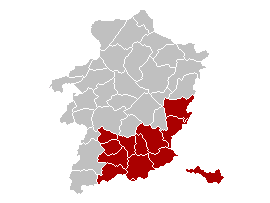
Limburg is the easternmost province of the Flemish Region of Belgium. Its capital city is Hasselt. The province is commonly named in several languages: in Dutch as Limburg, in French as Limbourg, in German as Limburg and in the local regional speech as Limburgish. Administratively it forms part of Flanders, one of Belgium's main communities and regions within the state of Belgium.
Image gallery
10 Images






Geography and parts
Limburg occupies a strip of territory along the Dutch border and combines low-lying plains, heaths and forested areas. The landscape includes agricultural zones, known orchards and rolling fields in regions such as Haspengouw, as well as larger contiguous heath and pinewood tracts in the Kempen area. Major towns include Hasselt, Genk, Tongeren and Sint-Truiden, each serving different economic and cultural roles within the province.
History and development
The current provincial boundaries and institutions date from the 19th century rearrangements of Belgian and Dutch territory. Over the following century Limburg evolved from a largely rural area into a region that experienced industrialisation, notably around coal mining and manufacturing in the 19th and 20th centuries. In more recent decades the province has reoriented toward services, light industry, and nature conservation.
Economy, culture and uses
Traditional agriculture remains important: fruit cultivation, arable farming and horticulture are familiar sights. Towns such as Tongeren highlight the province's long history; Tongeren is often cited as one of Belgium's oldest urban settlements with visible Roman and medieval traces. Hasselt is recognized for its cultural life, local jenever (gin) traditions and public gardens. The province also hosts large protected natural areas, including parts of the Hoge Kempen national park, which are significant for tourism and outdoor recreation.
Distinctive features and notable facts
- Language and identity: Dutch is the official language, while local Limburgish dialects remain culturally prominent.
- Historical shifts: the territory and name "Limburg" have historic echoes in the region and in neighbouring Dutch Limburg; the two are distinct modern provinces in different states.
- Heritage and tourism: Roman archaeology, medieval sites, orchards and national-park landscapes are common visitor attractions.
- Urban mix: from market towns and industrial legacies to newer service and cultural hubs, the province combines rural and urban elements.
For further reading on administrative details, local culture and visitor information, consult regional resources and guides that focus on Flanders and Belgian provincial life.
Related articles
Author
AlegsaOnline.com Limburg (Belgium) — province of Flanders Leandro Alegsa
URL: https://en.alegsaonline.com/art/58066
Sources
- statbel.fgov.be : Population per municipality as of 1 January 2016
- statbel.fgov.be : Institut National de Statistique - Direction générale Statistique et Information économique