
Liévin — commune in Pas-de-Calais, northern France
Liévin is a commune in Pas-de-Calais, Hauts-de-France. A former coal‑mining town, it has been reshaped by post‑industrial redevelopment, memorials to mining history, local culture and community initiatives.
Overview
Liévin is a commune in the Pas‑de‑Calais department in the north of France. Historically part of the industrial coal basin often called Nord‑Pas‑de‑Calais, the town now lies within the larger administrative region established after 2016, commonly referred to as Hauts‑de‑France. Its identity has long been shaped by 19th‑ and 20th‑century coal mining and the social structures that accompanied heavy industry.
Image gallery
4 Images


Geography and administration
Liévin occupies a generally flat area characteristic of the former mining plain. As a French commune it is governed by a municipal council and is one of many municipalities in the Pas‑de‑Calais department. Transport connections include regional roads and links to nearby towns and urban centres; residents also rely on public transport networks serving the wider northern territory described at the north of France.
History and industry
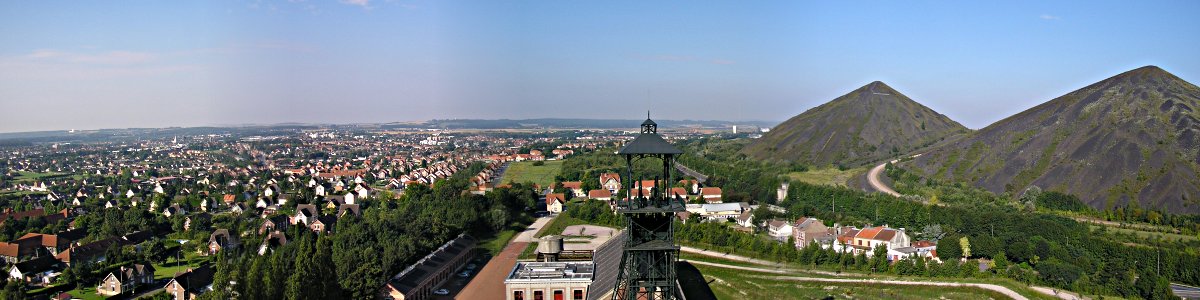
The town expanded rapidly with the development of deep coal mining. For generations mining dominated local employment, housing and community life. The decline of deep coal extraction in the later 20th century led to economic reorientation: former pit sites have been cleared, landscaped or repurposed for housing, light industry and public green space, and local planning has emphasised regeneration and diversification.
Culture, memorials and community life
Liévin preserves reminders of its industrial past through memorials, plaques and adapted industrial features; these commemorate miners and the social history of the coal basin. Cultural life today includes sports clubs, seasonal festivals, associations and civic projects that reflect the town's working‑class heritage while supporting contemporary community renewal.
Economy and services
The local economy now combines small and medium enterprises, service providers and commercial activity serving residents. Public amenities, schools and social services have been modernised in recent decades. For more detailed administrative and practical information consult official pages and regional resources such as departmental portals and local municipal sites.
Visiting and further reading
Visitors will find traces of the mining era in parks, monuments and interpretation panels that explain the town's past. Nearby larger towns provide complementary cultural institutions and transport hubs. Further contextual material and historical background can be found through regional overviews and municipal resources: historical background, municipal information and other local references.
Related articles
Author
AlegsaOnline.com Liévin — commune in Pas-de-Calais, northern France Leandro Alegsa
URL: https://en.alegsaonline.com/art/57870