
Li Ruihuan — Chinese political leader and former CPPCC chairman
Li Ruihuan (born 17 Sep 1934) is a retired Chinese politician who led the Chinese People's Political Consultative Conference (1993–2003) and served on the Communist Party leadership in the 1990s.
Li Ruihuan (born 17 September 1934) is a retired Chinese leader best known for serving as the sixth Chairman of the National Committee of the Chinese People's Political Consultative Conference (CPPCC) from 1993 to 2003. His name in Chinese is often shown alongside biographical notes: 李瑞环. He is widely described as a veteran politician whose career bridged municipal administration and national advisory leadership.
Image gallery
1 Image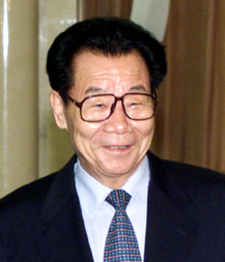
Early life and municipal career
Li was born in the Tianjin region and rose from a background in skilled trades and construction to positions in local government. His practical, hands-on experience in urban planning and building earned him a reputation as an administrator who emphasized tangible public works and housing issues. Over decades he held senior posts in Tianjin’s municipal structure, where he became known for an approach often framed as pragmatic and close to ordinary urban concerns.
Roles at the national level
In the early 1990s Li moved onto the national stage. He served on the Communist Party’s top bodies during a period of economic transition and was chairman of the CPPCC, the country’s principal united front advisory body, from 1993 until 2003. His tenure at the CPPCC made him a public face for consultative and symbolic aspects of policymaking, representing a bridge between the party, non-party groups, and social organizations. For an outline of his career and positions, see a general profile.
Style, priorities, and reputation
Li Ruihuan is commonly noted for a plain-speaking, populist image compared with some peers in the senior leadership. He was associated with advocacy for improving urban living conditions and with periodic calls for administrative reform and better governance practices. Observers have contrasted his working-class origins with the more technocratic backgrounds of other leaders of his generation.
- Born: 17 September 1934 (Tianjin region)
- Notable office: Chairman, CPPCC National Committee (1993–2003)
- Known for: municipal governance experience, practical orientation, public image
Since leaving formal office in 2003, Li has remained a figure referenced in discussions of late 20th-century Chinese leadership transitions and the diversity of career pathways within the party-state. He is sometimes cited in cultural contexts for interests such as calligraphy and public speaking, attributes that enhanced his public visibility during and after his official career.
Related articles
Author
AlegsaOnline.com Li Ruihuan — Chinese political leader and former CPPCC chairman Leandro Alegsa
URL: https://en.alegsaonline.com/art/57684