
Leon Czolgosz: assassin of President William McKinley
Overview of Leon Czolgosz (1873–1901), an American anarchist who killed President William McKinley; covers background, motives, trial, execution and historical impact.
Overview
Leon Czolgosz (May 5, 1873 – October 29, 1901) was an American worker and self-described anarchist who assassinated President William McKinley. Born in Alpena, Michigan to immigrant parents of Polish Catholic background, he became known for a single violent act that had immediate political consequences. Contemporary accounts and later histories emphasize both the political context of the assassination and questions about Czolgosz's motives and mental state.
Image gallery
9 Images


Early life and political influences
Czolgosz worked in factories and came into contact with labor movements and radical political thought that circulated at the turn of the 20th century. He described himself as an assassin only after the crime and later identified with anarchist ideas. He also acknowledged hearing lectures by prominent activists and is often associated with the circle around Emma Goldman, though Goldman publicly condemned the killing and denied directing it.
The assassination
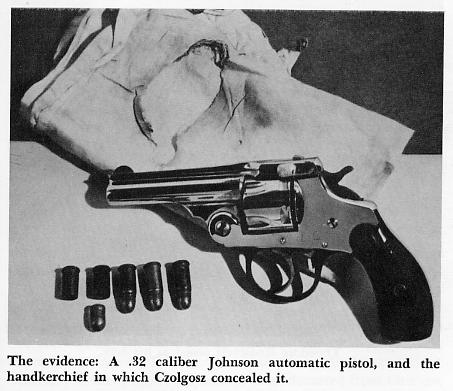
On September 6, 1901, at the Pan-American Exposition in Buffalo, New York, Czolgosz shot President William McKinley at close range while the President was greeting visitors. McKinley initially survived but died several days later from his wounds. Czolgosz later said he believed McKinley was an enemy of ordinary people because of U.S. actions overseas, including the Philippine conflict; observers have described his motive alternately as political outrage and as the act of a disturbed individual.
Trial, conviction and execution
Czolgosz was quickly arrested and tried. The proceedings were fast by modern standards; a jury convicted him of murder and he was sentenced to death. His execution took place by electric chair on October 29, 1901, at Auburn prison, New York. The trial and execution prompted debate at the time about due process, the adequacy of legal protections for defendants, and the proper response to political violence.
Legacy and historical significance
The assassination removed McKinley from office and brought his vice president, Theodore Roosevelt, to the presidency. It intensified national anxieties about anarchism and political radicalism and influenced public discussions of security for national leaders. Historians continue to weigh evidence about Czolgosz's motives: some emphasize a deliberate political intent tied to anger over U.S. policy abroad, while others emphasize psychological factors and isolation. Questions about his sanity were raised by contemporaries and have remained part of the historical assessment.
Notable facts and distinctions
- Czolgosz's act is often placed in the broader pattern of anarchist violence in the late 19th and early 20th centuries.
- He named contemporary radicals in public statements, generating scrutiny of anarchist organizations and individuals in the United States.
- His case is frequently cited in discussions about how societies respond to political violence and the balance between security and civil liberties.
- For further context on the period and reactions, readers can consult contemporary newspapers, legal records, and biographies of McKinley and Roosevelt; additional resources are available through historical archives and online collections such as primary sources, scholarly studies indexed at regional archives, and digital libraries listed at research portals and national collections. See also general overviews at historical sites, curated exhibits at museum pages, and educational materials at academic repositories and public records.
Czolgosz's name remains associated with questions about political extremism, the limits of protest, and the unpredictable ways that personal grievances intersect with broader social movements.
Related articles
Author
AlegsaOnline.com Leon Czolgosz: assassin of President William McKinley Leandro Alegsa
URL: https://en.alegsaonline.com/art/57208