
Electric chair (method of execution)
A restraint chair historically used to carry out capital punishment by passing electric current through the body. Introduced in the late 19th century, now uncommon and widely debated on legal and ethical grounds.
Overview
The electric chair is a purpose-built restraint chair used historically to carry out capital punishment by passing an electrical current through a condemned person's body. Introduced in the late 19th century as an alternative to hanging, it became a prominent method of execution in the United States. The device is intended to cause rapid unconsciousness and death through electrical disruption of vital systems; the use and effects of the method have been the subject of sustained legal and ethical debate. The act of putting a person to death in this way is commonly described as an execution by electrocution.
Image gallery
6 Images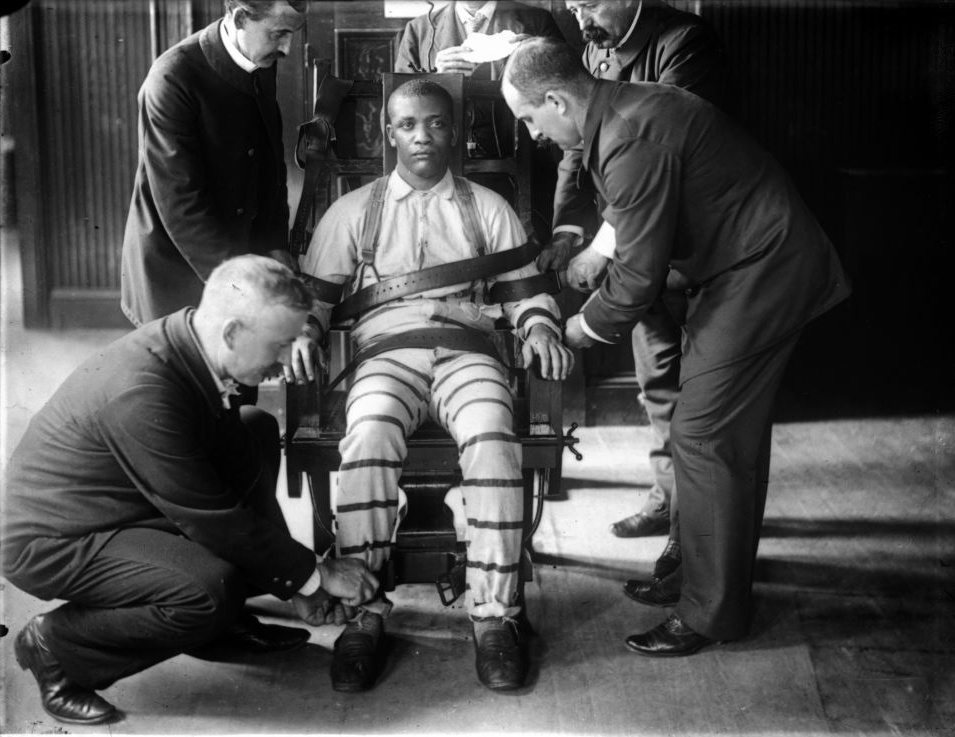


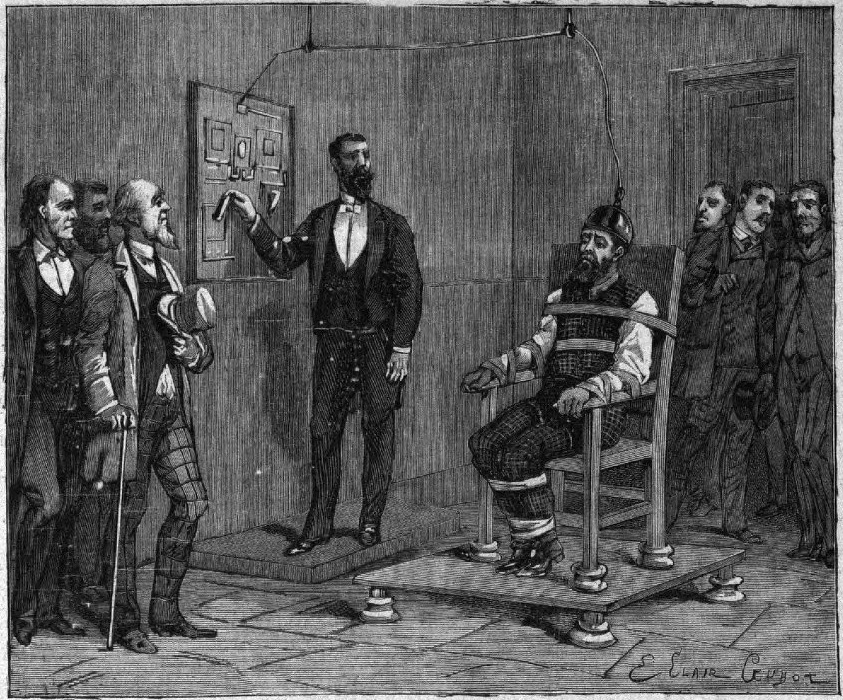
Design and components
Typical electric chairs are constructed from a robust frame, historically of hardwood, and fitted with restraints to secure the head, torso, arms and legs. Key components include the frame and restraints, electrodes that make contact with the skin, and a power and control system that applies the electrical output in prescribed intervals. Conductive materials such as saline-soaked sponges, metal plates or gels are often placed between electrode and skin to improve contact and reduce burning. The placement of electrodes is typically intended to create a path for current that crosses the chest to affect the heart and brain.
Procedure
Before an execution, the condemned person is restrained and the electrode sites are prepared to ensure good electrical contact. Medical or corrections personnel place head and limb electrodes and secure insulating or conductive dressings as required by the protocol in use. When initiated, electrical output may be applied in one or more cycles; historical protocols and equipment varied, and reported voltages and durations are not uniform. The intended physiological outcomes are rapid loss of consciousness and cardiorespiratory failure, though actual outcomes have sometimes been unpredictable and have led to accounts of prolonged or visibly traumatic procedures.
History and development
The electric chair emerged in the United States in the late 1800s, at a time when inventors and officials sought methods thought to be more modern or humane than hanging. It was adopted by a number of states and remained a common method of execution through much of the 20th century. Over time, technical refinements, judicial review, and public concern about botched executions influenced practice and equipment standards. The chair has also at times been built from or decorated with symbolic materials, and many devices acquired popular nicknames in regional lore, such as "Old Sparky," "Yellow Mama," and "Gruesome Gertie."
Legal status and controversy
From the late 20th century onward the electric chair has been largely displaced by lethal injection in jurisdictions that retain capital punishment. Some jurisdictions maintain electrocution as an alternative or as a backup method when other means are unavailable or legally prohibited. Litigation has frequently addressed whether electrocution constitutes cruel and unusual punishment, focusing on the risk of severe pain, disfigurement, or prolonged suffering when procedures fail. Technical failures and graphic accounts of problematic executions intensified scrutiny and shaped public opinion and legal rulings.
Cultural significance
The electric chair has become an enduring symbol in cultural discussions about the death penalty and state use of lethal force. It appears in literature, film, journalism and visual arts as an emblem of capital punishment and the moral issues it raises. Colloquial phrases such as "riding the lightning" reflect how the device entered public vernacular. Museums and criminal justice collections sometimes display decommissioned chairs or related artifacts for historical study, and scholarly work examines the electric chair as an instance of how technological options intersect with law, ethics and public policy.
Alternatives and current practice
Modern debates over execution methods emphasize reliability, minimization of suffering, legal constraints and the availability of trained personnel and pharmaceuticals. Many jurisdictions now favor lethal injection, while a small number retain older mechanical or electrical methods under specific conditions. Researchers, courts and policymakers continue to weigh evidence about comparative harms, procedural safeguards and constitutional limits. For readers seeking more detail on legal decisions, historical records of early implementations, or technical discussions of electric current in execution contexts, primary sources include court opinions, prison protocols and historical studies; contextual material on crimes for which death sentences were imposed can be found in sources concerning murder.
Questions and answers
Q: What is an electric chair?
A: An electric chair is a specially built chair used to execute condemned criminals by electrocuting them.
Q: What is the purpose of using an electric chair?
A: The purpose of using an electric chair is to kill the criminal as punishment for a crime they were accused of, usually murder.
Q: How is the electric chair built?
A: The electric chair is a strong wooden chair with electrodes for running electric current through the criminal's body.
Q: Where are the electrodes placed on the criminal's body?
A: One electrode is placed on the criminal's head, and another is placed on their right shin.
Q: What is the voltage of the electric current that runs through the criminal's body?
A: A 2,000 volt current runs through the criminal's body.
Q: What is the purpose of the electric shock in the electric chair?
A: The electric shock is meant to stop the criminal's heartbeat, cause unconsciousness, and ultimately cause death.
Q: What are some nicknames for electric chairs in the United States?
A: Some ironic nicknames for electric chairs in the United States are Old Sparky, Yellow Mama, Gruesome Gertie, Sizzling Sally, and Hot Seat.
Author
AlegsaOnline.com Electric chair (method of execution) Leandro Alegsa
URL: https://en.alegsaonline.com/art/30667
Sources
- trutv.com : "THE ELECTRIC CHAIR"