
Armenian diaspora: distribution, history, and cultural identity
Communities of Armenians living outside the Republic of Armenia, their historical causes, geographic distribution, cultural institutions, and ties to the homeland.
The Armenian diaspora refers to ethnic Armenians and their descendants who live outside the internationally recognised borders of the Republic of Armenia. These communities arose over centuries through trade, migration and forced displacement. Estimates of the global Armenian population vary; many sources from the early 21st century placed several million Armenians abroad, while a significant population remains in Armenia itself. Modern discussion of the diaspora often highlights both its geographic spread and its cultural-political influence.
Image gallery
2 Images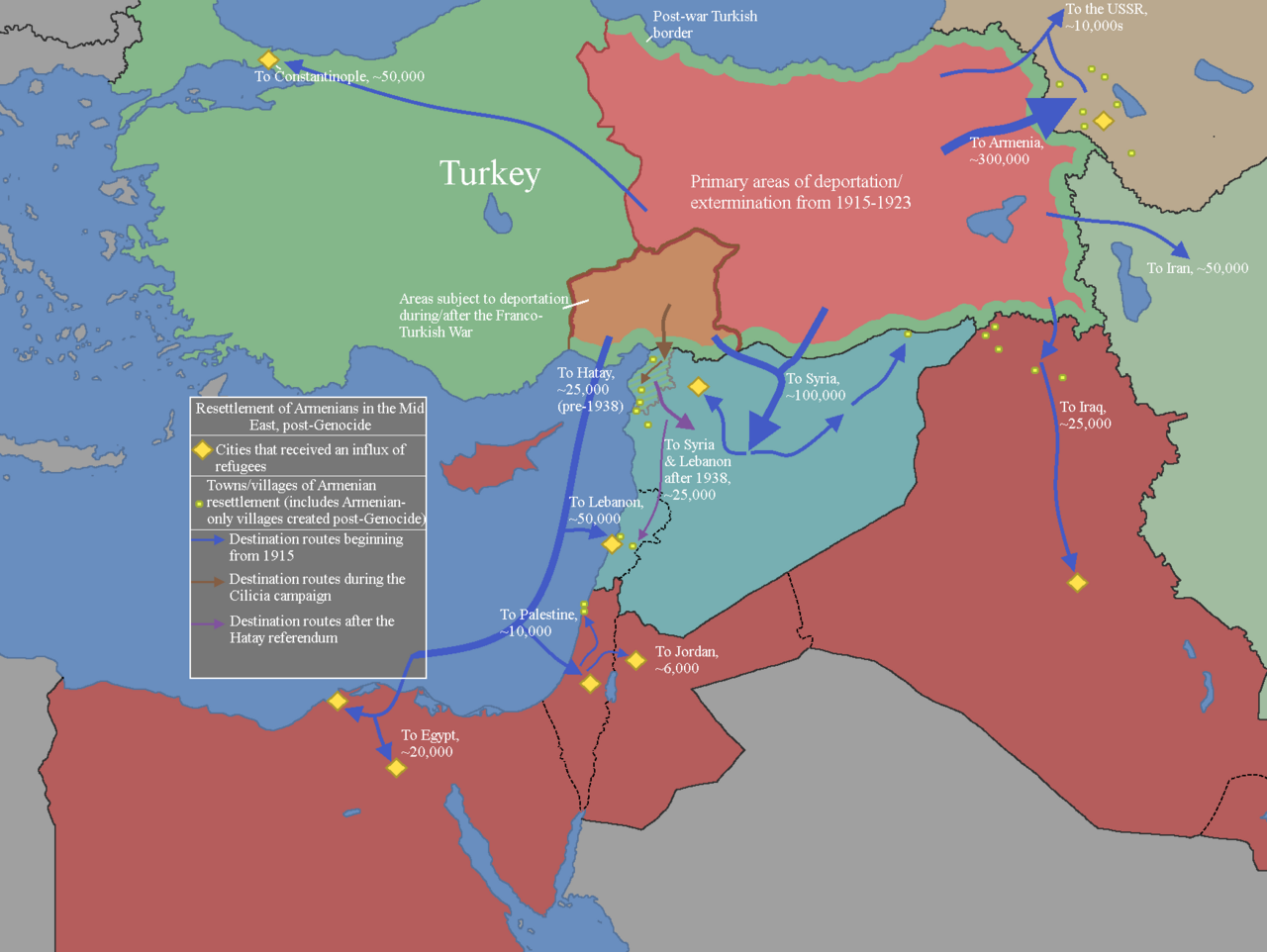

Distribution and communities
Armenian communities exist on every continent but are concentrated in several regions. Large, well-established groups are found in the Middle East (notably Lebanon and Iran), Europe (France, Russia), the Americas (United States, Argentina, Canada), and elsewhere. Smaller but historically important communities remain in places such as the Caucasus and parts of Central Asia. Many of these populations maintain schools, churches and cultural associations that preserve language and traditions.
Historical background
The diaspora has deep historical roots: medieval Armenian merchants and craftsmen settled abroad, while later centuries brought further movement under Ottoman, Persian and Russian rule. A pivotal moment was the mass displacements and atrocities of World War I and its aftermath, which created large refugee populations across the Middle East and beyond. The Soviet era and the collapse of the USSR prompted additional migration patterns, including labour migration and emigration for economic reasons.
Cultural life and institutions
Institutions such as the Armenian Apostolic Church, community schools and cultural centres play a central role in diasporan identity. Language divides—most notably Western and Eastern Armenian—reflect regional histories and affect education and media. Diasporan communities organize festivals, publish newspapers, and maintain philanthropic networks that support cultural preservation and humanitarian projects in Armenia.
Political and economic links
Members of the diaspora often engage politically through lobbying, advocacy for recognition of historical events, and support for Armenia’s development. Remittances, investment and charitable giving from diasporan Armenians have been important for Armenia’s economy. Transnational ties are sustained by family networks, frequent travel, dual citizenship in some cases, and modern communication.
Notable facts and distinctions
- Dialect and religion: Variation in dialects and adherence to the Armenian Apostolic, Catholic or Protestant churches mark internal diversity.
- Civic activism: Diaspora groups have been prominent in cultural preservation and international campaigns.
- Relationship to homeland: The diaspora both supports and sometimes debates policies in Armenia, balancing local priorities with transnational perspectives.
For more information about communities and demographic estimates see diaspora communities, the modern state of Armenia, and the situation of the de facto Republic of Artsakh.
Related articles
Author
AlegsaOnline.com Armenian diaspora: distribution, history, and cultural identity Leandro Alegsa
URL: https://en.alegsaonline.com/art/5704