
Legends of the Hidden Temple — 1990s Nickelodeon action-adventure game show
1990s Nickelodeon action-adventure game show where teams of children raced through stunts and quizzes to retrieve artifacts from a temple guarded by Olmec, a talking stone head.
Overview
Legends of the Hidden Temple was an American action-adventure television series produced for Nickelodeon. Airing from 1993 to 1995, the program combined physical challenges, memory tasks and trivia drawn from history, mythology and geography. Episodes presented a theatrical set: a stepped stone temple full of rooms, obstacles and a large talking Olmec head that guided contestants and introduced the show’s legend.
Image gallery
2 Images
Format and components
The basic unit of play featured six two-person teams, each a boy-and-girl pair identified by a color and animal name. The competition unfolded in several distinct stages that tested speed, coordination, recall and reasoning. Typical elements included:
- The Moat — an opening physical obstacle course used to eliminate some teams.
- The Steps of Knowledge — a quiz round in which teams answered questions about the episode’s legend; correct answers earned advantages.
- The Temple Guards — challenges or face-offs that determined who advanced toward the final prize.
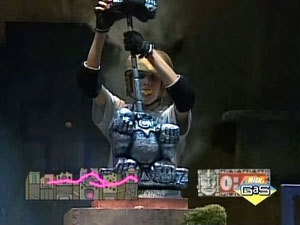
- The Temple Run — the concluding timed run through the temple to recover the featured historical artifact and exit before the gates closed.
Key people and production
The show was hosted on camera by Kirk Fogg while the large carved Olmec head was voiced by Dee Bradley Baker. It was produced by Stone Stanley Productions in association with Nickelodeon and recorded at Nickelodeon Studios at Universal in Orlando, Florida. The set, props and costuming aimed for a fictionalized Central American temple atmosphere, with a cast of costumed temple guards who pursued contestants during the final run.
History and recognition
After its debut in September 1993 the series ran for multiple seasons through 1995. It earned industry notice, including a CableACE award for Best Game Show Special or Series and nominations for art direction. The show became emblematic of Nickelodeon’s early-1990s slate of children’s programming and later appeared in nostalgia polls — for example, a 2007 survey by the Springfield State Journal-Register ranked it among viewers’ favorite "old school" Nickelodeon shows.
Legacy and cultural impact
Though designed as family entertainment, the series left a lasting imprint: its cinematic set pieces, the combination of physical play and curricular trivia, and the memorable Olmec character made it a frequent reference point in pop culture and a subject of fan conventions, online retrospectives and licensed merchandise. It also influenced later children’s game shows that blended obstacle courses with knowledge-based rounds.
Notable distinctions
Legends stood out for mixing theatrical storytelling with competitive play. The show emphasized teamwork across genders, used a single iconic prize-per-episode format (a themed artifact tied to the episode’s legend), and relied on a clearly staged but immersive temple environment. Safety and supervision were central to production, as the format involved timed chases and physical obstacles for child contestants. The series remains well known among 1990s television viewers and collectors of children’s programming history.
For further reading and archival materials, search broadcast archives and contemporary press coverage linked from official network pages or authorized retrospectives. Episodes and clips are frequently cited in discussions about the era’s children’s game shows and Nickelodeon programming.
Related articles
Author
AlegsaOnline.com Legends of the Hidden Temple — 1990s Nickelodeon action-adventure game show Leandro Alegsa
URL: https://en.alegsaonline.com/art/56993