
League of Legends
League of Legends is a free-to-play multiplayer online battle arena video game by Riot Games, known for its champion-based gameplay, strategic team objectives, and large global esports scene.
Overview
League of Legends is a multiplayer online battle arena (MOBA) video game developed and published by Riot Games. First released in 2009, it became widely popular for its accessible match structure, large champion roster, and continuous updates. The client runs on Microsoft Windows and macOS platforms (Windows, macOS), and the base game is free to download and play.
Image gallery
4 Images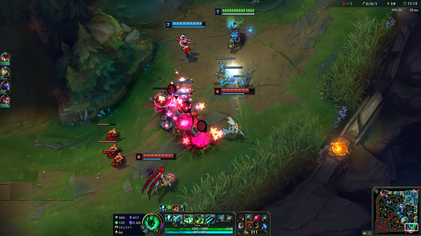


Gameplay and structure
Matches typically take place on a symmetrical map called Summoner's Rift where two teams, usually five players each, compete to destroy the opposing team's primary structure. Players select from a roster of playable characters known as champions, each with unique abilities and suggested roles. Common roles include top laner, jungler, mid laner, attack damage carry (ADC), and support. Success depends on a mix of individual mechanical skill, champion selection, team coordination, map awareness, and objective control.
Components and mechanics
Core mechanics include earning gold and experience by killing minions, enemy champions, and neutral monsters; purchasing items to enhance a champion's power; and taking objectives such as turrets, dragons, Baron Nashor, and inhibitors. Matches generally last from under twenty minutes to over an hour, depending on team composition and strategy. The game provides multiple modes and rotating playlists in addition to its primary competitive map (game modes).
Access model and monetization
League of Legends operates under a free-to-play, freemium model. The game is playable without purchase, while revenue comes from optional microtransactions for cosmetic items (skins, ward skins, emotes) and certain convenience features. Champions may be obtained through gameplay currency or real-money purchases, and Riot periodically rotates or discounts content to keep the roster accessible (freemium model).
History, influences and competitive scene
League drew inspiration from earlier custom map MOBAs, most notably Defense of the Ancients (DotA), and evolved through continuous balance patches, new champions, and major client updates. Over the years it established a robust professional ecosystem, with regional leagues and an annual World Championship that attracts global viewership. Riot has expanded the franchise into music, animation, and spin-off titles while maintaining LoL as a central esports fixture.
Notable facts and distinctions
The game's longevity is tied to regular content updates, an active community, and developer support. It is often discussed alongside other prominent titles in the MOBA genre for its influence on modern esports and live-service game design. For official resources, patch notes, and developer posts, see the publisher's pages and community hubs (learn more, Riot news, system requirements, mac support, modes, monetization, origins).
Related articles
Author
AlegsaOnline.com League of Legends Leandro Alegsa
URL: https://en.alegsaonline.com/art/56770