
Defense of the Ancients (DotA) — community-made MOBA mod
Defense of the Ancients (DotA) is a community-created multiplayer online battle arena mod for Warcraft III that popularized a genre and influenced competitive gaming and commercial successors.
Overview
Defense of the Ancients, commonly abbreviated DotA, is a player-created multiplayer online battle arena (MOBA) modification built on the map-making tools of the real-time strategy game Warcraft III and its expansion. It pits two teams against one another on a symmetric battlefield with the shared objective of destroying the opposing team’s central structure while defending their own. Although the map is distributed and played by the community, it was not an official Blizzard product; the original Warcraft III title and its developer are often referenced in discussions of DotA’s origin: Blizzard Entertainment.
Image gallery
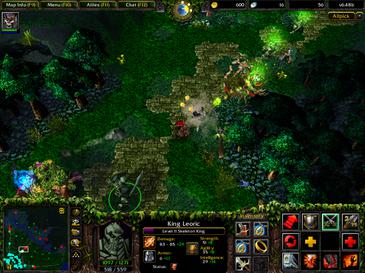
3 Images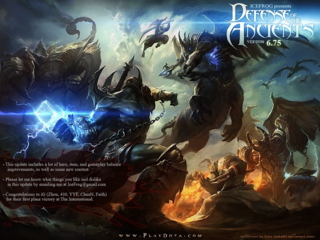

Core characteristics and gameplay
DotA distilled real-time strategy mechanics into a hero-centric, tactical contest. Each player controls a single hero unit with unique abilities that gain power through experience and items. The map typically features three main lanes that connect bases, intermittent neutral areas that spawn non-player "creeps," defensive towers that slow enemy advancement, and a final objective structure commonly called the "Ancient." Success requires a mix of individual skill, coordinated teamwork, lane control and resource management.
- Primary objectives: Level heroes, secure map control, push lanes, destroy enemy towers, and finally demolish the Ancient.
- Progression systems: Experience-based leveling, gold for item purchases, and cooldown-limited abilities.
- Match formats: Most often 5v5, with variants such as 3v3, 2v2, or 1v1 appearing in casual play.
History and development
DotA evolved from earlier custom maps and community experiments inspired by a modding tradition in real-time strategy games. Several community authors and contributors refined the concept over time, producing many map versions that added heroes, items, and balance changes. The work of anonymous and pseudonymous contributors helped shape the rules and mechanics that defined the genre. The popularity of this grassroots project eventually inspired stand-alone commercial efforts and modern sequels by other developers: notably, the company Valve Corporation later produced a dedicated successor titled Dota 2.
Competitive scene and cultural impact
As DotA’s player base grew, it became a fixture at LAN events and online tournaments, influencing the rise of esports. Community-organized competitions, national qualifiers and large conventions included DotA as a featured event, and its success demonstrated the viability of team-based, hero-focused multiplayer as a spectator sport. DotA is widely credited with crystallizing mechanics and competitive formats that defined the MOBA genre, and its conventions continue to inform game design and competitive structures across related titles.
Variants, legacy and notable distinctions
Many games owe part of their design vocabulary to DotA’s emphasis on distinct hero roles, item-driven power spikes, and lane-centric objectives. Variants and inspired titles introduced different pacing, accessibility and monetization models, expanding the audience for the genre. Even though DotA began as an unofficial map within another game’s editor, its lasting influence on game design, community modding, and the professionalization of esports is substantial and widely acknowledged.
Related articles
Author
AlegsaOnline.com Defense of the Ancients (DotA) — community-made MOBA mod Leandro Alegsa
URL: https://en.alegsaonline.com/art/26266
Sources
- gamasutra.com : "Analysis: Defense of the Ancients - An Underground Revolution"