
Armand David — French Lazarist missionary and naturalist
French Catholic priest and naturalist (1826–1900) who collected plants and animals in China; several species bear his name, including the giant panda, Père David’s deer and the dove tree.
Overview
Armand David (born Espelette, 1826, near Bayonne — died 10 November 1900 in Paris) was a French Catholic priest of the Congregation of the Mission and a prolific collector of natural history specimens. Known in French as "Père David," he combined his religious vocation with careful observation and systematic collecting of both plants and animals during extended periods in East Asia.
Image gallery
5 Images
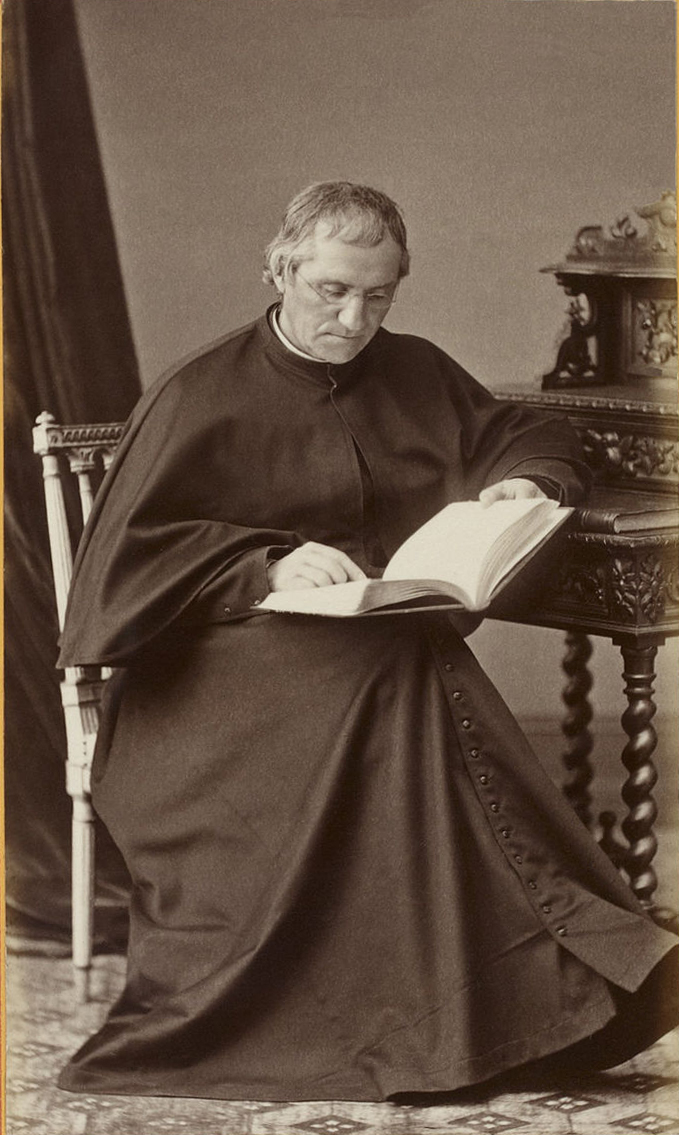


Life and vocation
David entered religious life and served as a missionary; his order is commonly called the Lazarists. Under that vocation he spent much of his working life abroad. In the 1860s and 1870s he traveled and lived for extended periods in China, where he pursued both pastoral duties and scientific interests. He corresponded with European institutions and regularly sent specimens back to museums and herbaria in France.
Scientific work and methods
Although trained as a clergyman, David acted as a field zoologist and botanist. He collected plant specimens, skins, bones and skeletons, and preserved botanical samples for study. These collections were forwarded to specialists in Europe who described many taxa on the basis of material he supplied. His field notes and specimens helped broaden Western knowledge of East Asian flora and fauna at a time when large regions remained little known to European science.
Notable discoveries and taxa
David either discovered or brought to Western attention numerous species. Among the best known are:
- Giant panda — the distinctive black-and-white bear from mountainous regions of China.
- Père David's deer (Elaphurus davidianus) — a species that disappeared from the wild in the 19th century and survived in captive herds maintained outside China.
- Dove tree (Davidia involucrata) — an ornamental tree admired for its striking bracts and often cultivated in gardens.
Many other plant and animal species were later given scientific names that honor David (for example, specific epithets such as davidii, davidiana or davidianus), reflecting the breadth of material he collected.
Legacy and importance
David's legacy is twofold: as a missionary who lived and worked in China, and as a bridge between field observations in East Asia and taxonomic study in Europe. Specimens he supplied remain in museum collections and continue to be useful to researchers. Gardens, museums and scientific literature commemorate his contributions by using his name for several taxa. His life illustrates the historical role that missionary naturalists played in advancing biological knowledge at the time.
For further reading, contemporary and later accounts, and institutional catalogues that hold his collections are often cited in histories of natural history; curated records may be found in museum archives and botanical garden catalogues in France and elsewhere. Espelette, Bayonne, Paris and the records of the naturalist community preserve traces of his correspondence and specimens. Additional archival and biographical references appear under institutional entries for the Lazarists, mission reports from China, and taxonomic literature that names species after him (1826, 1900). 10 November remains the recorded date of his death in many older sources.
Related articles
Author
AlegsaOnline.com Armand David — French Lazarist missionary and naturalist Leandro Alegsa
URL: https://en.alegsaonline.com/art/5663