
Armando Cossutta (1926–2015)
Italian communist politician known for a long post‑war career, leadership of the Party of Italian Communists, service in national and European legislatures, and his pro‑Soviet orientation and controversies.
Overview
Armando Cossutta (2 September 1926 – 14 December 2015) was an Italian political figure whose career stretched from the immediate post‑World War II era to the early 21st century. He became a prominent leader within Italy's communist movement, identified with its more pro‑Soviet tendency, and later served in both the national parliament and the European Parliament. His name was also linked to a debated intelligence allegation in 1999; he was never convicted.
Image gallery
1 Image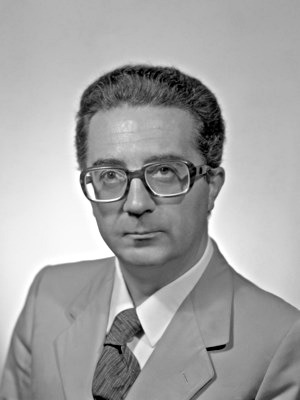
Political career and positions
Cossutta rose to prominence after World War II, when Italy's left reorganised and the Italian Communist Party (PCI) became a major political force. Within that broader movement, he represented a faction that defended traditional ties to the Soviet Union and political positions rooted in orthodox communist doctrine, often in contrast with colleagues who advocated reform and social‑democratic convergence. His stance shaped intra‑party debates over strategy, alliances and the response to international events.
Offices and public roles
Over several decades Cossutta held elective office and party responsibilities. He served multiple terms as a legislator in the Italian national assembly, commonly described as a Member of Parliament, and he was elected to the European Parliament, sitting during the 5th term (1999–2004) as a Member of the European Parliament. In the late 1990s he became president of the Party of Italian Communists (Partito dei Comunisti Italiani), a formation that gathered members who maintained a classical communist identity after splits and transformations on the Italian left.
Controversies and notable facts
In 1999 Cossutta's name appeared on a published list alleging contacts with Soviet intelligence; press reports referred to the possibility of ties to the KGB. The allegation was never resolved in criminal proceedings and Cossutta denied wrongdoing. Observers note the controversy both for its political impact in Italy and for how it illustrated tensions about Cold War legacies affecting post‑Cold War politics.
Legacy and assessment
Cossutta is remembered as a steadfast and sometimes polarising representative of Italy's communist tradition. Supporters cited his consistency and organizational skill in defending workers' rights and party identity; critics argued his positions resisted necessary adaptation. His long public life made him a recurring presence in debates over Italy's left‑wing evolution through the 20th and early 21st centuries.
Death
Armando Cossutta died on 14 December 2015 in Rome, Italy, following an illness attributed in reports to bronchopneumonia. He was 89 years old at the time of his death.
- Prominent periods: post‑World War II consolidation, the Cold War, the post‑1991 reorganisation of the Italian left.
- Key themes: fidelity to traditional communist doctrine, intra‑left disputes, transition from national to European political roles.
- Contested episode: appearance on a 1999 list of alleged foreign intelligence contacts; no criminal conviction followed.
For further context on post‑war Italian communism and debates about party transformation, see contemporary histories and archival collections. Additional background on the European Parliament term and parliamentary activity during his service is available through institutional records and parliamentary archives.
Related links: post‑war context, Soviet Union relations, national legislature, European Parliament term, intelligence allegation, Rome, Italy, cause of death.
Related articles
Author
AlegsaOnline.com Armando Cossutta (1926–2015) Leandro Alegsa
URL: https://en.alegsaonline.com/art/5669
Sources
- news.bbc.co.uk : "Italy 'KGB spies' named"
- repubblica.it : "Morto Cossutta, il più filosovietico dei comunisti italiani"