
Lavizzara — mountain municipality in Vallemaggia, Ticino, Switzerland
Lavizzara is an Italian‑speaking mountain municipality in the Vallemaggia valley of Ticino, formed in 2004 by merging six mountain villages; known for alpine scenery, traditional villages and outdoor activities.
Lavizzara is a rural municipality in the district of Vallemaggia, within the canton Ticino (Ticino is the Italian‑speaking canton of Switzerland). It occupies a high valley and several side valleys in the southern Swiss Alps. The area is characterised by steep slopes, mixed forests, alpine meadows and small clustered villages built along narrow mountain roads.
Image gallery
8 Images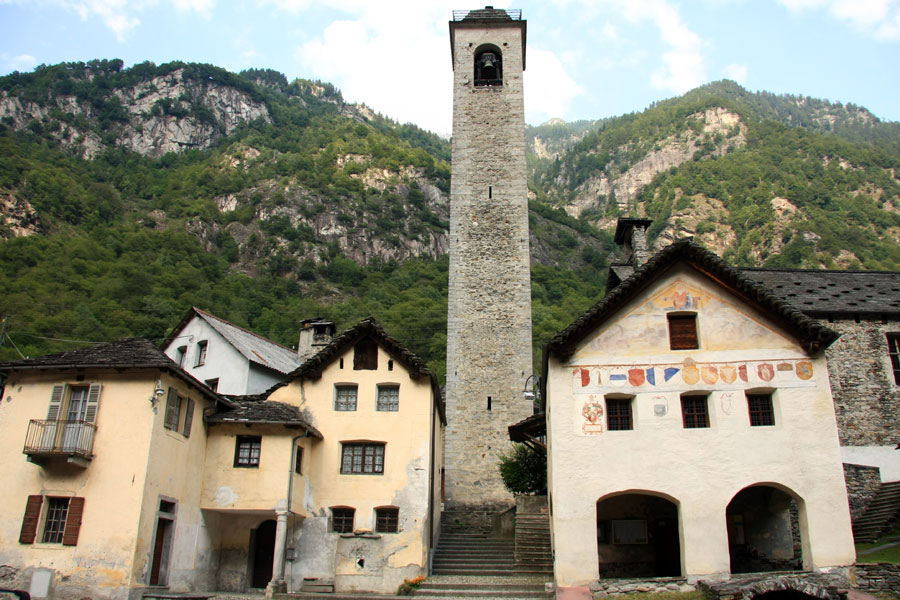


Villages and structure
Lavizzara was created as a single municipal administration in 2004 by the voluntary union of six formerly independent communities: Broglio, Brontallo, Fusio, Menzonio, Peccia and Prato‑Sornico. Each locality retains its own church, hamlet layout and local traditions. Together they form a dispersed settlement pattern typical of high mountain valleys, with summer grazing areas and spring‑to‑autumn hiking paths linking the hamlets.
Geography and natural features
The municipality lies along the upper reaches of the Maggia watershed and includes several tributary streams and small alpine lakes. Elevations vary substantially, creating distinct ecological zones from chestnut and mixed broadleaf woods at lower levels to alpine pastures and rock at higher elevations. The landscape is valued for hiking, wildlife observation and the visual contrast of stone houses against mountain backdrops.
History and development
The component villages have medieval roots and developed through pastoralism, forestry and small‑scale agriculture. Over the 19th and 20th centuries many residents emigrated seasonally or permanently to seek work elsewhere; in recent decades the municipal merger reflected a broader Swiss trend toward administrative consolidation to improve public services and sustain small mountain communities.
Economy, culture and activities
Local economic life blends traditional agriculture, forestry and crafts with tourism and small enterprises. Visitors come for hiking, mountain biking, winter walking and to experience rural architecture and local cuisine. Cultural events often revolve around church festivals, local artisans and seasonal markets.
Notable distinctions
- Italian language and Ticinese culture are prominent in daily life.
- Conservation of traditional stone and wood construction is visible in village centres.
- Its formation by merger is an example of modern municipal restructuring in Swiss mountain regions.
Practical information — access is by valley roads from lower Vallemaggia, and services are concentrated in the larger hamlets while smaller settlements remain quiet and largely residential. For municipal details and visitor information consult the official municipal pages and regional tourism resources.
Related articles
Author
AlegsaOnline.com Lavizzara — mountain municipality in Vallemaggia, Ticino, Switzerland Leandro Alegsa
URL: https://en.alegsaonline.com/art/56393
Sources
- bfs.admin.ch : "Arealstatistik Standard - Gemeinden nach 4 Hauptbereichen"
- bfs.admin.ch : "Ständige Wohnbevölkerung nach Staatsangehörigkeitskategorie Geschlecht und Gemeinde; Provisorische Jahresergebnisse; 2018"
- bfs.admin.ch : Amtliches Gemeindeverzeichnis der Schweiz