
Lake Biel (Lake Bienne): Swiss lake in the Canton of Bern
Lake Biel (Bienne) is a 15 km Swiss lake in Canton Bern, notable for viticulture on its sun-facing slopes, redirected rivers, and recreational and ecological importance in the Jura region.
Overview
Lake Biel, also known by its French name Lake Bienne, lies in the northwestern part of Switzerland and is the largest lake entirely within the Canton of Bern. It forms one of the three principal lakes of the Swiss Jura region together with Lake Morat and Lake Neuchâtel. The lake basin is an important regional landmark, combining agricultural use, especially vineyards, with towns, wetlands and recreational facilities.
Image gallery
8 Images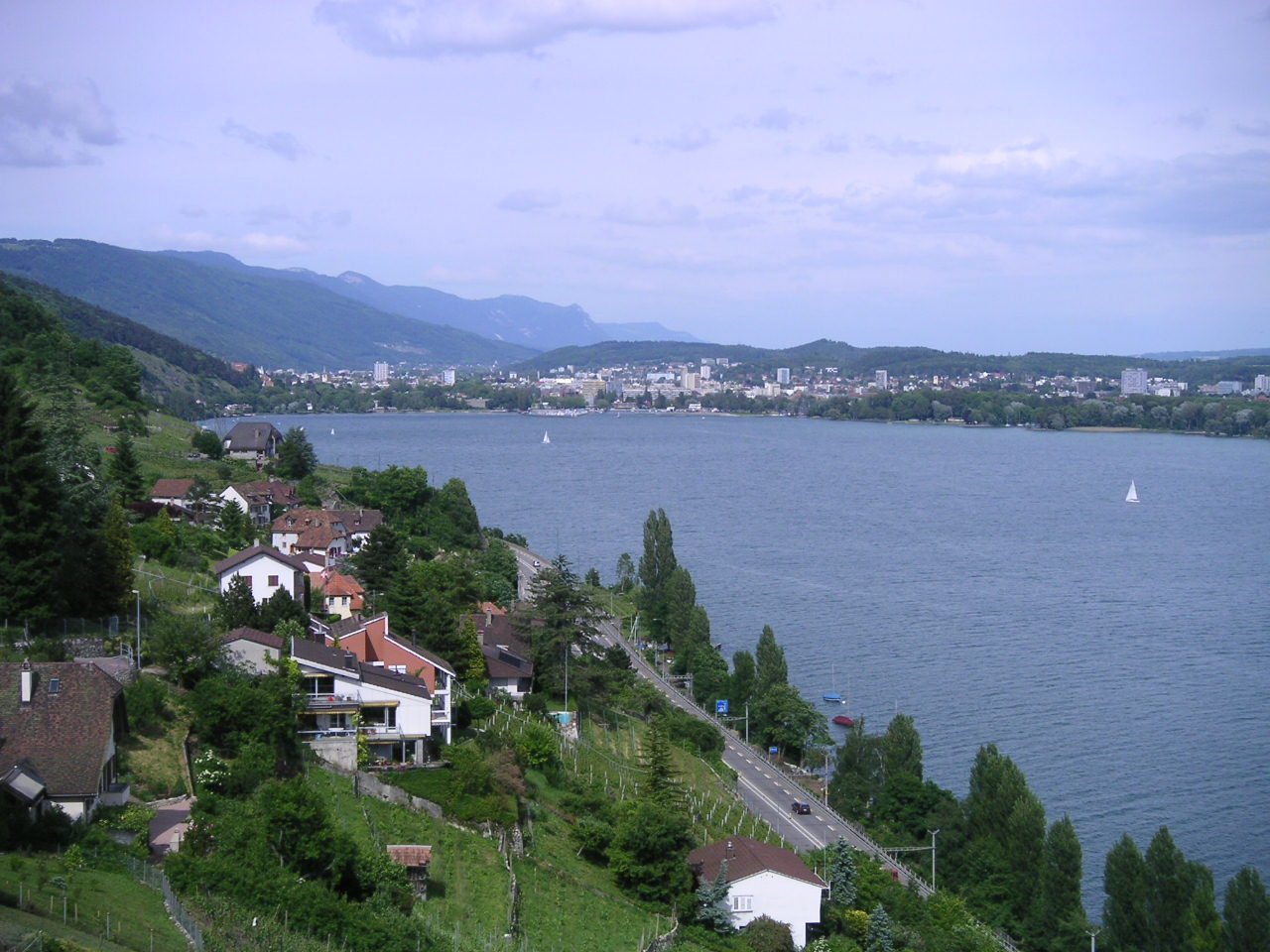


Physical characteristics
Lake Biel extends roughly 15 kilometres in length and reaches about 4.1 kilometres at its widest point, covering approximately 40 square kilometres. The surface lies near 429 metres above sea level and the maximum bathymetric depth is close to 74 metres; these figures are summarized by local surveys and hydrological descriptions (depth data). The lake has a gently sloping shoreline in some areas and steeper, vineyard-covered hills on the sunnier shores.
Hydrology and engineering
Two principal rivers feed the lake. The Suze (or Zihl) enters the lake near the town of Biel/Bienne and is the lake's historic natural inflow. The much larger Aare, one of Switzerland's major rivers, was deliberately diverted into Lake Biel in the late 19th century as part of national water-management and flood-control works; these changes reshaped the local hydrology and navigation patterns (rivers). Human interventions around the lake have continued to balance flood protection, shipping, and habitat conservation.
Viticulture and soils
The hills on the lake's southeastern and southern shores support a long-standing wine-growing tradition. Vineyards benefit from the sheltered aspect and the moderating effect of the water body, which helps create a milder microclimate for ripening grapes (climate effects). Soils in the region are often calcareous and well drained, contributing to distinctive profiles for local wines (soil types). Around 220 hectares are under vine, cultivated by many small winemakers; common varieties include Chasselas, Pinot blanc, Pinot gris, Pinot noir and Chardonnay, and there has been a gradual increase in red wine production (vineyards).
History and cultural significance
Evidence of viticulture around Lake Biel goes back to Roman times: archaeological finds such as amphorae and other storage containers indicate wine production and trade in antiquity (ancient finds). The landscape has been shaped by centuries of farming, and in the 20th century local regulations protected vineyard terraces from conversion, preserving much of the historic rural character. The bilingual towns around the lake reflect the area's position on the cultural border between German-speaking and French-speaking Switzerland (Canton of Bern context).
Uses, recreation and conservation
Lake Biel is a popular destination for boating, cycling, birdwatching and wine tourism. Shorelines include marinas, promenades and protected wetland areas that attract migratory birds and support biodiversity. Local authorities and conservation groups work to reconcile agriculture, tourism and habitat protection, maintaining water quality and the scenic vineyard terraces that are central to the lake's identity.
Notable facts
- The lake forms part of a broader tri-lake system in the Jura with shared environmental and navigational concerns (Morat, Neuchâtel).
- Redirecting the Aare into Lake Biel in the 19th century was a major engineering project that reduced floods downstream and altered local commerce (Aare diversion).
- Vineyards around the lake are protected by planning measures and remain largely family-operated; direct wine sales from cellars continue to be a regional custom (wine region).
Further information about hydrology, history and tourism can be found through regional resources and visitor guides linked by local institutions (wine villages, bathymetry, climate studies).
Questions and answers
Q: What is the name of the biggest lake in the Canton of Bern in Switzerland?
A: The biggest lake in the Canton of Bern in Switzerland is called Lake Biel (also known as Lake Bienne).
Q: How big is Lake Biel?
A: Lake Biel has a length of 15 kilometres (9.3 mi) and a width of 4.1 kilometres (2.5 mi), with a surface area of about 40 square kilometres (15 sq mi). Its maximum depth is 74 metres (243 ft) and it sits 429 metres (1,407 ft) above sea level.
Q: What are the two rivers that run into Lake Biel?
A: The two rivers that run into Lake Biel are the Suze, which is its only river, and the Aare, one of Switzerland’s longest rivers. The Aare was redirected into the lake in 1878.
Q: What kind of wine is produced around Lake Biel?
A: Around Lake Biel there are 220 hectares (540 acres) of vineyards producing traditionally white wines such as Chasselas, Pinot gris, Pinot noir, Pinot blanc and Chardonnay but increasingly red wines too. Most vineyards are family farms and their produce often sold directly from their wine cellars.
Q: When were vineyards first found around Lake Biel?
A: Vineyards have been found around Lake Biel since Roman times - archeologists even discovered amphora for storing wine! These vineyards still exist today thanks to a ban released in 1933 which forbid building on them.
Q: Is it popular with tourists?
A: Yes! It's a beautiful lake with many recreational activities to do so it's very popular with tourists looking for an enjoyable day out or weekend away.
Related articles
Author
AlegsaOnline.com Lake Biel (Lake Bienne): Swiss lake in the Canton of Bern Leandro Alegsa
URL: https://en.alegsaonline.com/art/55465
Sources
- hydrodaten.admin.ch : hydrodaten.admin.ch/en/seen-und-fluesse/stations/2208
- biel-seeland.ch : biel-seeland.ch/