
Kuni-kyō (Kuni no miyako): short-lived Nara-period capital
Kuni-kyō was an Imperial capital of Japan from 740 to 744, located in today’s Kizugawa, Kyoto Prefecture. Its remains reveal planned layout and Nara-period politics and archaeology.
Overview
Kuni-kyō, also called Kuni no miyako, was established as an Imperial capital of Japan for a brief period in the mid-8th century (740–744). It lay within the area of present-day Kizugawa in Kyoto Prefecture. The city is one of several short-lived administrative centers erected during the Nara period and is remembered mainly through archaeological remains and historical records rather than continuous urban occupation.
Image gallery
8 Images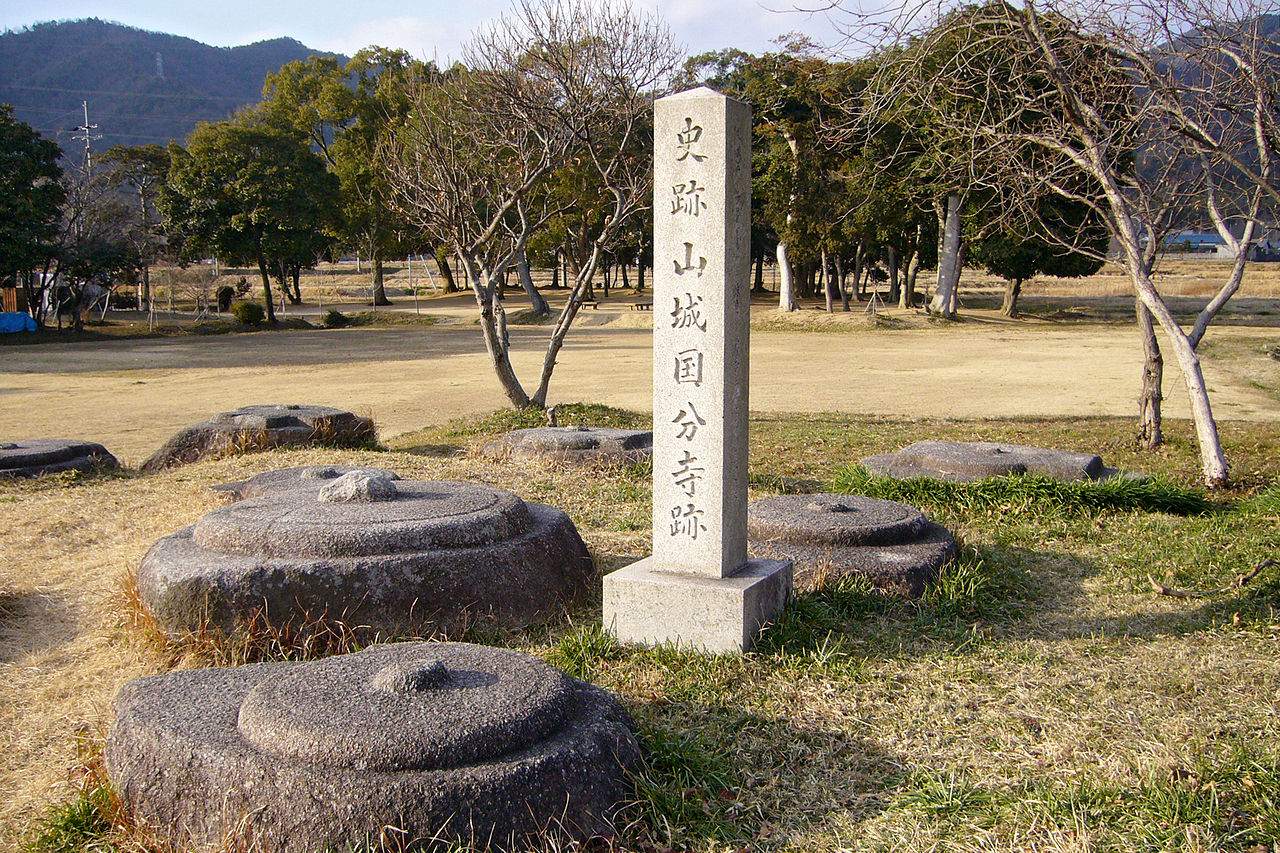


City plan and archaeological remains
The planned grid layout of Kuni-kyō reflects the continental model used by other early Japanese capitals, with regular streets and a central palace precinct. Excavations have uncovered foundation stones, roof tiles, ceramic fragments and traces of building platforms that mark the outlines of large official structures. These finds help reconstruct the palace complex and street pattern, and show construction techniques typical of the era.
Historical context
Kuni-kyō arose during the Nara period, when the court occasionally relocated for political, strategic or ritual reasons. Contemporary chronicles record a series of moves that resulted from factional conflict, uprisings and concerns about auspicious locations. Although the capital remained there only a few years, its creation reflects the fluid nature of court politics and administration in the 8th century.
Significance and distinctions
Because its tenure was so short, Kuni-kyō is often noted as one of the more ephemeral Japanese capitals. It is important to historians and archaeologists for what its remains reveal about palace architecture, urban planning, and material culture of the period. The site illustrates how early capitals borrowed Chinese administrative models while adapting to local needs.
Visiting the site and further reading
Today the Kuni-kyō area has been the subject of archaeological study and local preservation efforts; portions are accessible to visitors and scholars. For a concise background see resources on early Japanese capitals: Imperial capital, overviews of Japanese history: Japan, and regional information: Kizugawa, Kyoto Prefecture. Excavation reports and museum displays provide the best picture of the site’s layout and artifacts.
Related articles
Author
AlegsaOnline.com Kuni-kyō (Kuni no miyako): short-lived Nara-period capital Leandro Alegsa
URL: https://en.alegsaonline.com/art/54626
Sources
- kyoto-be.ne.jp : 恭仁宮跡の発掘調査 (Excavations on the Kuni Palace site)
- books.google.com : Annales des empereurs du Japon, p. 71.
- commons.wikimedia.org : Kuni-kyō
- tools.wmflabs.org : 34°45′56″N 135°51′46″E / 34.76556°N 135.86278°E / 34.76556; 135.86278