
Kupang — Capital of East Nusa Tenggara, Indonesia
Kupang is the largest city and main port on Timor, serving as the administrative, transport and commercial hub of East Nusa Tenggara province in southeastern Indonesia.
Overview
Kupang is the provincial capital of East Nusa Tenggara and the largest city on the island of Timor. Located on the western side of the island (commonly called West Timor), it functions as the region's principal port, administrative centre and service hub for surrounding islands and inland communities. Population estimates have varied; in the early 2010s the urban area was commonly cited as having roughly 450,000 inhabitants, while the surrounding regency (Kabupaten Kupang) is a separate administrative entity.
Image gallery
10 Images




Geography and climate
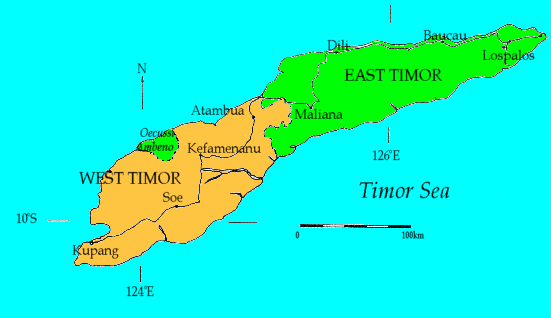
Kupang lies on a sheltered bay on Timor’s southwestern coast, with a mix of coastal lowlands and nearby hills. Its position gives it a natural advantage for harbour activities and maritime approaches. The climate is tropical savanna with a distinct wet and dry season; temperatures are generally warm year-round, and seasonal rainfall patterns influence agriculture and transport in the wider region.
History
The area around Kupang has long been part of regional trading networks in eastern Indonesia. European contact began from the early modern period, and the town later grew under colonial administrations and missionary influence. Over time Kupang developed as a local administrative centre and port, serving both inter-island trade and links with the Indonesian archipelago. In the twentieth century it became the principal urban centre for what is now East Nusa Tenggara province.
Economy
The city’s economy is diverse for a regional capital. Port activities and related logistics underpin trade in consumer goods and commodities for Timor and nearby islands. Light industry such as cement production supports construction and local demand, while services, public administration and retail employment are important employers. The surrounding rural districts contribute agricultural produce and fisheries to city markets.
Transport and infrastructure
Kupang is a transport hub for the province. El Tari International Airport (IATA: KOE) provides scheduled flights connecting the city with other Indonesian centres, and the port handles ferries and coastal shipping to many islands in East Nusa Tenggara. Road connections link Kupang with inland towns and regional highways. Because the province includes many remote islands, Kupang also functions as a staging point for logistics, health services and emergency response.
Society and culture
The city is culturally diverse, influenced by indigenous Timorese languages and traditions, Malay and wider Indonesian culture, and the presence of Christian and Muslim communities. Markets, local festivals, traditional crafts and culinary traditions reflect this mix. Indonesian is the common lingua franca in government, education and inter-island communication, while local languages such as Dawan and Tetun are widely spoken in everyday life.
Administration and role
As the provincial capital, Kupang hosts regional government institutions, public services, higher education campuses and major health facilities that serve the province. Its administrative role amplifies its importance beyond population size: it is the main point of contact for development programs, provincial governance and coordination of services to outlying islands.
Tourism and natural environment
Though less visited than some parts of eastern Indonesia, Kupang is a gateway to marine tourism, diving sites and island excursions across East Nusa Tenggara. The surrounding waters and islands offer coral reefs, fishing communities and cultural tourism opportunities. Visitors typically use Kupang as a base to reach nearby islands and attractions across the province.
Further information
- East Nusa Tenggara provincial administration
- Kupang city government and municipal services
- Indonesia country overview
- Geographic context of the island of Timor
- Economic profile of Kupang and the region
- Information on local industry and cement production
- Industry and manufacturing in East Nusa Tenggara
- Export activity through Kupang port
- Import and shipping services based in Kupang
Questions and answers
Q: What is Kupang?
A: Kupang is the provincial capital of East Nusa Tenggara province in southeast Indonesia.
Q: Where is Kupang located?
A: Kupang is located in West Timor on the island of Timor.
Q: What is the population of Kupang?
A: The population of Kupang was estimated to be 450,000 in 2012.
Q: What is the economy of Kupang based on?
A: Kupang's economy is mainly based on its cement industry and the export and import of goods from its busy port.
Q: What is the name of Kupang's airport and how far is it from the city center?
A: Kupang's airport is called Kupang El Tari, and it is approximately 8 km from the city center to the east.
Q: What is the importance of Kupang as the capital of East Nusa Tenggara?
A: As the capital of East Nusa Tenggara, Kupang has extensive transport and administrative links with isolated islands.
Q: What is the population of the regency of Kupang?
A: The regency of Kupang had a population estimated in 2009 at 394,173, but it is separate from the city of Kupang.
Related articles
Author
AlegsaOnline.com Kupang — Capital of East Nusa Tenggara, Indonesia Leandro Alegsa
URL: https://en.alegsaonline.com/art/54644
Sources
- ntt.bps.go.id : ntt.bps.go.id/index.php?option=com_content&view=article&id=46&Itemid=8
- library.puc.edu : library.puc.edu/pitcairn/pitcairn/history.shtml
- sailindonesia.net : sailindonesia.net/
- commons.wikimedia.org : Kupang (city)