
Kurukshetra — historic region and modern city in Haryana, India
Kurukshetra is an ancient kshetra and present-day city in Haryana, India, celebrated as the battlefield of the Mahabharata and the place where the Bhagavad Gita was imparted.
Kurukshetra is both a modern urban center and an ancient sacred region in northern India. The name literally means "the field of the Kurus," and the place is intimately associated with the epic conflict described in the Mahabharata and the spiritual teaching known as the Bhagavad Gita. Today the area attracts pilgrims, scholars and visitors interested in its religious, historical and cultural importance.

Image gallery
10 Images




Geography and boundaries
In classical Sanskrit literature the term kshetra denotes a region rather than a single town; Kurukshetra traditionally referred to a broad area spanning parts of the modern state of Haryana and adjoining districts of Punjab and neighboring territories. Ancient texts such as the Taittiriya Aranyaka sketch its limits in relation to other geographic names: south of Turghna (Sughna), north of Khandava, east of the Maru or desert and west of Parin. The present-day municipal city grew adjacent to the older town known as Thanesar or Sthaneswar, whose historic name means "Place of God." The locality sits within the national boundaries of India and functions as an administrative and pilgrimage hub.
Historical and cultural significance
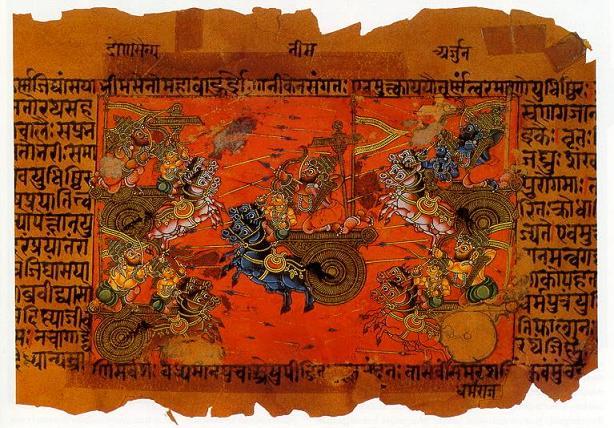
Kurukshetra is best known in Indian cultural memory as the setting for the great battle of the Mahabharata, a foundational epic of South Asian literature. It is in this context that Lord Krishna is said to have delivered the Bhagavad Gita to the warrior Arjuna, offering guidance on duty, righteousness and spiritual practice. Beyond the epic, the region has been a site of continuous religious activity: temples, sacred ponds and ceremonial grounds have long made it a focal point for Hindu rites and festivals, including commemorations tied to the Gita and other scriptural traditions.
Places of interest and contemporary life
Modern Kurukshetra combines pilgrimage facilities with educational and civic institutions. Visitors often explore sites traditionally linked with the Mahabharata narrative and with ritual bathing, study and commemoration. Notable features of the landscape include ancient sacred tanks and places identified in oral and written traditions as the spots where key events occurred. The town of Thanesar, adjacent to the newer municipal layout, preserves historic temples and archaeological remains that reflect layers of occupation and devotion through successive periods.
Importance and distinctive features
- Religious heritage: Kurukshetra is widely revered as a dharmakshetra, a place associated with moral and spiritual teaching.
- Literary prominence: The region figures prominently in pan-Indian epics and Puranic genealogies linked to the Kuru dynasty.
- Cultural continuity: Pilgrimages, festivals and scholarly interest have preserved its status as a living sacred landscape.
Because Kurukshetra functions at the intersection of myth, scripture and history, accounts about its precise historical boundaries, archaeological details and the identification of specific battlefield locations vary among traditions and scholars. Readers wishing to explore administrative information, pilgrimage guides or scholarly studies can consult local city resources and academic treatments that distinguish between the ancient kshetra and the contemporary municipal entity. For an overview of the city's administration see the local city profile, while broader regional information is available on pages about Maru and related geographical names, and on national heritage portals of India.
Kurukshetra remains a significant destination for those interested in Indian religious history, epic literature and the ongoing cultural practices that sustain its identity as a "holy place."
Questions and answers
Q: What is Kurukshetra?
A: Kurukshetra is a city in the state of Haryana, India. It is also known as Dharmakshetra ("Holy Place") and the "Land of Bhagwad Gita".
Q: Who was King Kuru?
A: King Kuru was the ancestor of both the Kauravas and Pandavas according to Hindu mythology.
Q: What happened in Mahabharata war?
A: The Mahabharata war was fought at the location of present-day Kurukshetra. Additionally, Lord Krishna explained the Bhagavad Gita to Arjuna during this war.
Q: What was Thanesar before 1947?
A: Before 1947, Thanesar was the name of both the tehsil headquarters and town located near modern-day Kurukshetra city.
Q: Where does Thanesar derive its name from?
A: Thanesar derives its name from the word "Sthaneshwar", which means "Place of God".
Q: Is Kurukshetra a city or region according to ancient Hindu texts?
A: According to most ancient Hindu texts, Kurukshetra is not a city but rather a region ("kshetra" meaning "region" in Sanskrit).
Q: What are some geographical boundaries for Kurukshetra?
A: Geographically speaking,Kurukhesta lies to central and western parts of Haryana and southern Punjab. Specifically it lies south of Turghna (Srughna/Sugh in Sirhind, Punjab), north of Khandava (Delhi and Mewat region), east of Maru (desert) and west of Parin.
Related articles
Author
AlegsaOnline.com Kurukshetra — historic region and modern city in Haryana, India Leandro Alegsa
URL: https://en.alegsaonline.com/art/54688
Sources
- kurukshetra.nic.in : "History of Kurukhsetra"
- omilosmeleton.gr : Agarwal, Vishal: Is There Vedic Evidence for the Indo-Aryan Immigration to India?
- kurukshetra.gov.in : "Srikrishna Museum"
- kurukshetra.gov.in : "Culture & Heritage, District Kurukshetra, Haryana"