
Koppa (Greek letter)
Koppa (Ϙ, ϙ) is an archaic Greek letter once representing a /k/ sound; it fell out of regular use by the classical alphabet but survives as the numeral for 90 and influenced Latin Q and Cyrillic Ҁ.
Overview
Koppa, written Ϙ (uppercase) and ϙ (lowercase) in modern transcriptions, is an archaic letter of the Greek alphabet. In early alphabets it represented a velar stop similar to the sound of kappa (Κ). Koppa no longer functions as a consonant sign in contemporary Greek orthography, but it remains part of the historical record and of the Greek numeral system as the symbol for 90.
Image gallery
3 Images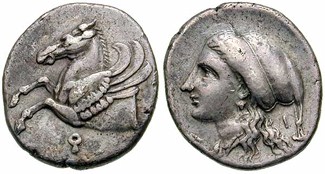

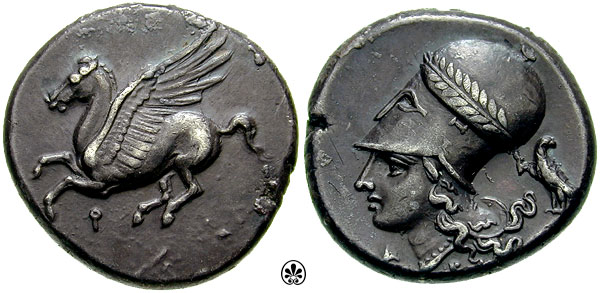
Form and phonetic role
In its earliest epigraphic appearances Koppa often had a rounded form with a short bar or tail beneath a circle. Over time regional handwriting and carving practices produced sharper, more angular variants; by the classical era a distinct shaped glyph was used when Koppa appeared as a numeral rather than as an alphabetic letter. Functionally, Koppa represented a /k/ sound in certain phonetic environments — especially before back vowels in some local dialects — while kappa took over general representation of /k/ sounds as the alphabet standardized.
Historical development
The letter traces its ancestry to a Semitic precursor, like other early Greek consonants, and existed in many of the local or "epichoric" alphabets used across the Greek-speaking world in the first millennium BCE. As the 7th–5th centuries BCE saw an increasing move toward alphabetic standardization, the need for two separate letters for similar velar sounds diminished. By about the 5th century BCE Koppa had been dropped from regular writing in most areas and kappa became the routine letter for the /k/ phoneme.
Survival as a numeral and modern use
Although Koppa ceased to be used as an alphabetic character, it was retained in the Greek system of alphabetic numerals as the symbol for 90. In that numerical role it developed a conventional numeric shape distinct from its early alphabetic glyph. Today Koppa is encountered primarily in studies of ancient inscriptions, in scholarly discussions of alphabet history, and as the numeric sign for 90 in contexts that use Greek numerals. Its continued numeric presence is an example of how obsolete letters can persist as numerals long after their phonetic function disappears.
Relationships and legacy
Koppa occupies a historical position in the sequence of early Greek letters between Pi and Rho, mirroring the placement of the letter Q between P and R in the Latin alphabet. The Latin letter Q and certain early Cyrillic signs such as Ҁ are derived from the same ancestral glyph family and so can be seen as descendants or cousins of Koppa. For further context about the writing system that incorporated Koppa, see the Greek alphabet, and for its place among other letters, compare Pi and Greek numerals.
Notable facts and distinctions
- Alphabetic order: Koppa originally sat after Pi and before Rho in many local alphabets.
- Sound inventory: It duplicated a k-sound role that kappa later subsumed.
- Graphic evolution: Early rounded forms gave way to angular or hooked shapes; a separate numeric glyph developed for the numeral 90.
- Modern appearances: Found chiefly in epigraphy, palaeography, and the numeric notation of classical texts.
Because Koppa links the study of alphabet history, numeral systems, and letter derivation, it is frequently cited in discussions about how alphabets change: some characters disappear as letters but survive in specialised symbolic roles. Readers who wish to explore Greek letters in greater depth can follow the links above to learn about the alphabet in general, the neighbouring letter Pi, the numeric practice of ancient Greece via Greek numerals, and the broader impact on alphabets such as Latin (Q).
Related articles
Author
AlegsaOnline.com Koppa (Greek letter) Leandro Alegsa
URL: https://en.alegsaonline.com/art/54249