
Kong Meng San Phor Kark See Monastery (Bright Hill Monastery)
Prominent Chinese Mahayana Buddhist temple in Bishan, Singapore, founded in the early 20th century. A centre for worship, monastic residence, education, memorial services and community outreach.
Overview
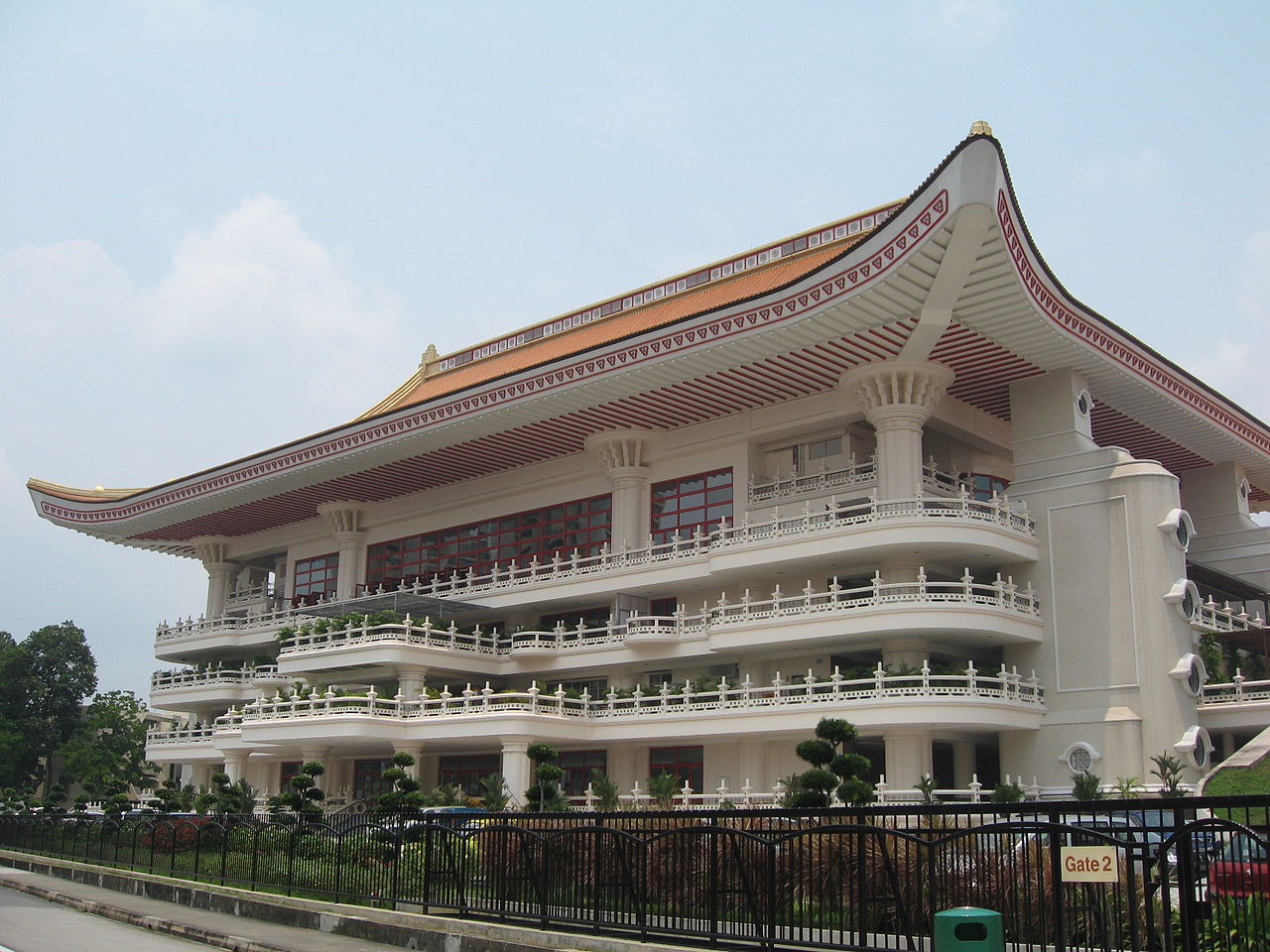
The Kong Meng San Phor Kark See Monastery, commonly known in English as Bright Hill Monastery, is a prominent Chinese Mahayana Buddhist complex located on Bright Hill Road in the Bishan district of Singapore. It is widely regarded as the largest Buddhist temple complex in the country. The monastery is known in Chinese as 光明山普觉禅寺 (simplified) and 光明山普覺禪寺 (traditional), often rendered in pinyin as Guāngmíng Shān Pǔjué Chán Sì.
Image gallery
2 Images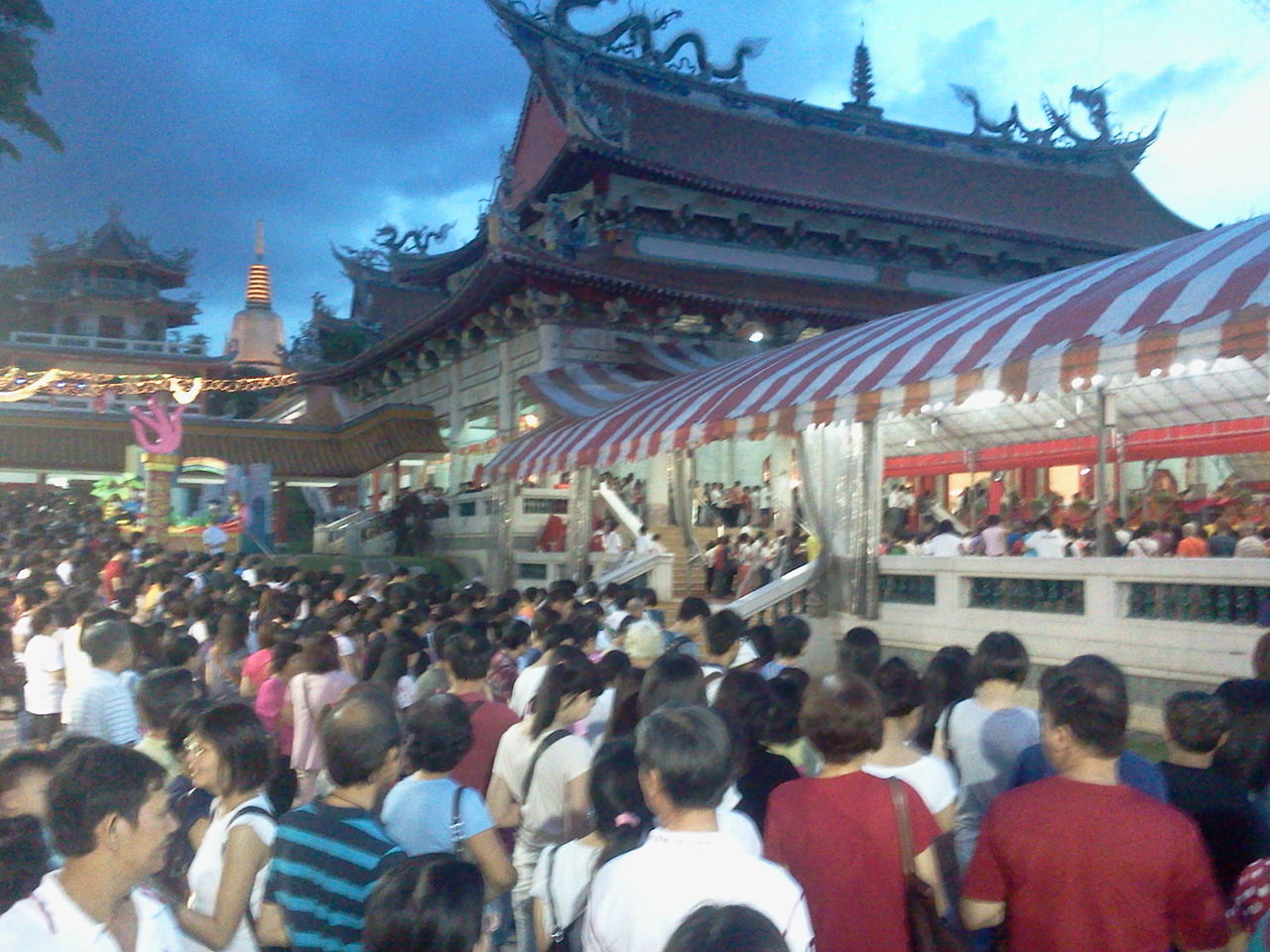
History
The monastery was established in the early 20th century by the Venerable Zhuan Dao to propagate Buddhist teaching and to provide lodging for the monastic community. Over successive decades it expanded from a modest temple into a broad complex through donations and successive building phases. The development reflects the growth of Chinese Buddhism in Singapore and the institution’s evolving role in urban society.
Architecture and grounds
The complex comprises multiple halls, courtyards and administrative and residential buildings set within landscaped grounds. Architectural features combine traditional Chinese temple forms—such as ornamental rooflines, guardian statues and shrine halls—with later modern construction adapted for climate and urban needs. The arrangement of halls, covered walkways and gardens facilitates ritual procession, communal gatherings and quiet contemplation.
Religious practice and education
Kong Meng San Phor Kark See is an active centre for daily worship, chanting and meditation. It offers public Dharma talks, scripture study and meditation courses for laypeople as well as training and routines for resident monastics. The monastery follows practices and rituals associated with Chinese Mahayana Buddhism and makes teachings accessible to an urban, multilingual population.
Community services and events
The monastery plays a public role beyond liturgy: it hosts major observances such as Vesak and other festival days, conducts ordinations and memorial rites, and provides educational and charitable programs. Facilities on site support funerary and memorial needs common in Singapore’s Buddhist communities, and volunteers and staff coordinate outreach and social-service activities.
Visiting information
As a living religious institution, the complex welcomes devotees and visitors; activities commonly include chanting sessions, public lectures and guided events for newcomers. Visitors are asked to observe customary etiquette for temples, including respectful dress and quiet behaviour in worship areas. Local guides, signage and printed materials provide orientation for those unfamiliar with ritual forms.
Significance
As the largest Buddhist complex in Singapore, the monastery has been influential in maintaining ritual practice, monastic training and community cohesion among the local Chinese Buddhist population. It also serves as a cultural landmark illustrating how traditional religious architecture and institutions adapt within a modern city-state.
Further reading and resources
- Official and community publications provide up-to-date information on visiting hours, religious services and educational programmes.
- For names and transliteration consult printed guides or the monastery’s own materials available to the public.
- Scholarly and local history sources describe the role of the monastery in Singapore’s religious and social development.
Questions and answers
Q: Where is the Kong Meng San Phor Kark See Monastery located?
A: The Kong Meng San Phor Kark See Monastery is located at Bright Hill Road in Bishan, Singapore.
Q: Who built the Kong Meng San Phor Kark See Monastery?
A: The Kong Meng San Phor Kark See Monastery was built by Zhuan Dao in the early 20th century.
Q: What was the purpose of building the Kong Meng San Phor Kark See Monastery?
A: The purpose of building the Kong Meng San Phor Kark See Monastery was to propagate Buddhism and to provide lodging for monks.
Q: Is the Kong Meng San Phor Kark See Monastery the only Buddhist temple in Singapore?
A: No, the Kong Meng San Phor Kark See Monastery is not the only Buddhist temple in Singapore, but it is the largest.
Q: What is the Chinese name of the Kong Meng San Phor Kark See Monastery?
A: The Chinese name of the Kong Meng San Phor Kark See Monastery is 光明山普觉禅寺.
Q: When was the Kong Meng San Phor Kark See Monastery built?
A: The Kong Meng San Phor Kark See Monastery was built in the early 20th century.
Q: What is the Pinyin name of the Kong Meng San Phor Kark See Monastery?
A: The Pinyin name of the Kong Meng San Phor Kark See Monastery is Guāngmíng Shān Pǔjué Chán Sì.
Related articles
Author
AlegsaOnline.com Kong Meng San Phor Kark See Monastery (Bright Hill Monastery) Leandro Alegsa
URL: https://en.alegsaonline.com/art/54196
Sources
- plus.google.com : "About Page of Kong Meng San Phor Kark See Monastery on Google+" · web.archive.org
- eresources.nlb.gov.sg : "Kong Meng San Phor Kark See Monastery"
- nanopulser.com.sg : nanopulser.com.sg
- giahoithutrang.blogspot.sg : "NGHỆ THUẬT KIẾN TRÚC PHẬT GIÁO SINGAPORE"
- news.asiaone.com : "Columbarium gives women's ashes to wrong family"
- nileguide.com : "Five Beautiful Buddhist Temples in Singapore"
- jorgecancela.es : "Singapore Life (V). Religions of Singapore"
- photoplusbyritasim.wordpress.com : "Ficus religiosa: The Sacred Fig"
- singapore-guides.blogspot.sg : "Kong Meng San Phor Kark See Monastery"
- news.asiaone.com : "Kong Meng San Phor Kark See lights up for Vesak Day"
- ghettosingapore.com : "A Bright Hill lit by lanterns"
- asiaone.com : "Clearer skies, roads for temple's neighbours"