
Kid Blue (1973 film)
A 1973 American Western directed by James Frawley starring Dennis Hopper and an ensemble cast; a revisionist, character-focused take on outlaws trying to adapt to small-town life.
Kid Blue is a 1973 American Western film directed by James Frawley and distributed by 20th Century Fox. Rather than a straightforward shoot-'em-up, the movie belongs to the era's more skeptical, character-driven Westerns: it blends dark comedy and social observation as it examines identity, respectability, and the uneasy transition from outlawry to ordinary life.
Image gallery
1 Image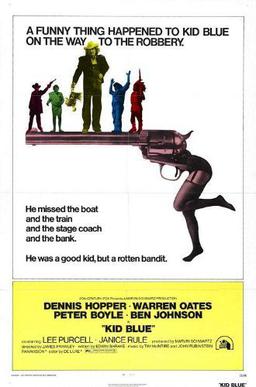
Plot overview
The story follows a small-time outlaw who attempts to give up crime and fit into a frontier community. As he assumes a new role in town and tries to lead a quieter existence, pressures from his past, local politics and personal ambition complicate his effort to stay on the straight path. The tone alternates between dry humor and ironic melancholy, emphasizing character over spectacle.
Cast and characters
- Dennis Hopper — leads the film with an idiosyncratic performance that foregrounds internal conflict and swagger.
- Warren Oates — contributes a gritty, grounded supporting turn.
- Peter Boyle — appears in a character role typical of his range in the 1970s.
- Ben Johnson — brings veteran Western credibility to the ensemble.
- M. Emmet Walsh — offers his trademark dry presence in a small but memorable part.
Production and style
Directed by James Frawley, who later worked in both film and television, Kid Blue favors mood and moral ambiguity over traditional Western heroics. The film uses its setting and period trappings to examine themes of reputation and reinvention. Cinematography and pacing underline awkward social exchanges rather than romanticized action.
Reception and significance
Upon release the picture received mixed reviews: some critics appreciated its offbeat tone and performances, while others found its pacing or lack of conventional action frustrating. Over time it has been noted as an example of the 1970s trend toward revisionist Westerns that questioned the myths of the American frontier and put character dilemmas at the center.
Notable facts
- Distributed by 20th Century Fox, the film sits within the studio output of the early 1970s.
- Its cast unites actors known for both mainstream and countercultural work, reflecting shifting cinematic tastes of the period.
Related articles
Author
AlegsaOnline.com Kid Blue (1973 film) Leandro Alegsa
URL: https://en.alegsaonline.com/art/53317