
Khunjerab Pass
High mountain border pass on the China–Pakistan boundary crossed by the Karakoram Highway; a strategic high-altitude trade route and gateway to Khunjerab National Park.
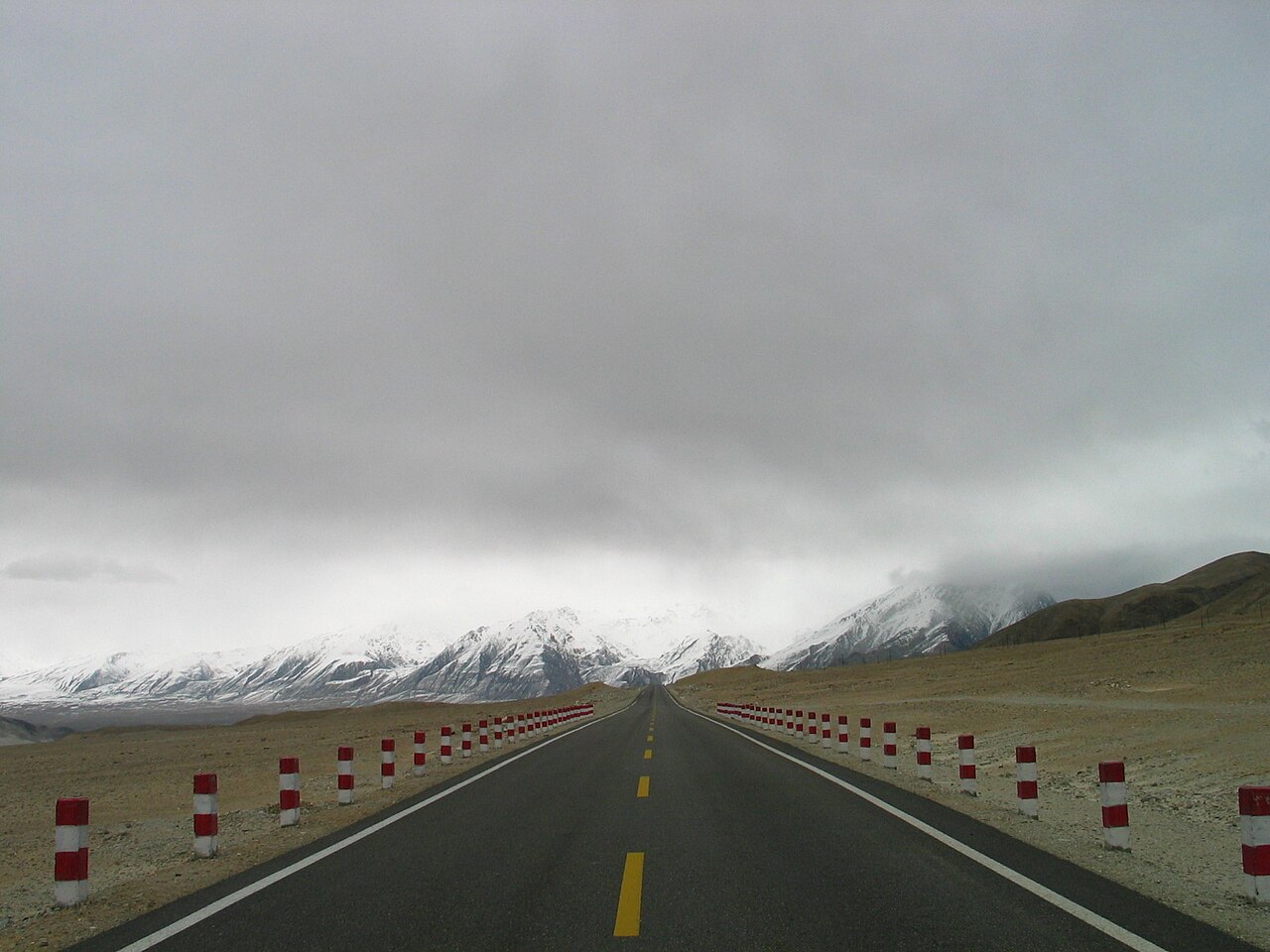
The Khunjerab Pass sits high in the Karakoram Range on the international frontier between Pakistan's Gilgit‑Baltistan region and the Xinjiang region of China. At about 4,693 metres (15,397 feet) above sea level it is one of the highest paved international border crossings in the world. The pass marks the point where the Karakoram Highway — a modern successor to sections of the ancient Silk Road — crosses from Pakistan into China, providing a direct overland link to the Himalayan and Central Asian transport networks.
Image gallery
9 Images




Geography and characteristics
Khunjerab lies in a rugged mountain environment of steep ridges, glaciers and high plateaus. The pass itself is a relatively broad saddle used for road transit; surrounding terrain includes high peaks and permanent snowfields. Climate is alpine and harsh: winters bring heavy snowfall and extremely low temperatures, and the road is frequently closed or restricted in winter months because of snow and avalanches.
History and the Karakoram Highway
While local traders and caravans have crossed routes in this region for centuries, the modern overland connection was established with the construction of the Karakoram Highway during the mid‑20th century. Built by Pakistani and Chinese engineering teams over difficult terrain, the road transformed Khunjerab from a seldom‑used high pass into a year‑round strategic crossing (seasonal closures notwithstanding). The highway is often described as part of the contemporary Silk Road corridor because it links markets and transport routes between South and Central Asia.
Trade, transport and strategic importance
Today Khunjerab functions as a customs and immigration checkpoint and is a principal road conduit for trade, tourism and bilateral traffic between Pakistan and China. It is especially important for connections to the Gilgit region and beyond; many goods and travellers bound for Gilgit and northern Pakistan use this route. The pass is also noted for its strategic value in regional infrastructure planning and as a component of broader transport corridors linking the two countries.
Nature, wildlife and tourism
On the Pakistani side Khunjerab lies adjacent to Khunjerab National Park, a protected area established to conserve high‑altitude fauna. The park is known for species adapted to cold, thin‑air environments, including the Marco Polo sheep and other mountain mammals and birds. The dramatic scenery and the novelty of such a high international border crossing attract tourists and adventure travellers, though visitors should prepare for altitude and weather extremes.
Practical notes
- Elevation: ~4,693 m (15,397 ft).
- Access: via the Karakoram Highway; permits and proper documentation are required for border transit.
- Seasonality: Open mainly during milder months; closures and restrictions occur in winter due to snow.
Khunjerab Pass remains a distinctive intersection of high‑mountain geography, international transport and natural conservation — a place where modern engineering, historical routes and fragile alpine ecosystems meet.
Related articles
Author
AlegsaOnline.com Khunjerab Pass Leandro Alegsa
URL: https://en.alegsaonline.com/art/53271