
Khmer script: the Cambodian writing system
Khmer script is the abugida used for the Khmer language of Cambodia. It preserves an extensive consonant–vowel system, has a long epigraphic history, influenced neighboring scripts, and poses modern digital challenges.
Overview
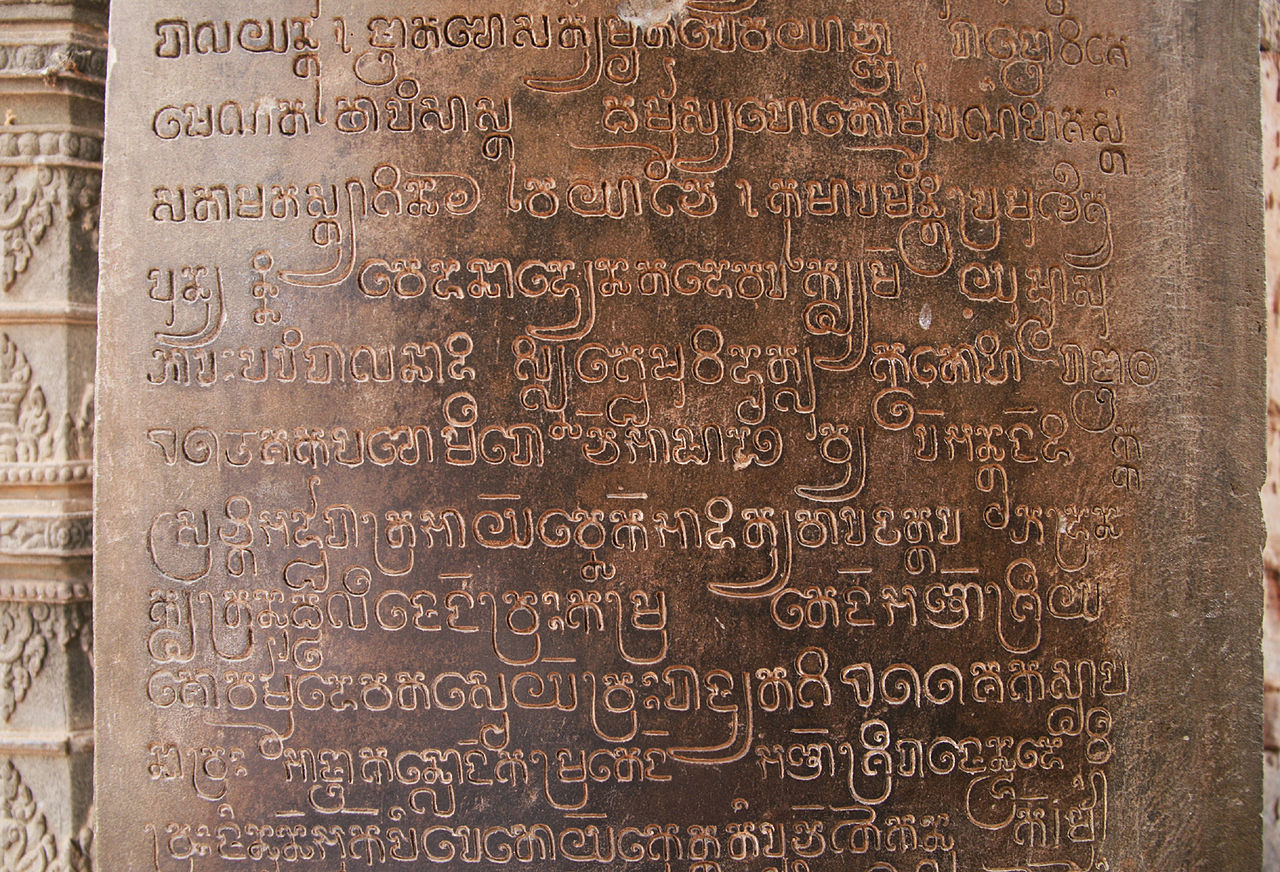
The Khmer script is the traditional writing system used primarily for the Khmer (Cambodian) language. It belongs to the family of Brahmic-derived scripts and functions as an abugida: each consonant sign carries an inherent vowel which can be changed or muted by adding dependent vowel signs or diacritics. The script is written from left to right and appears in both stone inscriptions and modern printed and digital media. For further general context see Khmer script resources.
Image gallery
2 Images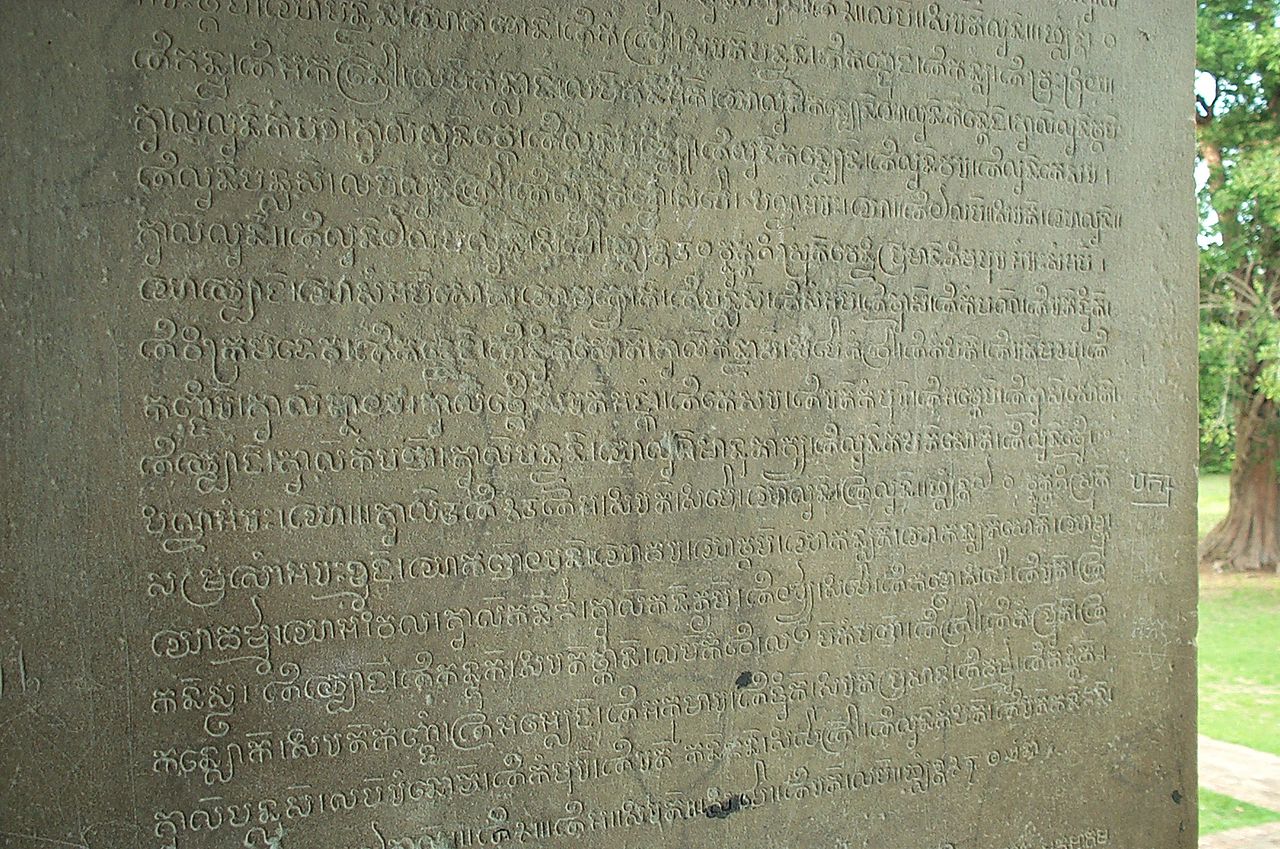
Structure and main features
Khmer combines several types of signs to represent spoken syllables. Its principal elements include:
- Consonant letters — base signs that usually imply an inherent vowel sound and may form consonant clusters.
- Dependent vowels — marks attached to consonants that change the inherent vowel quality or length.
- Diacritics and vowel killers — modifiers that alter phonation, suppress the inherent vowel, or indicate other phonological features.
- Subscript consonants — reduced forms written beneath a base consonant to show clusters without inserting an extra vowel.
- Numerals and punctuation — a set of script-specific digits and markers used in everyday texts and inscriptions.
These components give Khmer a rich visual texture and allow it to represent syllable structure compactly. For typographic and Unicode considerations see digital Khmer.
History and development
The script evolved from South Indian model scripts that spread into Southeast Asia. Early stone inscriptions and temple writings show that local scribes adapted letter shapes and added conventions to fit Khmer phonology. Over centuries the writing system stabilized into the forms used in classical literature and royal inscriptions. Khmer also served as a source of letter shapes for neighboring writing systems: the modern Thai and Lao scripts descend from similar ancestors influenced by Khmer conventions; see comparative notes at related scripts and Thai and Lao connections.
Uses and significance
Today Khmer is the official script for government, education, media, religious texts, and signage in Cambodia. Historically it recorded administrative documents, epigraphy on temple walls, sacred Pali and Sanskrit texts, and literary works. The script’s conservative orthography often preserves older pronunciations: many letters no longer match modern spoken sounds, which is useful for historical study but complicates learning and transcription systems. Examples of romanization and teaching materials are discussed in sources such as romanization guides.
Notable distinctions and modern challenges
Unlike the scripts of tonal Southeast Asian languages, Khmer has no tonal diacritics because Khmer is not a tonal language. The script’s relatively large inventory of consonant and vowel symbols makes it one of the more complex Brahmic-derived systems in practical use. In the digital era, complex shaping, font support, and input methods have been areas of active development; standards-compliant rendering engines and Unicode fonts are essential for correct display—see technical references at Khmer in computing.
Overall, Khmer script is both a living national script and an important historical record of the region’s linguistic and cultural development. Its visual forms link modern Cambodia with a long tradition of inscriptional and literary practice while continuing to adapt to contemporary media.
Related articles
Author
AlegsaOnline.com Khmer script: the Cambodian writing system Leandro Alegsa
URL: https://en.alegsaonline.com/art/53239
Sources
- omniglot.com : "Khmer (Cambodian) alphabet, pronunciation and language"