
Kaskaskia: People of the Illiniwek (Illinois) Confederation
The Kaskaskia were an Algonquian-speaking tribe of the Illiniwek (Illinois) Confederation in the Great Lakes and Mississippi valley. First contacted by Europeans in 1667; many descendants join the Peoria Tribe today.
The Kaskaskia were a prominent component of the Illiniwek, or Illinois, group of closely related Native American bands in the Northeastern Woodlands and Upper Mississippi watershed. They belonged to the broader Algonquian-language family and traditionally occupied riverine and floodplain landscapes well suited to a mixed economy of agriculture, hunting, fishing and gathering. Much of their material and social life was organized around seasonal cycles, with maize, beans and squash forming a central part of cultivation.
Image gallery
2 Images
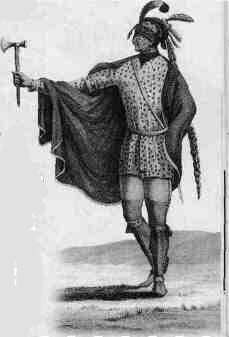
Society, settlement and material culture
Kaskaskia villages were often located along rivers where fertile soil supported crops and waterways provided travel and fish. Housing typically used wood and bark, and communities made use of bark canoes, woven baskets and pottery for storage and cooking. Social relationships emphasized kinship, clan ties and village leadership; ceremonial life included observances tied to planting and harvest seasons as well as other community rites.
Language and affiliations
Linguistically the Kaskaskia spoke a dialect of the Illinois languages within the Algonquian family and shared cultural affinities with neighboring Illiniwek groups. They formed one of about a dozen cognate bands that together have been referred to as the Illiniwek Confederation, a loose network of allied peoples rather than a centralized state.
First European contact and missionary activity
Recorded contact with Europeans dates to 1667 at a Jesuit mission station near present-day Green Bay, Wisconsin, and subsequent decades brought increasing interaction with French fur traders and missionaries. These contacts introduced new trade goods, horses in some regions, firearms, and Christianity; Jesuit and other missions established ties that affected local religious practices as some community members adopted aspects of Christianity while others continued traditional beliefs.
Historical change, displacement and alliances
Throughout the 18th and early 19th centuries the Kaskaskia, like many Indigenous nations in the region, faced pressures from colonial rivalries, shifting trade patterns, intertribal warfare and expanding European-American settlement. These forces contributed to population movement, the consolidation of smaller bands, and new political arrangements. Many Kaskaskia eventually moved westward or merged with neighboring groups for security and survival.
Modern descendants and recognition
Descendants of the Kaskaskia later joined with other historic groups, including the Wea and the Piankeshaw, in later reorganizations. Today many Kaskaskia descendants are enrolled in the Peoria Tribe of Indians of Oklahoma, a federally recognized tribe that preserves cultural memory, legal status and tribal programs. Information about the historic confederation and modern tribal affairs is available through tribal publications and government records concerning the Illiniwek and the Peoria Tribe.
Legacy and place names
- The name Kaskaskia survives in place names and historic sites across the American Midwest, reflecting the tribe's long presence in the region.
- Accounts of Jesuit missions and colonial-era records document aspects of Kaskaskia life but must be read carefully, alongside oral histories and modern tribal perspectives.
- Contemporary tribal communities work to maintain language, cultural practice and historical knowledge while engaging with state and federal institutions.
For broader regional context, the Kaskaskia lived within the ecological and cultural zone commonly described as the Great Lakes and Mississippi valley region, where river systems shaped settlement and travel. Scholarly works, archaeology, and tribal histories together provide the best overview of the Kaskaskia past and present; for direct tribal information consult publications and resources associated with the Peoria Tribe and allied communities.
Related articles
Author
AlegsaOnline.com Kaskaskia: People of the Illiniwek (Illinois) Confederation Leandro Alegsa
URL: https://en.alegsaonline.com/art/52449
Sources
- lib.niu.edu : "Illinois Indians and French Colonists."
- books.google.com : United States Code 2006, Volume 15.