
Julius Caesar (1953 film)
1953 screen adaptation of Shakespeare's Julius Caesar directed by Joseph L. Mankiewicz, noted for its ensemble cast (Brando, Mason, Gielgud) and its award-winning art direction and performances.
Julius Caesar is a 1953 film adaptation of William Shakespeare's tragedy, directed by Joseph L. Mankiewicz. The movie preserves much of Shakespeare's language while translating the play to a cinematic setting, emphasizing political tension, rhetoric and the aftermath of assassination. Released in the early 1950s, it attracted attention for its stage-trained ensemble and a high-profile screen presence that helped introduce Shakespeare to wider mid-20th-century audiences.
Image gallery
4 Images
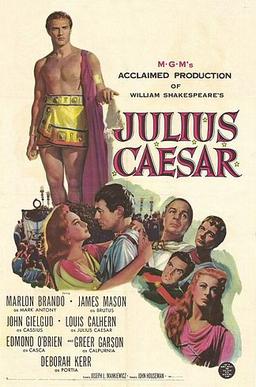


Principal cast and roles
- John Gielgud as Cassius — noted for his classical stage technique and measured delivery. Gielgud profile
- James Mason as Brutus — delivers the conflicted republican idealism at the story's heart. Mason profile
- Marlon Brando as Mark Antony — a performance remembered for its fiery oratory and charisma. Brando profile
- Greer Garson as Calpurnia — portrayed as the private face of Caesar's household. Garson profile
- Deborah Kerr as Portia — a sympathetic counterpart to Brutus. Kerr profile
- Additional ensemble members and supporting players round out the conspirators and Roman populace. Full cast and credits
The screenplay and direction balance theatrical dialogue with cinematic pacing. Mankiewicz adapted the play for the screen in a way that kept Shakespeare's rhetorical intensity while opening scenes and framing to suit film audiences. The production design and art direction recreate a believable Roman world without resorting to grandiose spectacle, focusing instead on political claustrophobia and close-quarter interaction.
Reception, awards and legacy
Critics praised the performances, particularly those of Gielgud and Brando, and the film was a commercial and critical success for a Shakespeare adaptation of its era. It earned the Academy Award for Best Art Direction, reflecting the strength of its visual design, and received multiple BAFTA honors: John Gielgud and Marlon Brando were recognized among the year's best performers. The film is often cited in discussions about cinematic Shakespeare and the ways mid-century film sought to make classical drama accessible to a broader public. Shakespeare source play
Today the 1953 Julius Caesar is regarded as an important bridge between stage and screen interpretation of Shakespeare, notable for its distinguished cast and its contribution to the postwar revival of interest in classical drama on film. For more background on production details, critical essays and archival materials see related resources and film histories. Further reading performance analyses design studies
Related articles
Author
AlegsaOnline.com Julius Caesar (1953 film) Leandro Alegsa
URL: https://en.alegsaonline.com/art/51521
Sources
- mrqe.com : "Julius Caesar"