
Jurassic Park (1993 film)
Steven Spielberg's 1993 science fiction adventure about a dinosaur theme park, based on Michael Crichton's novel. Noted for pioneering visual effects, sound design, and spawning a long-running franchise.
Jurassic Park is a 1993 science fiction adventure film directed by Steven Spielberg and adapted from Michael Crichton's novel. Released on June 11, 1993, the film tells the story of a commercial dinosaur park created by cloning prehistoric animals from recovered DNA. When containment systems fail, visitors and staff face the consequences of resurrecting powerful species. The movie combined blockbuster storytelling with themes about scientific hubris, ethics, and the unpredictability of complex systems.
Image gallery
10 Images
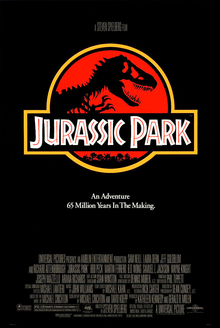


Production and creative team
Spielberg assembled a prominent cast including Sam Neill, Laura Dern, Jeff Goldblum and Richard Attenborough, and worked with composer John Williams for the score. The visual and practical effects were a collaboration between Industrial Light & Magic, which provided groundbreaking computer-generated imagery (CGI), and Stan Winston's studio, which developed life-sized animatronic dinosaurs. This blend of technologies contributed to a new standard in visual effects for feature films.
Impact and recognition
Upon release the film was both a critical and commercial success, becoming one of the highest-grossing films of its era. It won several Academy Awards in technical categories and received wide acclaim for its sound design, visual effects, and suspenseful direction. More broadly, Jurassic Park influenced subsequent filmmaking, accelerated the adoption of CGI in Hollywood, and renewed popular interest in paleontology.
Notable features of the film include its use of practical animatronics for close-up interactions, digital effects for large-scale movement and herd scenes, and an emphasis on realistic sound design to convey the creatures' presence. The screenplay balances scientific exposition with set-piece action, while the island setting—Isla Nublar in the story—serves as a contained arena for escalating tension.
- Key themes: ethics of cloning and human control over nature.
- Technical legacy: pioneering CGI combined with practical effects.
- Cultural effect: spawned a multi-film franchise, merchandising, and themed attractions.
While the film presented dinosaurs in a way that captured the public imagination, some scientific details have been revised by later paleontological research (for example, the likelihood of feathers on many theropods). Jurassic Park remains notable for its storytelling, technical achievements, and lasting influence on both cinema and popular ideas about dinosaurs.
Further reading and resources: studio information, film database entry, director profile, novel source, author biography.
Related articles
Author
AlegsaOnline.com Jurassic Park (1993 film) Leandro Alegsa
URL: https://en.alegsaonline.com/art/51715