
Jules Joseph Lefebvre — French academic painter of portraits and idealized female figures
Jules Joseph Lefebvre (1836–1911), French academic painter known for portraits and idealized single-figure studies of women; Prix de Rome laureate, École des Beaux-Arts professor and regular Salon exhibitor.
Jules Joseph Lefebvre (born in Tournan-en-Brie on March 14, 1836; died in Paris on February 24, 1911) was a French academic painter best known for portraits and idealized single-figure studies of women.
Image gallery
10 Images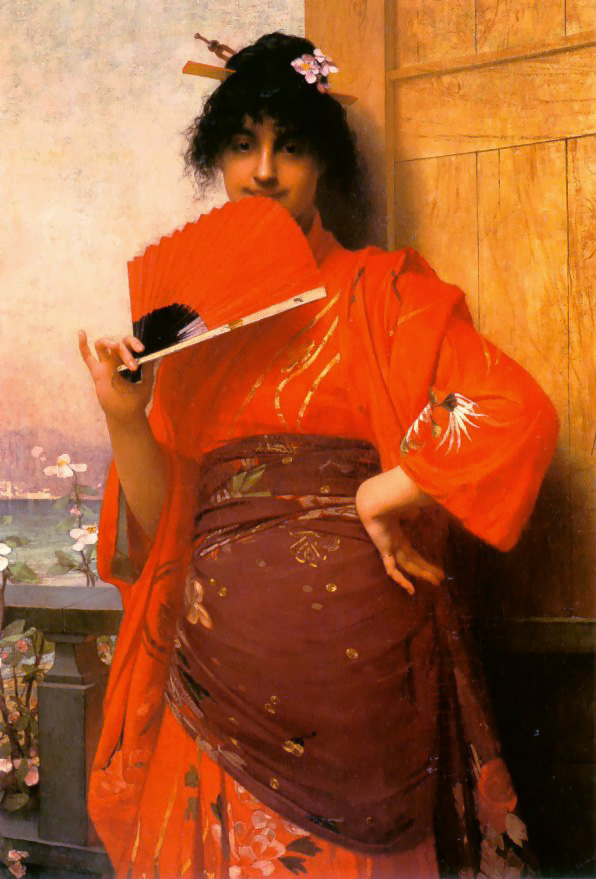




Training and early career
Lefebvre entered the École nationale supérieure des Beaux-Arts in 1852, where he studied in the studio of Léon Cogniet. His early promise was recognised when he won the prestigious Prix de Rome in 1861, an award that helped establish his reputation in official French artistic circles. From 1855 until 1898 he was a frequent exhibitor at the Paris Salon, sending some 72 portrait works during that period.
Teaching and pupils
Alongside his practice, Lefebvre had a long career as an instructor. He taught at the private Académie Julian in Paris and for many years held a professorship at the École des Beaux-Arts. His workshop attracted students from France and abroad; among those who studied with him were the Scottish-born landscape painter William Hart and the painters Georges Rochegrosse and Félix Vallotton. Several American artists also trained under Lefebvre, including Childe Hassam, John Henry Twachtman, John Noble Barlow, Augustus Kenderdine, and Charles A. Platt.
Artistic style and notable works
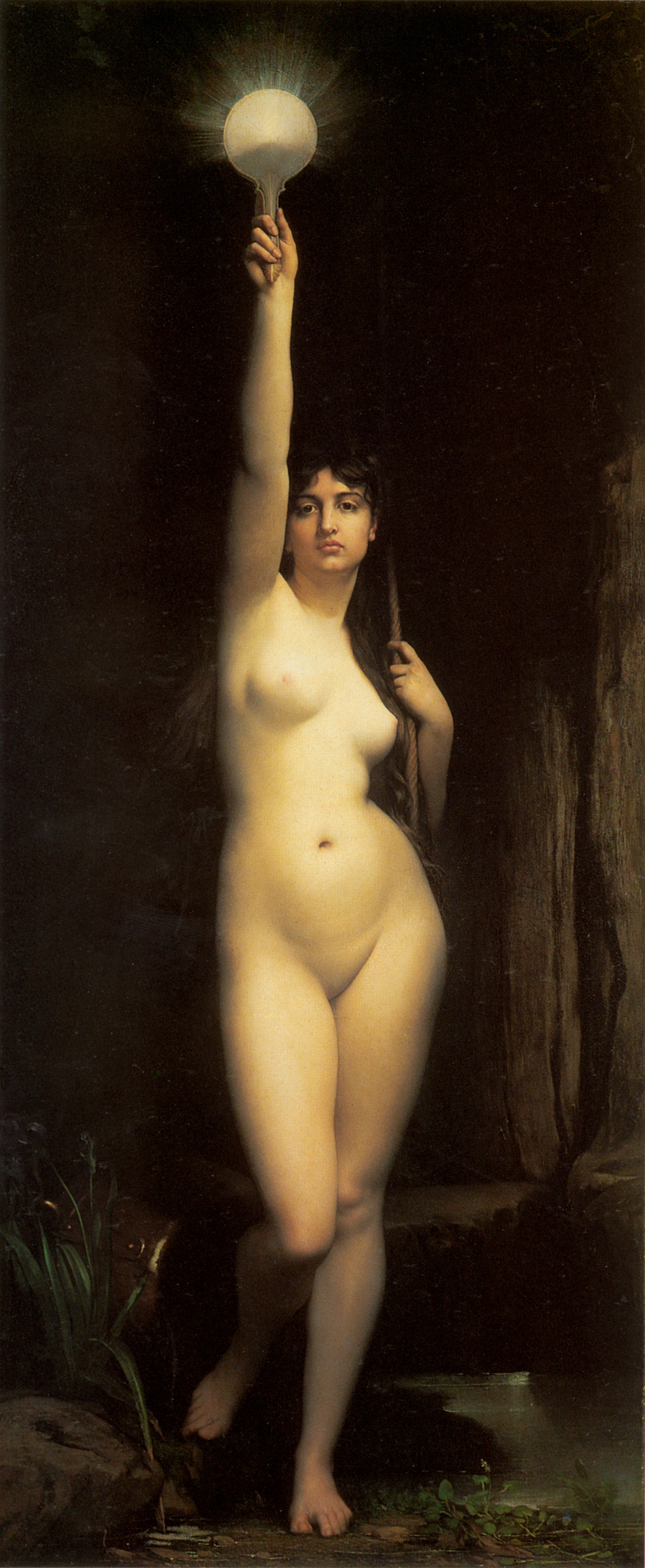
Lefebvre’s compositions often focus on a solitary figure—typically an idealized young woman—rendered with smooth finish and careful attention to anatomy and drapery. His portraits include sittings such as those of M. L. Reynaud and the portrait of the Prince Imperial (dated 1874), works that brought him both critical attention and public commissions.
Honors and recognition
- First-class medal, Paris Exhibition (Exposition) of 1878
- Medal of honor, 1886
- Commander of the Legion of Honor
- Member of the Académie des Beaux-Arts (elected 1891)
During his lifetime Lefebvre was widely respected within the official French art establishment and held positions that connected him to institutions such as the Institut de France. His paintings remain examples of late 19th-century academic portraiture and continue to appear in museum collections and private holdings.
Questions and answers
Q: Who was Jules Joseph Lefebvre?
A: Jules Joseph Lefebvre was a French figure painter.
Q: When and where was Jules Joseph Lefebvre born and when did he pass away?
A: Jules Joseph Lefebvre was born in Tournan-en-Brie in March 14, 1836 and passed away in Paris on February 24, 1911.
Q: Where did Jules Joseph Lefebvre study art?
A: Jules Joseph Lefebvre studied art at the École nationale supérieure des Beaux-Arts in 1852.
Q: Who was Jules Joseph Lefebvre a pupil of?
A: Jules Joseph Lefebvre was a pupil of Léon Cogniet.
Q: What was Jules Joseph Lefebvre notable for winning?
A: Jules Joseph Lefebvre was notable for winning the prestigious Prix de Rome in 1861.
Q: Was Jules Joseph Lefebvre a teacher at the Académie Julian in Paris?
A: Yes, Jules Joseph Lefebvre was a teacher at the Académie Julian in Paris.
Q: Who were some of Jules Joseph Lefebvre's famous students?
A: Some of Jules Joseph Lefebvre's famous students were Georges Rochegrosse, Félix Vallotton, the Americans Childe Hassam, John Henry Twachtman, John Noble Barlow, Augustus Kenderdine, and Charles A. Platt.
Related articles
Author
AlegsaOnline.com Jules Joseph Lefebvre — French academic painter of portraits and idealized female figures Leandro Alegsa
URL: https://en.alegsaonline.com/art/51478