
Jousting: medieval mounted tournament combat and its legacy
Jousting was a mounted contest among armored fighters that developed in medieval Europe into a ceremonial sport in the Renaissance. It involved lances and other weapons, specialized armour, and formal rules.
Overview
Jousting was a formalized contest of arms fought on horseback that became prominent in Europe. Originally a test of skill useful in war, it later evolved into a public spectacle and aristocratic pastime. Participants were usually knights or similarly trained horsemen and events took place within arranged enclosures or tilts.
Image gallery
10 Images

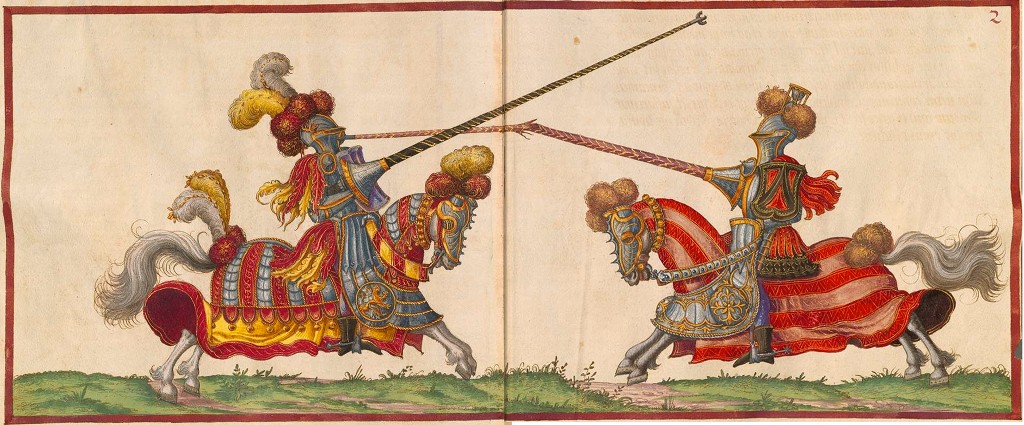


Equipment and weapons
Combatants wore protective armour that changed over time from mail to full plate. The primary weapon was the lance, but tournaments could include other armaments. Typical items included:
- Heavy lances designed to break on impact
- Close-combat weapons such as swords and daggers
- Occasional use of axes and specialised blunted implements for sport
- Specialised saddlery and trained horses adapted for charging
Format and common rules
Tournaments were organized with rules intended to limit lethal outcomes: riders typically aimed to strike or break a lance against an opponent, unhorse them, or score points for clean hits. Matches might be single passes down a tilt or series-based, and officiating marshals recorded results and enforced safety measures.
History and development
Jousting grew out of mounted warfare and knightly training in the Middle Ages, becoming increasingly stylised by the Renaissance. Over centuries the practice shifted from practical combat rehearsal toward ceremony, pageantry and regulated sporting contests sponsored by rulers and nobles.
Significance and legacy
Beyond its martial origins, jousting shaped ideas of chivalry, heraldry and courtly display. It influenced literature and the arts and remains a symbol of medieval aristocratic culture. Modern historical reenactment and sporting groups recreate jousts for education and entertainment, balancing spectacle with safety and historical research. For further reading see sources on tournaments and mounted combat, or consult specialist collections and museums that preserve armour and equipment.
Notable distinctions: Jousts should be distinguished from battlefield melees and from other equestrian sports; their rituals, scoring and equipment were specific to tournament contexts and changed markedly between regions and periods.
For more detailed introductions, guides on equipment, and lists of surviving artifacts, consult specialist works and museum catalogues that cover knights, arms and horsemanship in medieval and early modern Europe.
Read on Europe | Middle Ages | Renaissance | Knights | Horses | Lances | Daggers | Swords
Related articles
Author
AlegsaOnline.com Jousting: medieval mounted tournament combat and its legacy Leandro Alegsa
URL: https://en.alegsaonline.com/art/51302