
Journey to the Center of the Earth (1959 film)
1959 American family science-fiction adventure directed by Henry Levin, adapted from Jules Verne. Stars James Mason, Pat Boone and Arlene Dahl; noted for its visuals and three Academy Award nominations.
Overview
Journey to the Center of the Earth is a 1959 American science-fiction family adventure film directed by Henry Levin and released by 20th Century Fox. The picture is a loose adaptation of Jules Verne's 1864 novel, updated and condensed for mid‑20th century cinema. Its principal stars included James Mason, Pat Boone and Arlene Dahl, and it also features Thayer David in a supporting role. The production aimed to balance spectacle with a story accessible to general audiences.
Image gallery
3 Images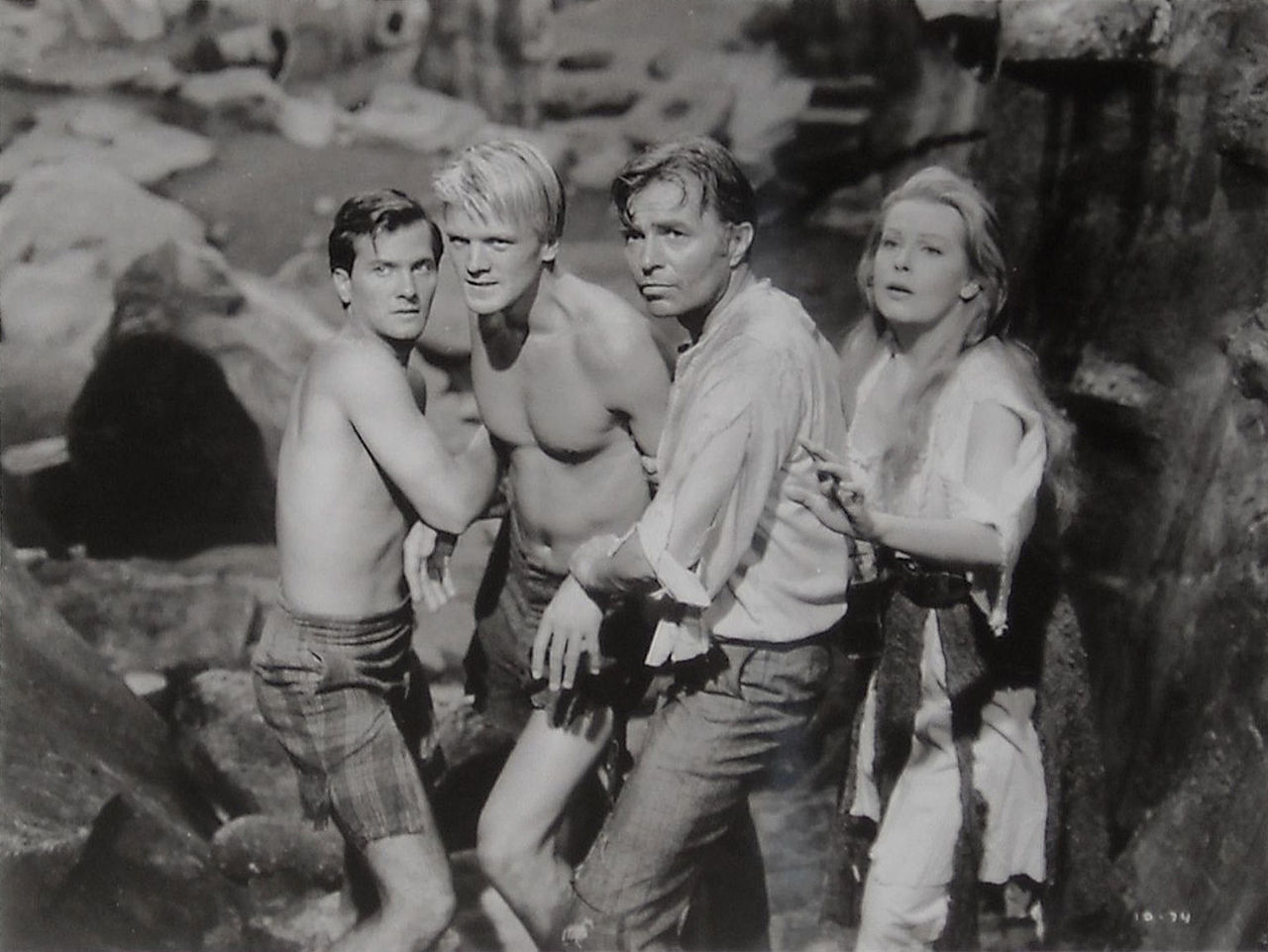


Plot and characters
The film follows an expedition that descends beneath the Earth's surface via geological passages and encounters vast underground landscapes, strange natural phenomena and prehistoric creatures. The central group—led by an experienced scientist accompanied by a younger companion and guides—faces both physical dangers and moral dilemmas while searching for a route back to the surface. The narrative emphasizes adventure, suspense and the bond between the explorers rather than the novel's dense scientific exposition.
Production and style
Produced as a mainstream family feature, the movie makes prominent use of colorful cinematography, large-format framing and practical visual effects available at the time to represent subterranean vistas and fantastic creatures. Set design, models and optical effects were combined to create a sense of scale. The adaptation simplified many of Jules Verne's scientific digressions and introduced clearer interpersonal dynamics and romantic elements to broaden appeal.
Principal cast
- James Mason — leading scientist/explorer
- Pat Boone — youthful companion and hero figure
- Arlene Dahl — female lead, added romantic interest
- Thayer David — supporting guide/antagonistic foil
Reception and awards
Upon release the film was commercially successful with audiences who enjoyed family adventure and spectacle. It earned critical notice for its production values and was nominated for three Academy Awards in 1960, reflecting industry recognition of its technical achievements. Over time the movie has continued to be remembered as a representative example of mid‑century cinematic adaptations of classic science‑fiction literature.
Differences from Verne and legacy
The cinematic version departs from Jules Verne's original novel in several ways: it streamlines complex scientific theories, alters character relationships and adds scenes designed for visual excitement and emotional clarity. These changes made the story more immediately cinematic and contributed to its status as a family adventure. The film influenced later screen adaptations and remains a touchstone in popular portrayals of subterranean exploration.
Notable facts
- The movie serves as a gateway for many viewers to the broader literary tradition of Jules Verne—see the original novel: Jules Verne, Journey to the Center of the Earth.
- It exemplifies how studios of the era adapted classic adventure tales into family‑oriented spectacles.
- Its combination of practical effects and set work reflects filmmaking techniques immediately prior to the widescale use of modern optical and digital methods.
Related articles
Author
AlegsaOnline.com Journey to the Center of the Earth (1959 film) Leandro Alegsa
URL: https://en.alegsaonline.com/art/51299