
Joyful Noise (2012 film)
2012 musical comedy-drama about a small-town church choir. Written and directed by Todd Graff, it stars Queen Latifah and Dolly Parton and features gospel-influenced music arranged by Mervyn Warren.
Joyful Noise is a 2012 musical comedy-drama film centered on a struggling small-town church choir. The picture was written and directed by Todd Graff and released in the United States on January 13, 2012 (release details). The production mixes traditional gospel with contemporary pop and country influences, and its arrangements were overseen by composer and producer Mervyn Warren.
Image gallery
1 Image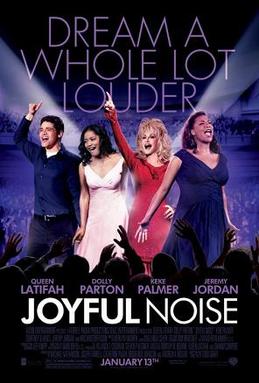
Overview
The story follows members of a rural congregation who must pull together after a loss leaves their choir without leadership. Conflicts of style and personality arise when established caretakers and new voices disagree about how to keep the choir—and the church—alive. The film balances musical set pieces with themes of community, reconciliation, and the redemptive power of song. It is presented in the format of a mainstream Hollywood musical with both dramatic and comedic elements (musical film).
Cast and characters
- Queen Latifah — a lead performer whose character anchors the choir and its emotional core.
- Dolly Parton — a veteran entertainer who portrays a rival-turned-ally figure with a strong musical presence.
- Keke Palmer — a younger singer cast as one of the choir's emerging talents.
- Courtney B. Vance — appears in a supporting dramatic role tied to the church community.
- Screenplay — credited to the film's writer-director, exploring themes of faith and teamwork.
Production and music
Music is central to the film's identity. The soundtrack features a mixture of gospel standards and contemporary arrangements, influenced by gospel music traditions and modern production techniques. Performances in the film range from choir ensemble numbers to more intimate solo moments. The creative team intended the music both to serve the narrative and to stand alone as a collection of energetic vocal performances.
Plot elements and themes
Without revealing major spoilers, the plot advances through rehearsals, personal conflicts, and preparations for competitive performances. The narrative explores how art can bridge generational and cultural divides, how competition can test loyalties, and how communal institutions adapt when leadership changes. The film blends comic situations with heartfelt reconciliations.
Reception and legacy
On release, the film drew a mixed response: reviewers often praised the principal performers and musical sequences while noting a conventional storyline. Audiences attracted to vocal showcases and family-oriented stories found the film appealing; others criticized it for predictability. Over time it has remained of interest to fans of contemporary gospel-influenced cinema and to viewers drawn by its principal cast and musical numbers. For further information and official materials see production page and other resources (performer profile, cast details, supporting cast, script notes, director background, musical influences, release info).
The film serves as an accessible example of how mainstream cinema can incorporate religious musical traditions into contemporary storytelling, and it introduced several younger performers to a broader audience while showcasing the enduring appeal of gospel-tinged songs in popular culture.
Questions and answers
Q: What is Joyful Noise?
A: Joyful Noise is a musical movie released in 2012 in the United States.
Q: Who are the stars of Joyful Noise?
A: The stars of Joyful Noise are Queen Latifah, Dolly Parton, Keke Palmer, Courtney B. Vance, and Jeremy Jordan.
Q: Who wrote and directed Joyful Noise?
A: The screenplay of Joyful Noise was written and directed by Todd Graff.
Q: What type of music was used in Joyful Noise?
A: Gospel music was used in the movie Joyful Noise.
Q: When was Joyful Noise released in the United States?
A: Joyful Noise was released in the United States on January 13, 2012.
Q: Who composed the music for Joyful Noise?
A: Mervyn Warren composed the music used in Joyful Noise.
Q: What are some of the main themes of Joyful Noise?
A: Some of the main themes of Joyful Noise include music, faith, and community.
Related articles
Author
AlegsaOnline.com Joyful Noise (2012 film) Leandro Alegsa
URL: https://en.alegsaonline.com/art/51325
Sources
- latimesblogs.latimes.com : "Movie Projector: 'Beauty and the Beast,' 'Contraband' fight for No. 1"
- boxofficemojo.com : "Joyful Noise (2012)"