
Joseph Polchinski (1954–2018)
American theoretical physicist known for his work in string theory, especially D-branes, author of the standard textbook 'String Theory', and recipient of major awards including the Dirac Medal and Fundamental Physics Prize.
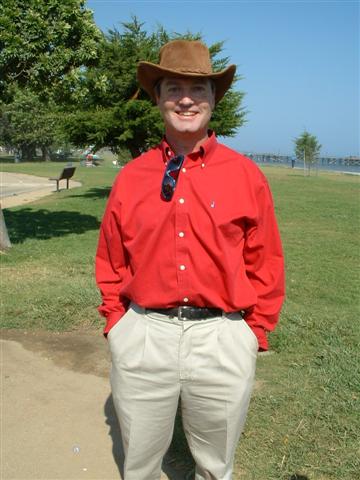
Joseph Polchinski was an influential American theoretical physicist whose research helped shape modern string theory. He is widely remembered both for a two-volume graduate textbook that remains a standard reference and for identifying D-branes as essential, dynamical objects in string theory. His work bridged formal developments in quantum gravity and practical tools used by generations of theorists and students. For an overview of his career and contributions see further biography.
Image gallery
1 Image
Major contributions
Polchinski's most celebrated discovery was the central role of D-branes in the mid-1990s: extended objects on which open strings can end and which carry Ramond–Ramond charges. This observation transformed how string theorists understood nonperturbative aspects of the theory and led to a surge of research connecting strings, branes, and black hole physics. He also engaged deeply with issues in quantum gravity and the black hole information problem, contributing to debates about how information is preserved in black hole evaporation.
Books and teaching
His two-volume textbook, String Theory, published in 1998, is widely used as a graduate-level introduction. The books present both the technical machinery and conceptual background of perturbative string theory, and they have been influential in training physicists in the subject. Polchinski combined careful derivations with physical intuition, making the volumes a lasting educational resource.
Career and life
Born in White Plains, New York, Polchinski spent much of his professional life as a professor at the University of California, Santa Barbara, and was associated with the Kavli Institute for Theoretical Physics. Colleagues remember him for rigorous thinking, clarity of exposition, and a readiness to engage in foundational questions. He died in Santa Barbara on February 2, 2018. Local remembrances and tributes summarize his influence and teaching legacy at institutional pages and elsewhere.
Awards and impact
Polchinski received several major honors recognizing his role in advancing theoretical physics. Notable awards include:
- Dirac Medal (2008)
- Fundamental Physics Prize (2017)
Beyond prizes, his ideas about D-branes opened new connections between string theory and gauge theory, and his later work on black hole information helped bring renewed attention to puzzles at the intersection of quantum mechanics and gravity. For more information and records of his publications see biographical resources and regional archives such as local entries.
Polchinski's combination of technical achievement, pedagogical influence, and engagement with deep conceptual problems left a lasting imprint on theoretical physics; his texts and papers continue to be cited and studied by researchers and students worldwide.
Related articles
Author
AlegsaOnline.com Joseph Polchinski (1954–2018) Leandro Alegsa
URL: https://en.alegsaonline.com/art/51242
Sources
- francis.naukas.com : "Joe Polchinski (1954-2018): La teoría de cuerdas está de luto"
- ictp.it : ictp.it
- news.ucsb.edu : "Another Major Breakthrough"
- chancellor.ucsb.edu : "Obituary: Professor Emeritus Joseph Polchinski"