
Joseph Smith: Founder of the Latter Day Saint movement
Joseph Smith (1805–1844) was an American religious leader who founded the Latter Day Saint movement, published the Book of Mormon, and organized early Mormon communities and institutions.
Joseph Smith Jr. (December 23, 1805 – June 27, 1844) was an American religious leader best known for founding the Latter Day Saint movement. Followers regard him as a prophet who restored what they see as original Christian teachings. Many sources describe a series of visions and revelations that Smith said led to the recovery of new scriptures and the creation of a distinct religious community; see further background on Smith.
Image gallery
10 Images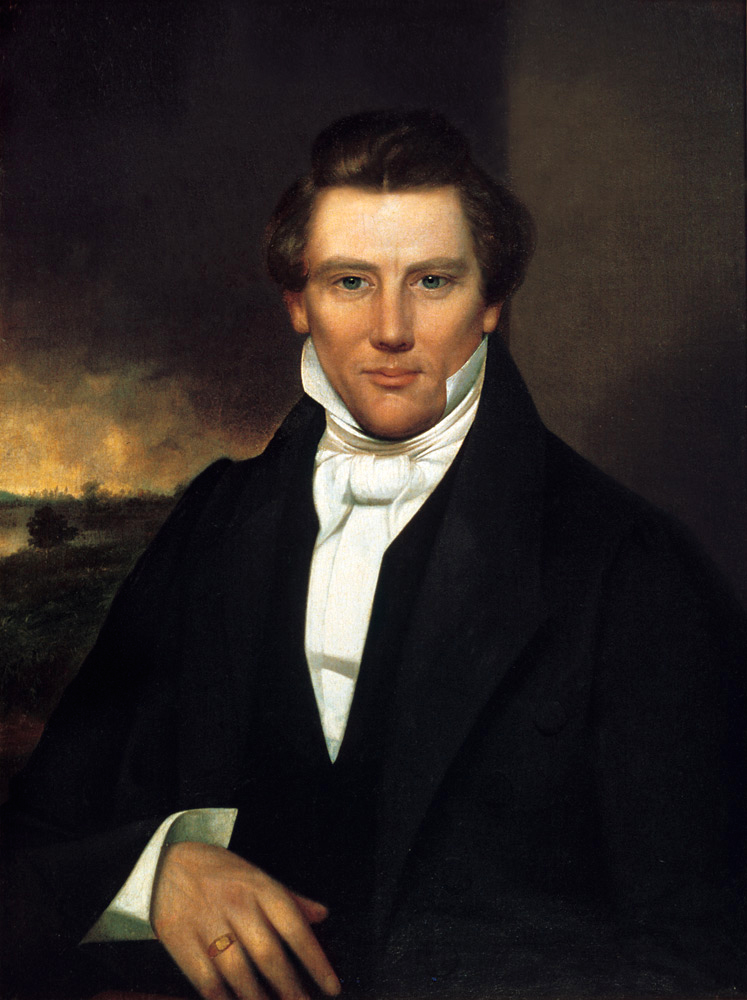


Early life and reported revelations
Born in Vermont and raised in upstate New York, Smith grew up in a frontier environment shaped by religious revivalism. In his youth he reported visionary experiences, including an event commonly called the "First Vision," and later claimed an angelic visitation that revealed the location of buried metal plates. Smith said he translated those plates into English, producing the Book of Mormon, which became a foundational text for his followers.
Organization and development
Beginning in the late 1820s and formally organized in 1830, Smith gathered adherents and established congregations. He oversaw the creation of church structures, missionary efforts, and communal projects. During the 1830s and early 1840s the movement established centers in Ohio, Missouri and then in Nauvoo, Illinois, where Smith and his followers built a city and a temple plan emphasizing distinctive rites and leadership offices.
Teachings, scripture and practices
Smith taught a mix of restorationist Christian doctrine and new revelations recorded in texts attributed to him or received under his direction. His teachings addressed prophecy, priesthood authority, temple ceremonies, and community organization. He introduced or endorsed practices that shaped the movement, such as a formalized priesthood hierarchy and new liturgical forms.
Controversies, legal troubles and death
Smith's life involved significant conflict with neighbors and political leaders over property, law, and social practices. Some of his teachings—especially plural marriage, announced publicly after his death by some followers but practiced during his lifetime according to many historians—were controversial. In 1844 Smith was jailed in Carthage, Illinois, and was killed by a mob while in custody. His death prompted an immediate succession crisis and migration of many followers westward.
Legacy and denominations
Smith's influence endures through several religious bodies that trace origins to his movement. The largest, the Church of Jesus Christ of Latter-day Saints, and other groups such as the Community of Christ, interpret his life and writings in different ways. Historians and participants continue to study his role as a religious innovator whose claims of revelation created a distinct and lasting American religious tradition.
- Key texts: Book of Mormon and later revelations
- Important events: First Vision, translation of the Book of Mormon, organization of the church, death at Carthage
- Enduring topics: prophetic claims, temple practices, migration and institutional development
Related articles
Author
AlegsaOnline.com Joseph Smith: Founder of the Latter Day Saint movement Leandro Alegsa
URL: https://en.alegsaonline.com/art/51247
Sources
- lds.org : "Doctrine and Covenants 10"
- fairmormon.org : "Polygamy book/Initiation of the practice - FairMormon"
- en.fairmormon.org : en.fairmormon.org/Joseph_Smith/Polygamy/Not_Biblical
- historytogo.utah.gov : "Utah History to Go"