
Johnny English (2003) — British spy comedy film
Overview of the 2003 British spy comedy Johnny English: premise, production, cast, reception and its sequels, written as a neutral encyclopedia-style article.
Overview
Johnny English is a 2003 British spy comedy centered on a bumbling secret agent who becomes his country's last hope. Created as a broad parody of the suave espionage genre, the film lampoons conventions associated with long-running franchises such as James Bond. It combines slapstick, sight gags and situational humour to present an intentionally inept hero thrust into high-stakes scenarios.
Image gallery
2 Images
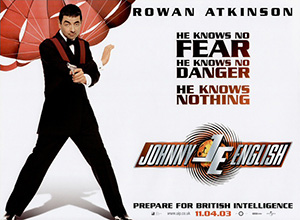
Production and principal contributors
The film was produced by Tim Bevan, Eric Fellner and Mark Huffam for a British production team and directed by Peter Howitt. Its financing and creative backing came from established UK film producers; promotional materials emphasized the picture's London locations and distinctly British comic tone. For more on the production context and companies involved see production notes.
Cast and characters
The title role is played by Rowan Atkinson, whose performance leans heavily on physical comedy and a straight-faced delivery of absurd situations. The supporting cast includes familiar faces from British film and television, who play government officials, allies and villains that both support and foil English's well-meaning blunders. A brief list of notable elements:
- Lead: Rowan Atkinson as the incompetent but determined agent.
- Supporting performers: a mix of established performers in comic and dramatic turns.
- Setting: much of the action is staged in and around London, underlining the film's British identity.
Plot and style
Structurally the film follows a familiar spy plot: an assassination attempt or theft triggers a national security crisis, and an unlikely protagonist must prevent disaster. What distinguishes Johnny English is tone and execution: set pieces are designed for humour rather than realism, gadgets and surveillance become sources of comic mishap, and the protagonist's confidence contrasts with his repeated misunderstandings. The movie uses parody to subvert genre tropes, turning elegant spycraft into a sequence of escalating pratfalls and misunderstandings.
Reception and legacy
Critical and audience reactions were mixed: reviewers often praised Atkinson's comic timing and physical antics while noting the film's reliance on broad jokes. Johnny English found an audience among viewers who enjoy family-friendly slapstick and affectionate satire of spy movies. Over time it has become familiar as a light-hearted pastiche within British comedy cinema, spawning further entries in the series and continuing to be referenced in discussions of cinematic parodies.
Sequels and related titles
The original film led to a continuing franchise. It was followed by sequels that continued the adventures of the same central character and retained the mixture of action and humour. For details on later films in the series consult pages about Johnny English Reborn and franchise overviews such as Johnny English sequels. General genre context and comparisons with other spy comedies can be found via resources on spy comedy films and the broader history of British film comedy settings.
While rooted in parody, Johnny English illustrates how comedy can reinterpret popular genres: it repackages familiar plot devices and archetypes to produce a deliberately absurd and accessible entertainment experience.
Related articles
Author
AlegsaOnline.com Johnny English (2003) — British spy comedy film Leandro Alegsa
URL: https://en.alegsaonline.com/art/50887