
John William Strutt, 3rd Baron Rayleigh
English physicist and Nobel laureate (1842–1919), known for the discovery of argon, Rayleigh scattering, and foundational work in acoustics, optics, and fluid dynamics.
John William Strutt, 3rd Baron Rayleigh (12 November 1842 – 30 June 1919) was an English physicist and nobleman whose experimental and theoretical work shaped several fields of physics. He received the Nobel Prize in Physics in 1904 for his studies of the densities of gases and his role in the discovery of argon. He was a leading scientific figure of his era and held high honours, including the Order of Merit.
Image gallery
6 Images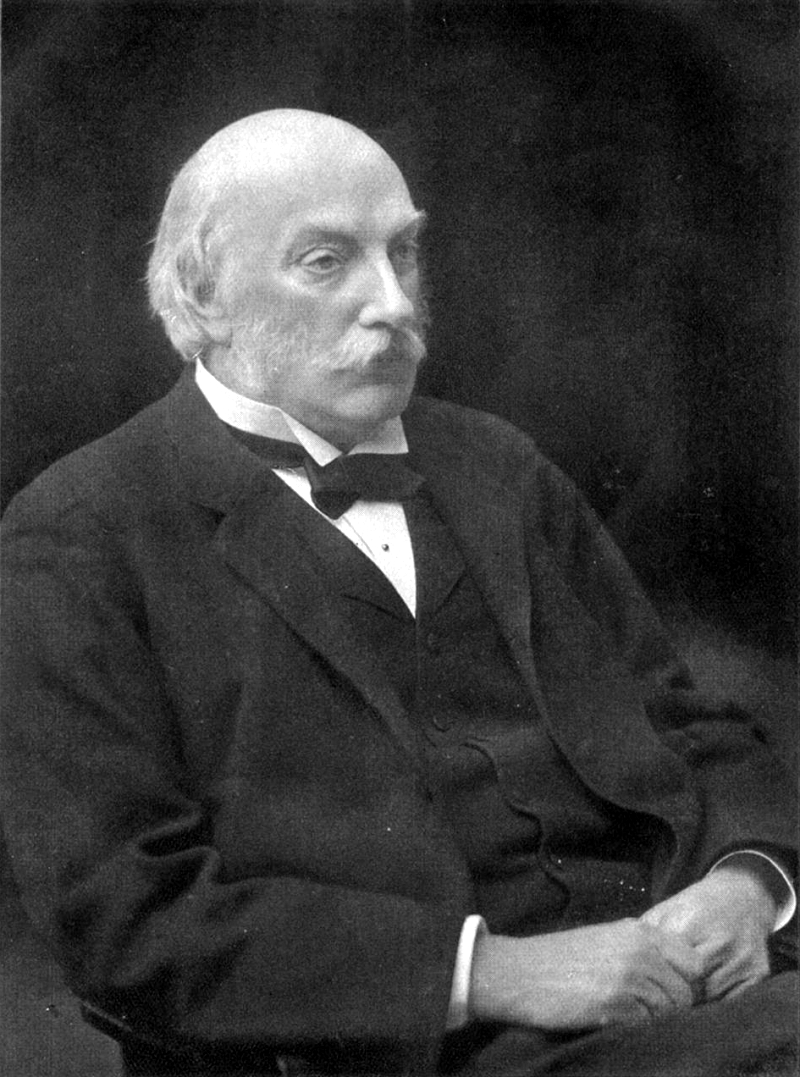


Major contributions
Rayleigh's research covered a wide range of topics. He is best known for:
- Discovery of argon: His careful measurements of gas densities revealed an unexplained discrepancy that led to the isolation of the noble gas argon, work later completed in collaboration with others.
- Rayleigh scattering: The explanation for why the sky is blue and why sunsets redden, arising from the scattering of light by particles much smaller than the wavelength.
- Acoustics and The Theory of Sound: Author of a classic, rigorous treatment of sound, vibration and wave motion that influenced generations of physicists and engineers.
- Waves and stability in fluids: Studies that produced concepts now used in seismology (Rayleigh waves), hydrodynamics and the mathematical description of instabilities.
- Resolution and radiation theories: Formulation of limits to optical resolution and contributions that fed into classical attempts to describe blackbody radiation.
Life and career
Educated at Harrow and Trinity College, Cambridge, Rayleigh combined the privileges of his title with an active scientific career. He inherited the barony and used his position to pursue research, publishing influential monographs and numerous papers. He was an elected fellow and later a leader within scientific societies, and his work earned international recognition, including the Nobel Prize in 1904 for investigations into gas densities and the discovery of argon.
Importance and applications
Rayleigh's name appears across modern science: Rayleigh scattering is central to atmospheric optics; Rayleigh waves are fundamental in earthquake seismology; and the Rayleigh criterion sets a practical limit for optical instruments. His texts on sound remain reference points in acoustics and engineering. These contributions link laboratory measurements to broad phenomena in nature and technology.
Further reading and context
Biographical summaries and technical expositions on Rayleigh are available for readers seeking more depth. For a general biography and life overview see biographical sources, for technical introductions to his theories see standard physics texts and archived papers noted at academic repositories. For specific treatments of the argon discovery and atmospheric scattering, consult specialized histories and review articles linked from historical collections.
Related articles
Author
AlegsaOnline.com John William Strutt, 3rd Baron Rayleigh Leandro Alegsa
URL: https://en.alegsaonline.com/art/50864