
Absinthe spoon: design, use, history and ritual
A small perforated or slotted utensil used in the traditional preparation of absinthe; designed to hold sugar while cold water is dripped to dilute and sweeten the spirit.
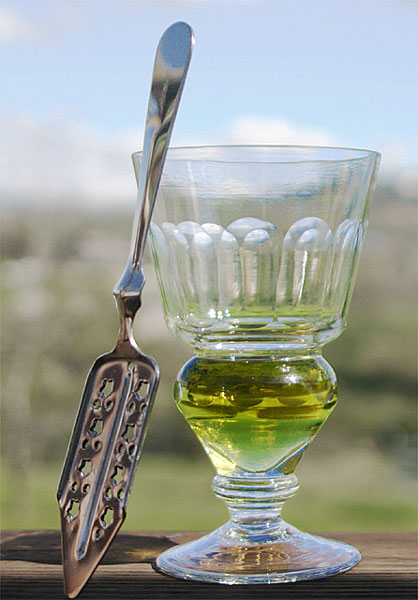
An absinthe spoon is a purpose-made utensil used when preparing a glass of absinthe. It rests across the rim of the glass and supports a sugar cube as cold water is added. The spoon’s perforations or slots let sweetened water and dissolved sugar pass into the spirit while catching larger solids.
Image gallery
8 Images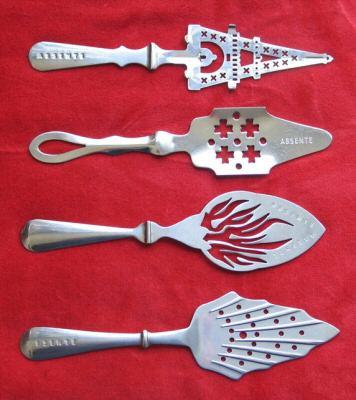




Design and characteristics
Most spoons are flat with decorative cutouts or pierced patterns; common materials include silver, nickel silver, stainless steel and plated metals. The cutouts vary from simple slits to ornate filigree; some have a shallow bowl while others are almost flat. Typical features are a length that spans a glass rim, a raised center to hold the cube, and multiple holes that control drips.
Preparation ritual
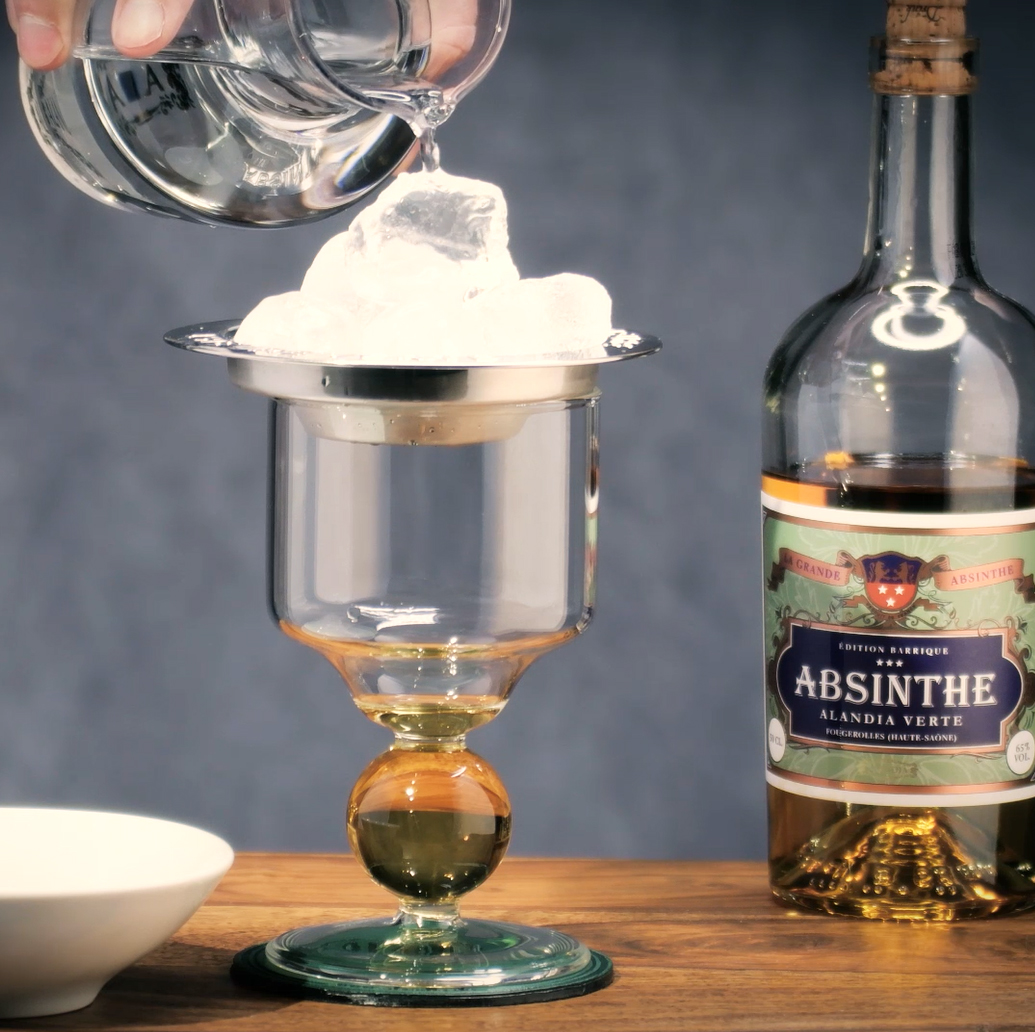
The spoon is central to the classic French or Bohemian absinthe ritual. A sugar cube rests on the spoon while cold water is dripped slowly over it. As the sugar dissolves, sweetened water falls through the perforations into the liquor, diluting it and producing the louche—an opalescent clouding as essential oils emulsify.
- Place glass of absinthe on a stable surface.
- Lay the glass of absinthe rim with the spoon and set a sugar cube on the spoon.
- Slowly pour ice-cold water over the cube until desired dilution and louche occur.
- Remove spoon and stir gently if needed, then enjoy.
History and variations
Absinthe spoons became popular in the late 19th and early 20th centuries alongside the spirit’s heyday. Designs often reflect period styles such as Art Nouveau or Belle Époque. Modern replicas and contemporary designs exist for collectors and bars, including spoons with built-in reservoirs or hinged elements to vary flow.
Collecting, care and notable facts
Collectors prize antique spoons for their decoration, maker’s marks and patina. For use, avoid abrasive cleaners on plated or silver pieces; rinse after use and dry thoroughly to prevent tarnish. While not strictly necessary—many prefer sugar-free or rapid-pour methods—the spoon remains a cultural symbol of absinthe’s ceremonial preparation and social history.
Related articles
Author
AlegsaOnline.com Absinthe spoon: design, use, history and ritual Leandro Alegsa
URL: https://en.alegsaonline.com/art/506