
Jiming Temple (Jiming Si) — Historic Buddhist Temple in Nanjing
Jiming Temple (Jiming Si) is an ancient Buddhist temple in Nanjing, China. Originating around the Western Jin, rebuilt under the Ming, reduced after 19th‑century destruction and later restored; a major cultural site.
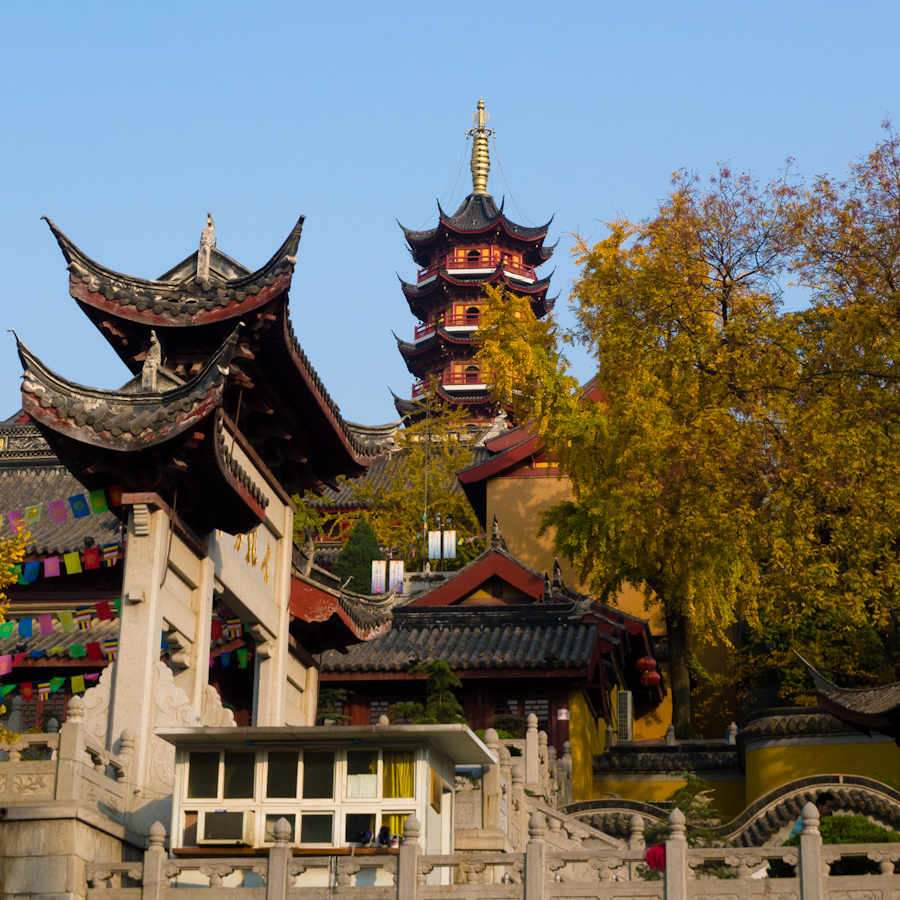
Jiming Temple (鸡鸣寺, Jiming Si) is one of Nanjing's oldest and best‑known Buddhist temples. Perched on a small hill near the centre of the city, it has served religious, cultural and social roles for many centuries. The temple's Chinese name is often translated as "Rooster Crowing Temple," a traditional toponym with local and symbolic resonance. Today Jiming Temple is both an active place of worship and a popular destination for visitors exploring Nanjing's historical sites.
Image gallery
9 Images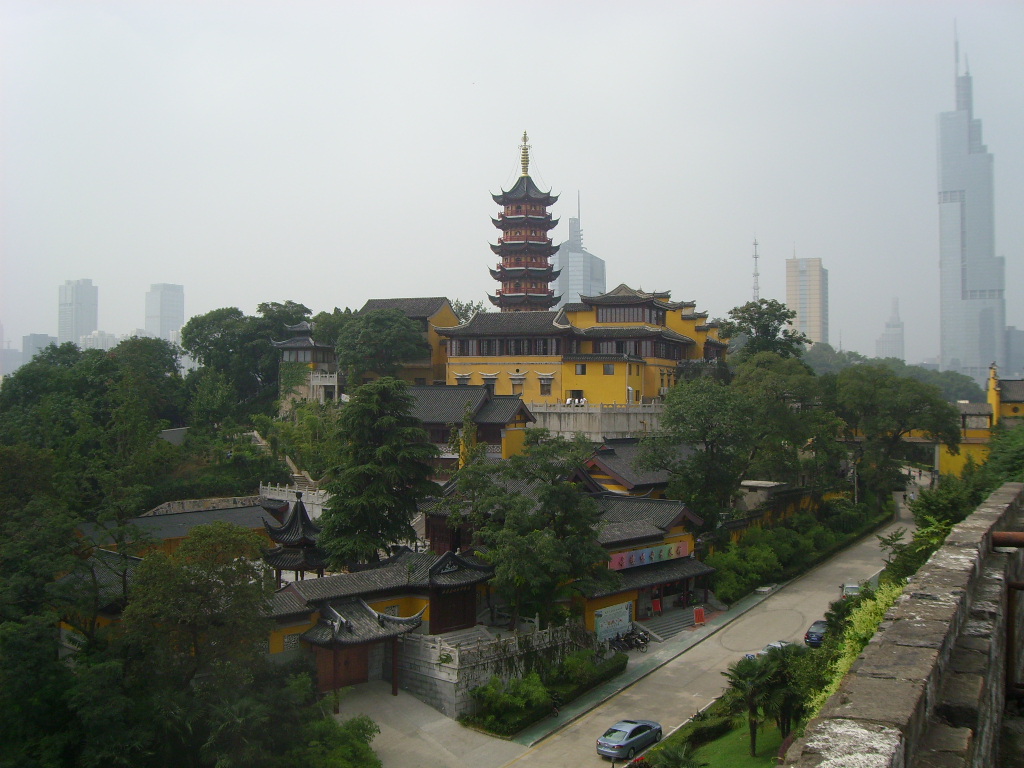



History
The origins of the site date back to the late Three Kingdoms and Western Jin periods, when an early temple or monastic community was established on a gardened hilltop. Historical accounts link the foundation to an earlier institution known as Qixuan Temple, and subsequent dynasties left successive layers of construction and patronage. In 527 the Liang dynasty emperor is recorded to have sponsored a major temple complex on the island or hill then associated with the site, enhancing its prominence as a Buddhist retreat.
During the Ming dynasty the temple saw extensive rebuilding. In 1387 the Hongwu Emperor ordered reconstruction and conferred the name that survives today. Later Ming emperors continued repairs and additions, enlarging the temple grounds; historical sources describe the courtyard reaching a very large area, commonly measured in mu (a traditional Chinese unit of land).
In the mid‑19th century the temple suffered severe damage amid the upheavals that affected Nanjing, including fires that destroyed much of the ancient fabric. A later Qing‑era restoration in the Tongzhi years reestablished monastic activity, but the complex never fully regained the scale it had in its heyday. The modern temple is therefore the product of many phases of rebuilding and preservation.
Architecture and features
Jiming Temple occupies a compact hill site and follows conventions of Chinese Buddhist temple layouts: a sequence of courtyards leading to principal halls, with prayer rooms, side pavilions and service buildings aligned on an axis. Typical features include a main worship hall, attendant niches and towers such as bell and drum pavilions that mark ritual time. The setting near water and urban landmarks enhances the temple's scenic appeal.
Cultural importance and uses
Historically described as the "First Temple of the Southern Dynasties," Jiming Temple has been an influential center for Buddhist ritual, local festivals and monastic life in southern China. It functions today as a place for regular worship, special observances on Buddhist festivals, and a focal point for tourists interested in Nanjing's religious heritage. Its long recorded history and imperial associations make it a key site for understanding the city's spiritual and civic past.
Visiting and notable facts
Jiming Temple stands close to central Nanjing landmarks and is easily reached from the urban core. The approximate site coordinates are given as 32°03′47″N 118°47′24″E. Visitors should expect a compact but layered complex, where reconstructed buildings coexist with older stones, inscriptions and ritual objects. When studying or visiting, it is useful to keep in mind the temple's long history of destruction and renewal — a common pattern among China's ancient religious sites — and its continuing role in local religious life.
- Origins: late Three Kingdoms/Western Jin era.
- Ming rebuilding and naming by the Hongwu Emperor (1387).
- Damaged in 19th‑century upheavals and partially restored in the Tongzhi era.
- Located near central Nanjing and a frequent tourist destination.
Questions and answers
Q: When was Jiming Temple first built?
A: Jiming Temple was first built in the Western Jin Dynasty.
Q: What is the history of Jiming Temple?
A: The history of Jiming Temple can be traced back to Qixuan Temple in Wu during the Three Kingdoms. Around the year 300, a temple was built on the hill. After the Eastern Jin Dynasty, it became part of the Tingwei Department and Emperor Wu of Liang Dynasty renamed it Tongtai Temple. In 1387, Hongwu Emperor ordered its reconstruction and enlargement and named it "Jiming Temple". Later, Xuande, Chenghua and Hongzhi Emperors improved its courtyard which covered more than 100 mu. However, a fire destroyed it during Xianfeng era and although it was rebuilt during Tongzhi Era its scale has been greatly reduced.
Q: What is known about Jiming Temple?
A: Since Middle Ages, Jiming Temple has been known as First temple of Southern Dynasties and is one of oldest Buddhist temples in Nanjing. It sits on top of a hill surrounded by garden with coordinates 32°03′47″N 118°47′24″E / 32.06306°N 118.79000°E / 32.06306; 118.79000 .
Q: What does "mu" refer to?
A: Mu refers to Chinese unit for area measurement which equals 1/15th hectare or 667 square meters approximately .
Q: Who ordered demolition and reconstruction of old houses at Jiminig Temples?
A: The Hongwu Emperor from Ming dynasty ordered demolition and reconstruction of old houses at Jiminig Temples in 1387 .
Q: What happened to Jiminig Temples during Xianfeng Era?
A: During Xianfeng Era ,a fire destroyed ancient temple at Jiminig Temples .
Related articles
Author
AlegsaOnline.com Jiming Temple (Jiming Si) — Historic Buddhist Temple in Nanjing Leandro Alegsa
URL: https://en.alegsaonline.com/art/50255