
Three Kingdoms (China): the era of Wei, Shu Han, and Wu
Period of Chinese disunity following the Han dynasty (late 2nd–3rd century CE) when Cao Wei, Shu Han and Eastern Wu vied for supremacy; notable for military conflict, literature and lasting cultural influence.
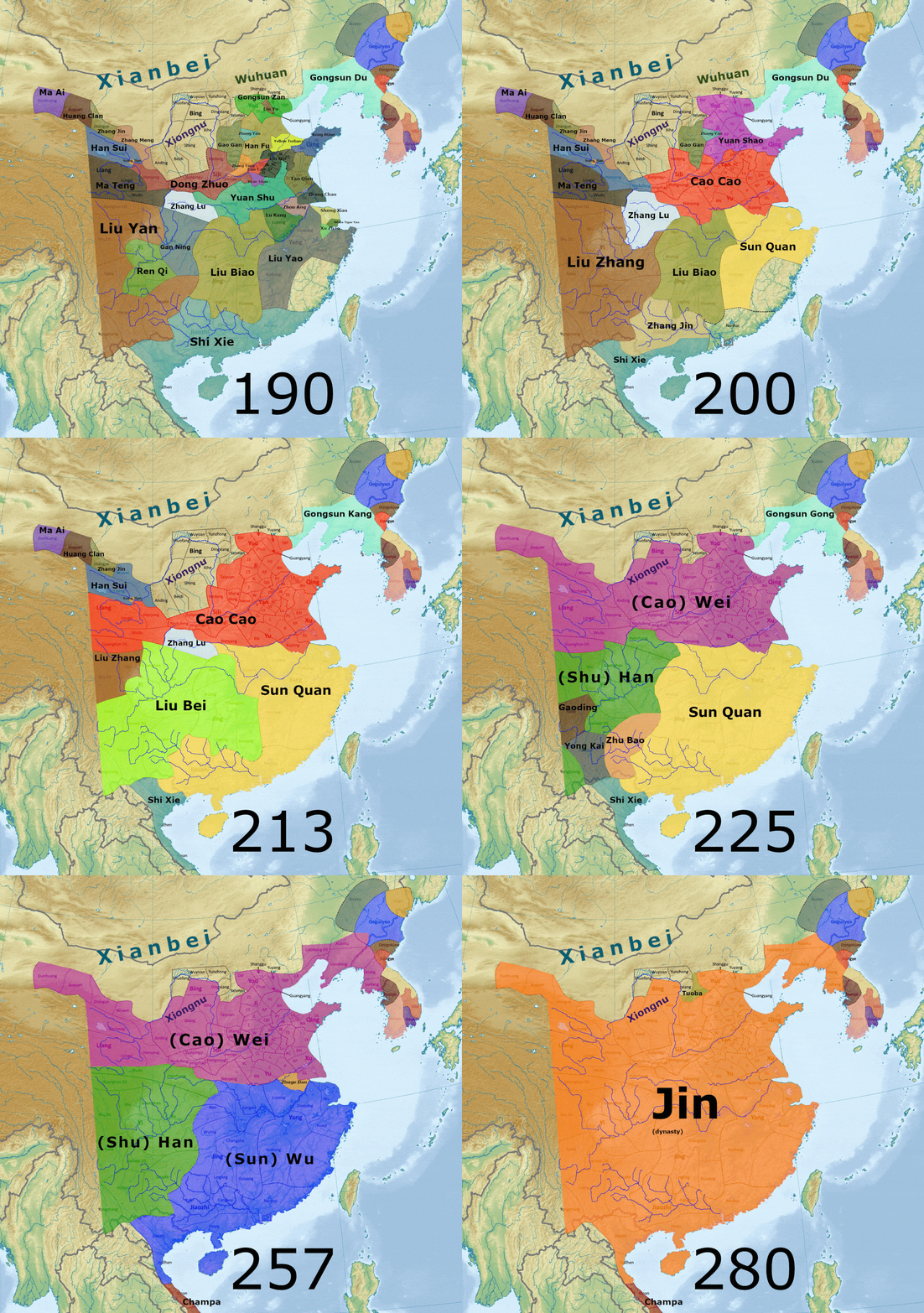
The Three Kingdoms period is a widely studied era in Chinese history during which the political unity of the Han dynasty dissolved and three rival states—commonly called Wei, Shu (Shu Han) and Wu—competed for control of the territory of imperial China. Traditional chronologies place the core of the period from about 220 CE, when the last Han emperor formally abdicated, until about 280 CE, when the Jin dynasty reunited the realm. Some historians mark the beginning earlier, around 189 CE, the year that the Han central government effectively lost control and powerful regional warlords began to assert independent authority. The period is remembered for intense military competition, shifting alliances and the emergence of several influential political and military families.
Image gallery
10 Images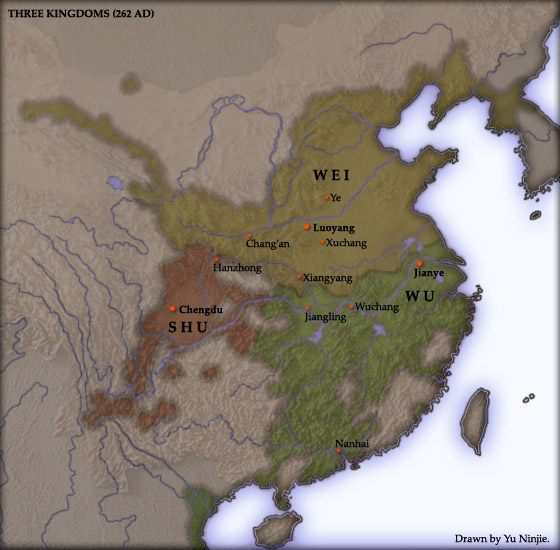



Political divisions and principal actors
After the decline of the Han, three polities emerged as the primary contenders for imperial succession. Each occupied distinct regions and developed its own administrative and military structures:
- Cao Wei (commonly shortened to Wei) controlled much of northern China and grew out of the power base created by the warlord Cao Cao and his successors, including Cao Pi, who accepted the abdication of the last Han emperor and declared himself ruler.
- Shu Han (often called Shu) formed in the southwest around Sichuan and the central plains under leaders such as Liu Bei; it claimed continuity with the Han dynasty and emphasized legitimacy in imperial lineage.
- Eastern Wu (usually called Wu) dominated the Yangtze River delta and the southeast coast, developing strong naval capabilities and emerging under the leadership of Sun Quan and his predecessors.
Chronology and contested starting points
The end of the Han dynasty was a drawn-out process rather than a single event. The abdication of the last Han emperor, Emperor Xian, in 220 CE is a conventional marker for the start of the Three Kingdoms because it formalized the transfer of imperial title to Cao Pi of Wei. However, the political fragmentation that produced separate regional states began earlier; many scholars trace the practical onset to the collapse of central authority after 189 CE, when court factionalism and warlordism paralyzed the imperial government. The period concluded when the Sima family, which had risen to prominence within Wei, established the Jin dynasty and reunified much of China in 280 CE.
Culture, military affairs and primary sources
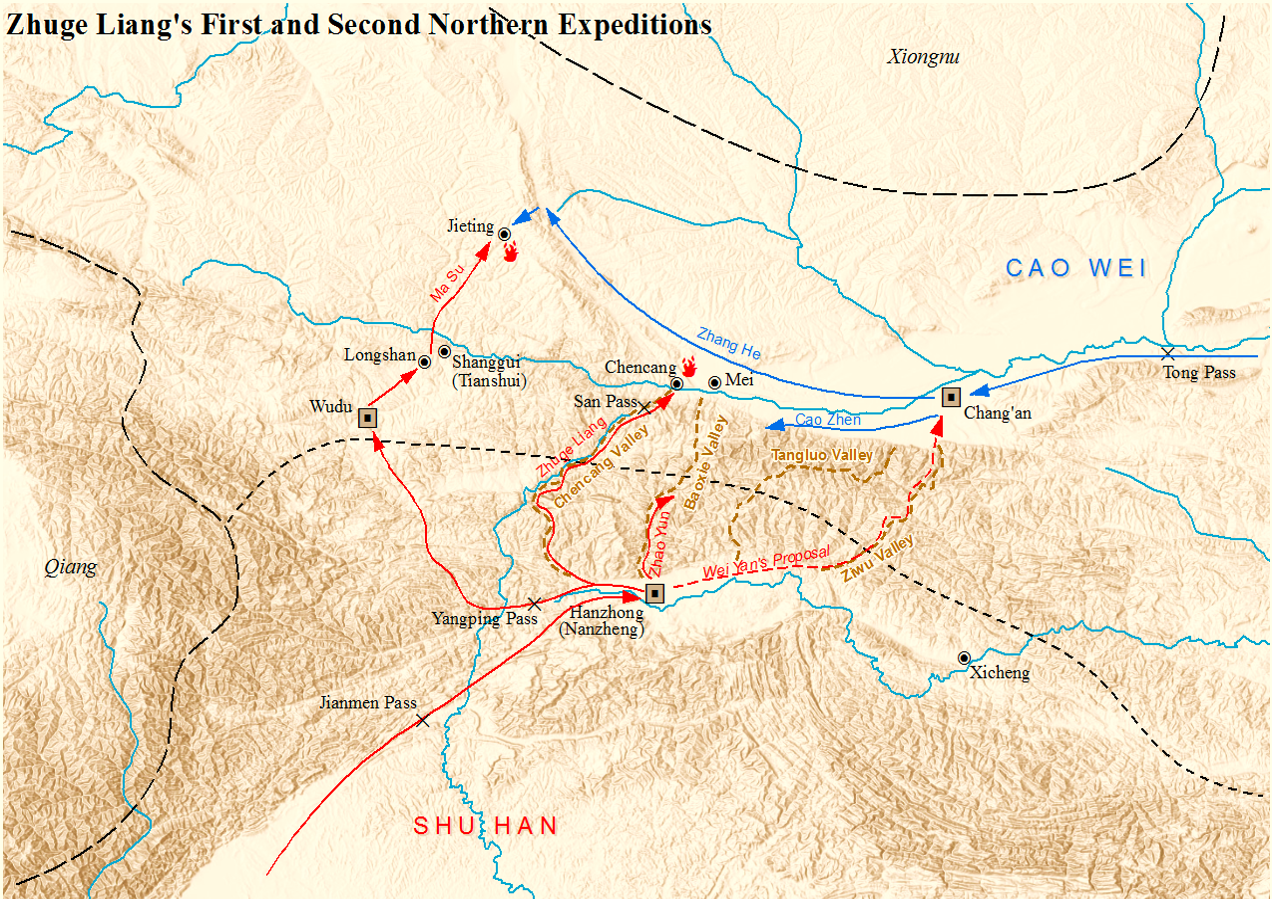
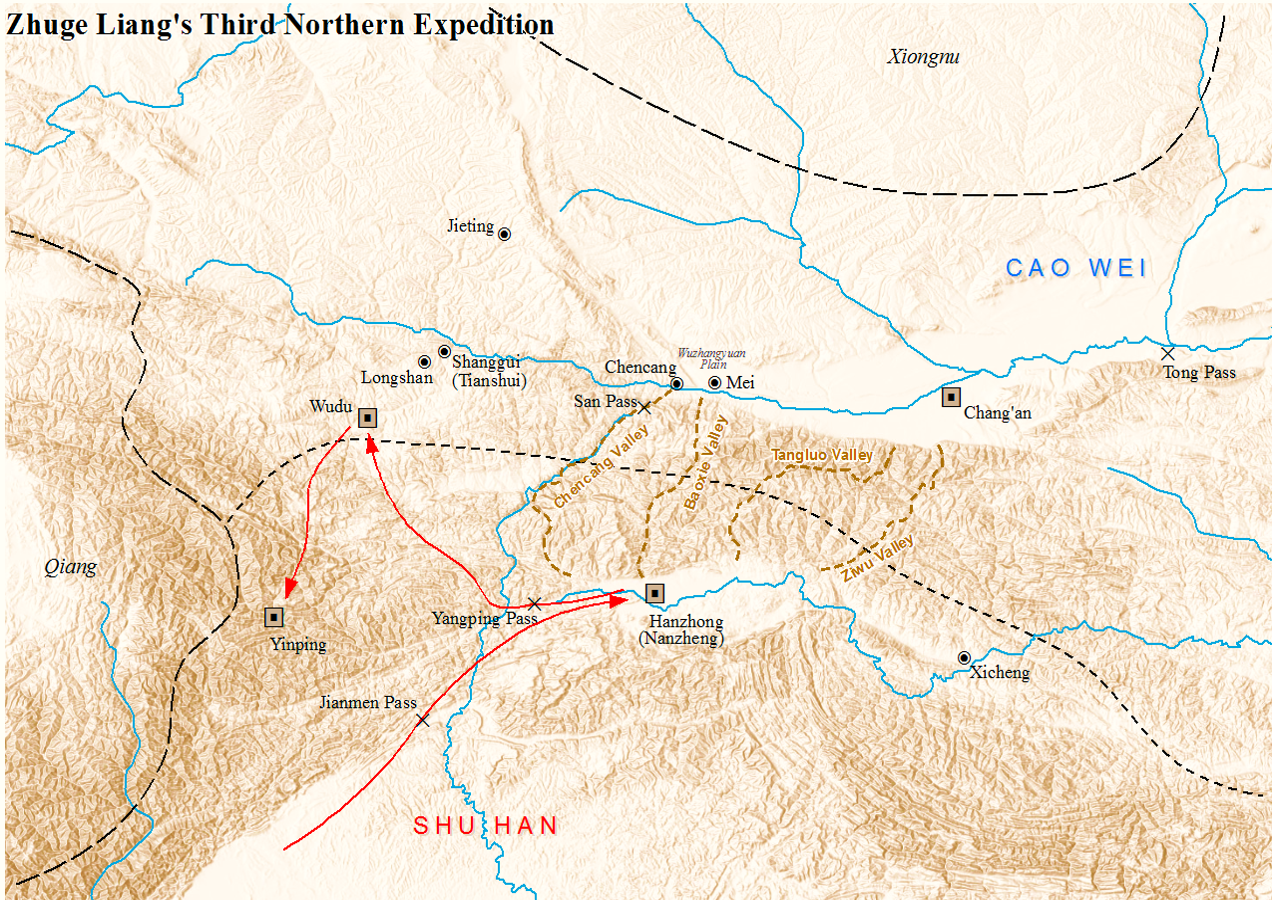
Warfare during the Three Kingdoms featured large-scale troop movements, riverine campaigns, fortified frontier defenses and continuous tactical innovation. Many personalities from the era—Cao Cao, Liu Bei, Sun Quan, Zhuge Liang and Sima Yi among them—are remembered both for military deeds and for statesmanship. Contemporary and later historical records provide the basis for modern understanding; important historical compilations include works such as the Records of the Three Kingdoms, while popular narratives and dramatic retellings, most notably the later novel "Romance of the Three Kingdoms," have shaped public memory and cultural portrayals. These sources must be read with care: official histories, biographies and literary adaptations mix factual reportage, partisan interpretation and storytelling.
Legacy and significance
The Three Kingdoms era has had an outsized influence on East Asian culture and historical imagination. It is a frequent subject for novels, theatre, television series, films, games and academic study. Themes of loyalty, strategy, legitimacy and the rise and fall of states are central to its enduring appeal. Historians debate issues such as which polity could claim legitimate succession to the Han throne, how much the balance of power was determined by personalities versus structural factors, and the ways in which later dynasties appropriated Three Kingdoms imagery for their own political purposes. Archaeology, textual criticism and comparative study continue to refine our picture of the period.
Notable facts and distinctions
- The name "Three Kingdoms" refers to the tripartite division of power rather than to a tidy, stable partition—the borders and allegiances changed repeatedly during the era.
- Some major figures from the era became archetypal characters in East Asian folklore and popular culture.
- Debates over the correct starting date—whether to begin with 189 or 220—reflect different emphases on de facto power versus formal dynastic change.
For further reading on the period and its historiography, see general overviews and primary-source discussions, which provide contrasting perspectives on political legitimacy and military history. Contemporary introductions and scholarly studies remain the best route to navigate the mixture of documented events and later legendary accretions that characterize the Three Kingdoms era. Overview sources and works on the preceding Han dynasty offer useful background, while focused studies address the biographies of major figures and the military campaigns that defined the period. Han dynasty context and debates about succession feature in many treatments, and historians continue to reassess the era using both traditional texts and new evidence. Historiographical analyses explain how different generations of scholars have interpreted questions of legitimacy, chronology and cultural legacy.
Questions and answers
Q: What is Three Kingdoms?
A: Three Kingdoms is the name of a historical period in Ancient China that lasted from about 180 or 220, to about 280.
Q: What were the kingdoms during the Three Kingdoms period?
A: During the Three Kingdoms period, China was split between the kingdoms of Wei, Shu Han and Wu.
Q: Who were the successors after the fall of the Han dynasty?
A: After the fall of the Han dynasty, there were three important successors: Wei, Shu Han, and Wu.
Q: Was any of the three kingdoms strong enough to win against the other two?
A: None of the three kingdoms during the Three Kingdoms period was strong enough to win against the other two.
Q: Did China have an emperor during the Han dynasty?
A: Yes, during the Han dynasty, China had an emperor.
Q: Who united China again in 280?
A: Jin Wudi was the one who united China again in 280.
Q: When did the central government lose most of its power?
A: The central government lost most of its power in 189, and many people think that the time of the Three Kingdoms already started in that year.
Related articles
Author
AlegsaOnline.com Three Kingdoms (China): the era of Wei, Shu Han, and Wu Leandro Alegsa
URL: https://en.alegsaonline.com/art/99645