
Jikji: the earliest extant book printed with movable metal type
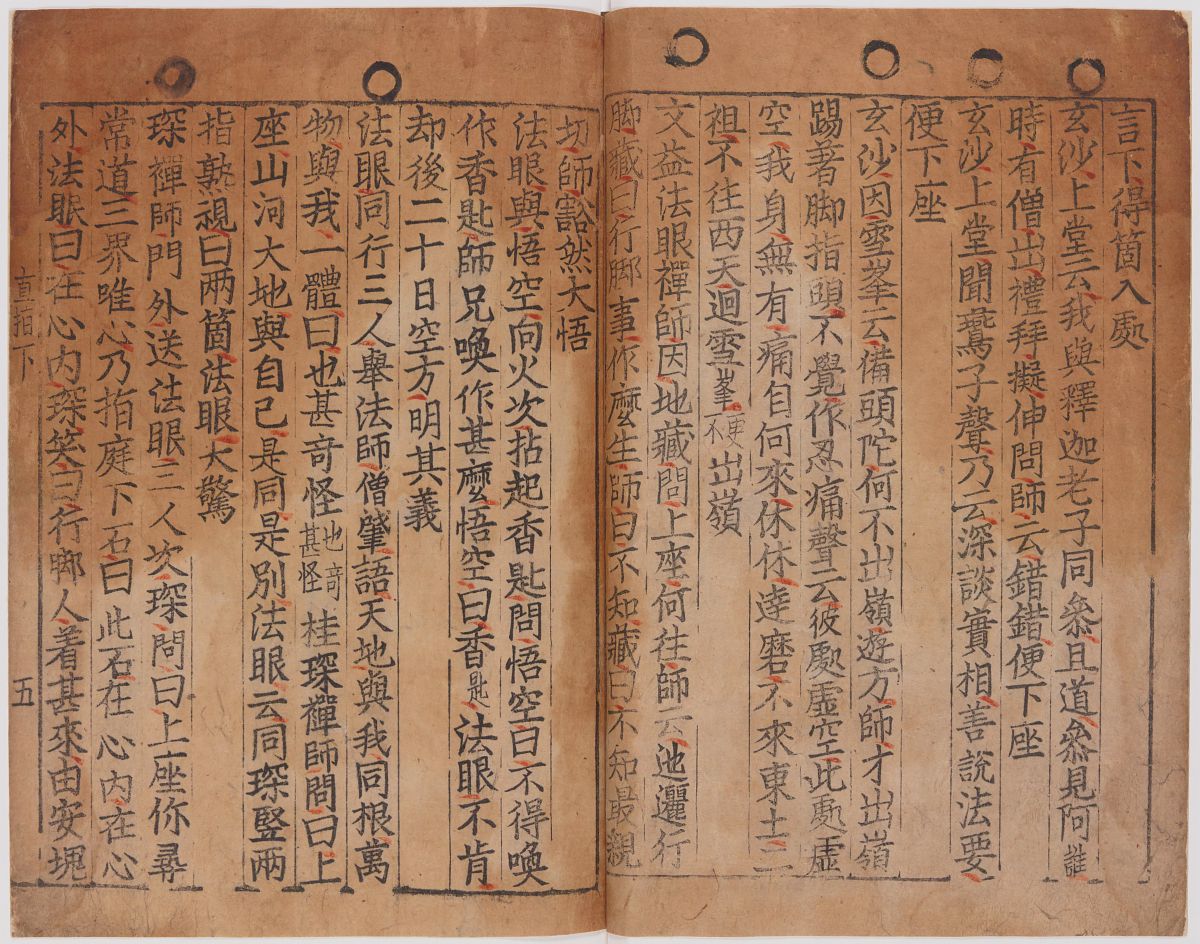
Jikji (Jikji Simche Yojeol) is a 14th‑century Korean Zen Buddhist anthology printed with movable metal type in 1377. Only the second volume survives and is preserved in the National Library of France.
Jikji is the abbreviated name of a Korean Buddhist anthology traditionally known as Jikji Simche Yojeol, often translated as "Anthology of the Great Priests' Zen Teachings." Compiled from earlier Zen (Seon) teachings, the work is famous because a copy printed in 1377 was produced using movable metal type. That example is the oldest surviving book known to have been printed with metal movable type.
Image gallery
3 Images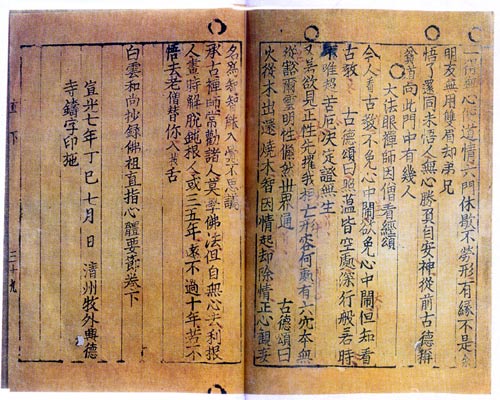

Contents and authorship
The text collects excerpts, instructions and records from prominent Zen masters, arranged for use by monks and students. It was compiled by the monk Baegun, a respected teacher associated with temples on the Korean peninsula. Baegun selected passages intended to transmit doctrinal points and practical guidance rather than to serve as a single authored treatise.
Printing, place and date
The printed edition was produced in 1377 during the Goryeo dynasty. It is believed to have been printed at Heungdeok Temple, where local metalworking and printing techniques were practiced. The significance of the 1377 imprint is technical as well as cultural: it demonstrates that casting and assembling individual metal type characters for printing was in use in Korea before similar methods became widespread in Europe.
Survival, location and recognition
Jikji originally existed in two volumes; only the second volume of the 1377 edition survives. That surviving volume is held today at the National Library of France, where it has been preserved and studied. In 2001 the work was placed on the UNESCO Memory of the World register in recognition of its historical importance.
Historical context and comparisons
Movable type printing appeared in different forms in East Asia before and after this date, including wooden and ceramic types in previous centuries. The Jikji example is notable because it used metal type. European printing history commonly highlights the mid‑15th century Bible printed by Johannes Gutenberg (often called the 42-Line Bible) as a landmark; Jikji predates that famous European printing by several decades. The comparison underlines independent developments in printing technology across regions rather than a single origin story.
Why Jikji matters
- It is a valuable source for the study of Korean Buddhist thought and monastic practice.
- As an early example of metal movable type, it sheds light on the technological history of printing.
- Its preservation and international recognition have prompted research into cultural exchange, conservation, and the global history of books.
Notable facts and further reading
The short name "Jikji" is commonly used in scholarship and public discussion. For context about the language, era and religious tradition involved, see materials on Korean history, the Goryeo period, and the Zen (Seon) strand of Buddhism. Museums and national libraries retain related documents and facsimiles; institutions sometimes provide digital reproductions and commentaries for study. For an entry focused on Western printing developments, consult resources that discuss Gutenberg and the early printed Bible tradition.
Related articles
Author
AlegsaOnline.com Jikji: the earliest extant book printed with movable metal type Leandro Alegsa
URL: https://en.alegsaonline.com/art/50180
Sources
- commons.wikimedia.org : Jikji
- koreatimes.co.kr : The Korea Times: "Jikji: An Invaluable Text of Buddhism"