
Gutenberg Bible (42-line Bible)
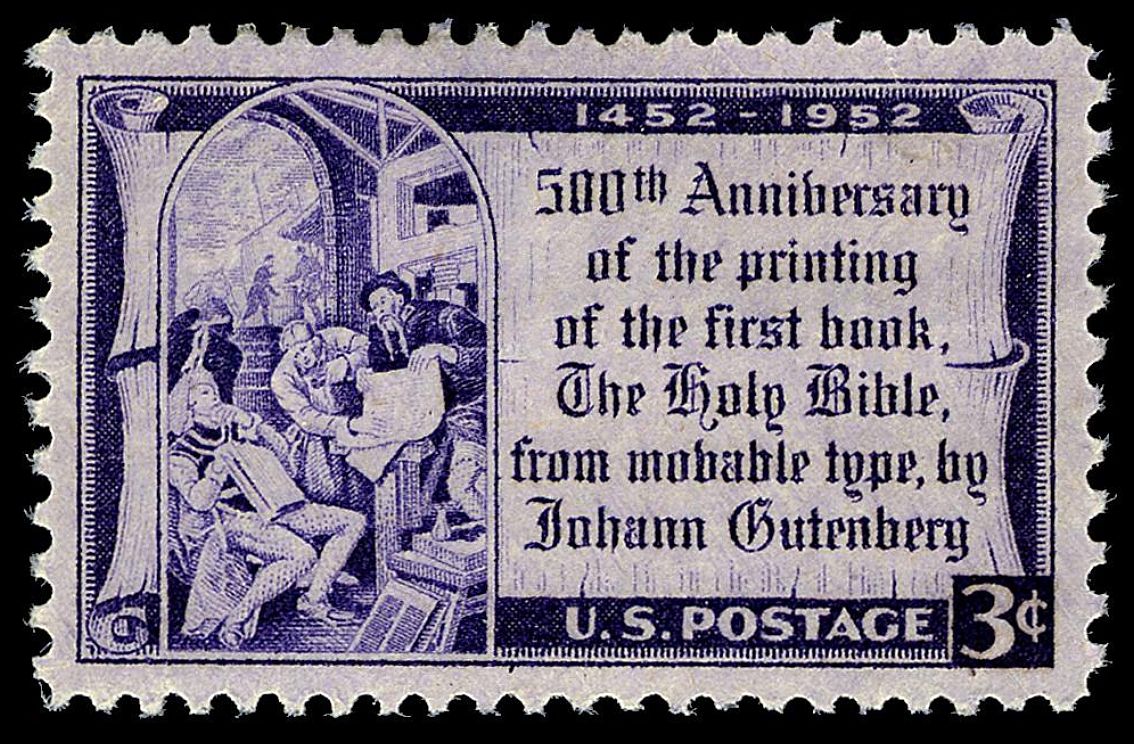
The Gutenberg Bible, printed by Johannes Gutenberg in Mainz c.1454–55, is the first major book produced with movable metal type in Europe and a landmark of the printing revolution.
Overview
The Gutenberg Bible is a Latin edition of the Christian scriptures produced in the mid-15th century using movable metal type. Commissioned and printed by Johannes Gutenberg in Mainz, Germany, it reproduces the Latin Vulgate translation of the Bible. Usually called the "42-line Bible" or the "Mazarin Bible," it is celebrated as the first large-scale book to demonstrate the technical and commercial possibilities of European typographic printing around the 15th century.
Image gallery
10 Images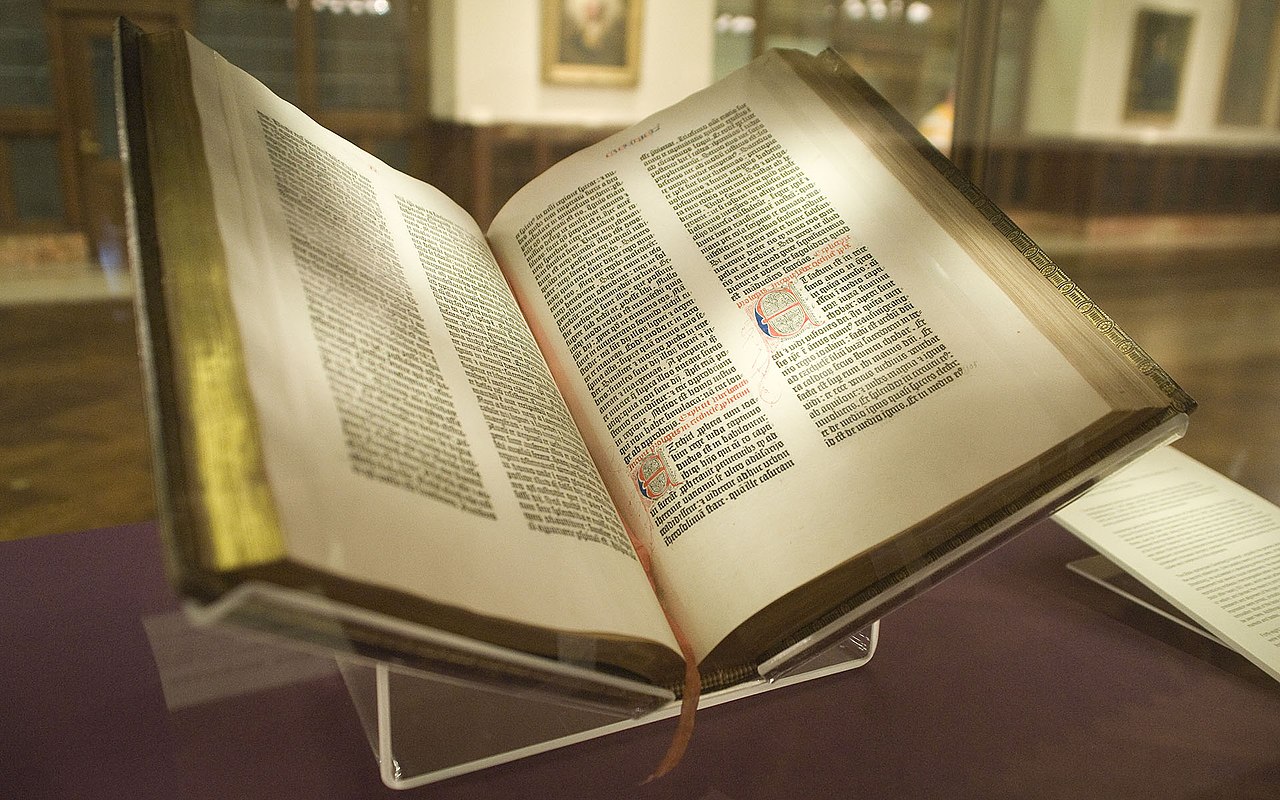



Production and design
Printed on both vellum and paper, the work typically presents two columns of text with forty-two lines per column. Gutenberg developed durable metal type, oil-based inks formulated for printing, and a press mechanism adapted from existing screw presses; these components together allowed repeated, consistent impressions of text pages. After printing, many copies received hand-applied rubrics and decorative initials, so individual copies combine machine-printed text with manuscript-style embellishment.
Characteristics
- Text: Latin Vulgate, the standard medieval Bible translation for Western Europe.
- Format: Folio pages, two columns, 42 lines per column—hence the nickname.
- Production: Movable metal type, oil-based inks, press impressions, plus hand illumination in many copies.
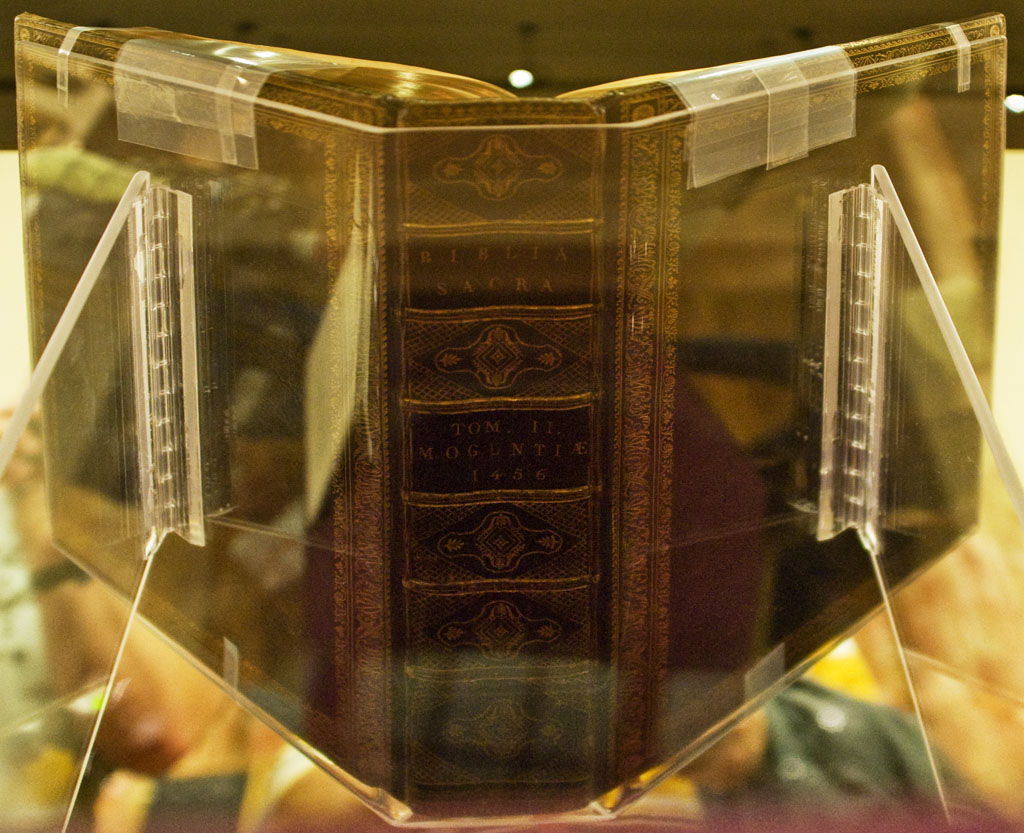
- Survival: Fewer than two hundred copies were produced; around forty-nine survive complete or nearly complete.
Historical importance
The Gutenberg Bible is not simply a religious book but a symbol of a wider technological and cultural shift. By making high-quality, repeatable printed pages feasible, Gutenberg's methods lowered the cost and increased the speed of book production in Europe. This development contributed to wider access to texts, the spread of literacy and learning, and eventually to profound changes in religion, science, and politics through the rapid dissemination of ideas.
Survival and legacy
Complete and partial copies of the Gutenberg Bible are prized by libraries, museums, and collectors; many are held in national and university collections. Each surviving volume provides scholars with evidence about early typecasting, page layout, and the combination of print and handwork in 15th-century bookmaking. The work remains one of the most valuable printed books by virtue of its rarity, beauty, and historical significance.
Context and comparison
Although the Gutenberg Bible is pivotal for European printing history, movable-type printing had earlier instances elsewhere. The Korean printed anthology known as the Jikji predates Gutenberg's Bible by several decades and demonstrates that movable metal type technology developed independently in East Asia. The European innovation lay in the specific combination of durable type, ink chemistry, and press technique that made mass production of books economically viable across Europe.
For further introductory reading, see general resources about the Latin Vulgate, the history of the Bible in manuscript and print, and biographical material on Gutenberg. Major studies of early printing and surviving copies can be found in catalogues and exhibitions hosted by libraries in and beyond Mainz and across Germany.
Questions and answers
Q: What is the Gutenberg Bible?
A: The Gutenberg Bible is a printed version of the Latin Vulgate translation of the Bible that was printed by Johannes Gutenberg in Germany in the 15th century.
Q: What other names is the Gutenberg Bible known by?
A: The Gutenberg Bible is also known as the 42-line Bible or the Mazarin Bible.
Q: Was the Gutenberg Bible the first book to be printed by Gutenberg's new movable type system?
A: No, although it is not the first book to be printed by Gutenberg's new movable type system, it is his major work and of central importance for the start of the "Gutenberg Revolution" and the "Age of the Printed Book."
Q: How many copies of the Gutenberg Bible were made?
A: Fewer than 200 copies of the Gutenberg Bible were made.
Q: How many complete or nearly complete copies of the Gutenberg Bible are known?
A: 49 complete or nearly complete copies of the Gutenberg Bible are known.
Q: How many pages does the Gutenberg Bible have?
A: The Gutenberg Bible has 1286 pages.
Q: What was the earliest known book with movable type and when was it published?
A: The earliest known book with movable type was published 78 years before the Gutenberg Bible in Korea and is known as the Jikji.
Related articles
Author
AlegsaOnline.com Gutenberg Bible (42-line Bible) Leandro Alegsa
URL: https://en.alegsaonline.com/art/41535
Sources
- portal.unesco.org : Memory of the World