
Jeonju: Cultural Heart of Korea’s Honam Plain
Jeonju is a historic city in South Korea's Honam Plain, famed for its Hanok Village, UNESCO City of Gastronomy status, traditional crafts, and links to the Joseon founding lineage.
Overview
Jeonju is a city in southwestern Korea that has long been regarded as the cultural and agricultural center of the Honam Plain, an area known for fertile farmland and rich regional traditions. Today it is noted both for well-preserved examples of traditional Korean architecture and for a lively contemporary cultural scene. Visitors come for food, craftwork, historic neighborhoods and film and music festivals that celebrate local creativity and heritage.
Image gallery
10 Images


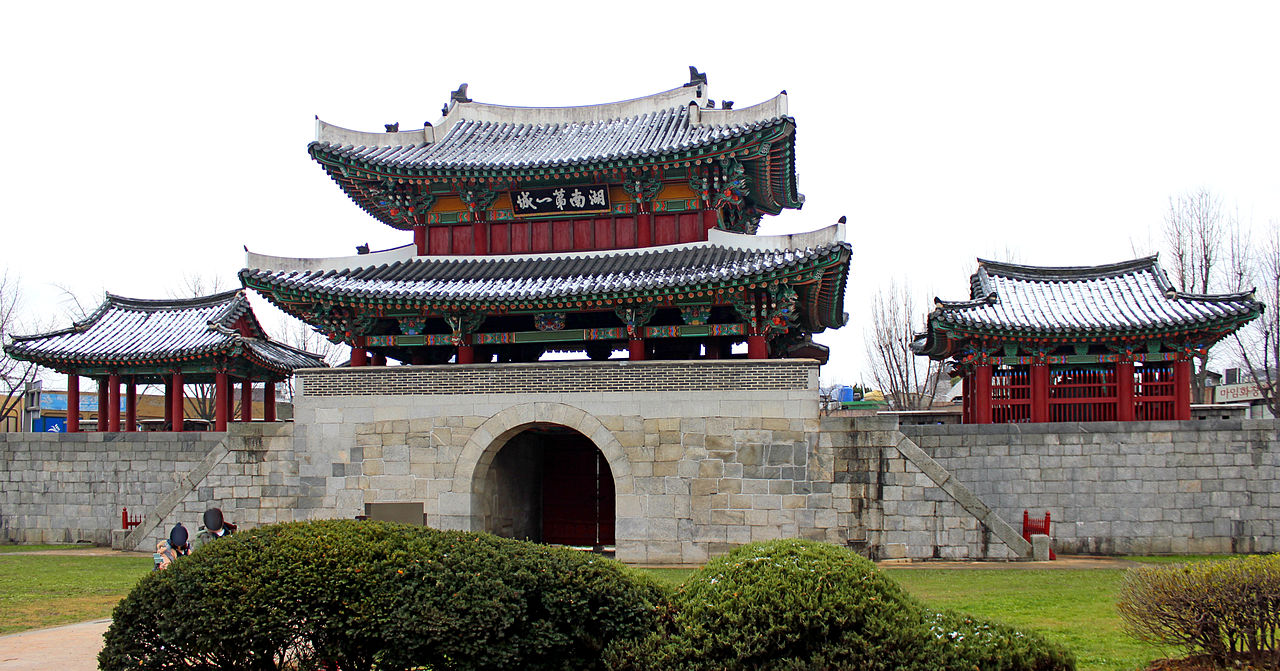
Historical background
Early written records refer to the settlement under the name Wansanju during the Unified Silla period. In the centuries that followed, Jeonju's strategic and fertile location made it an administrative and military focal point. After the fragmentation of Unified Silla, the locality served as an important center for one of the successor polities often identified as late Baekje; modern accounts sometimes link that period to broader regional shifts in power and identity. During the later medieval era Jeonju gained particular prominence as the ancestral seat of the Lee family from which the founder of the Joseon dynasty emerged, a connection that shaped its political and cultural reputation throughout Joseon times. For further context, see historical summaries of late Baekje and the Joseon period.
Architecture, crafts and living traditions
Jeonju is perhaps best known for its Hanok Village, a compact district of traditional wooden houses with tiled roofs, raised wooden floors, and ondol — the Korean underfloor heating system. Many hanok there date from the Joseon era or are modern reconstructions that retain traditional building methods. The city is also associated with hanji, the handmade paper produced from mulberry bark, and with practices of traditional Korean medicine and folk crafts. Visitors can often join workshops to learn papermaking, calligraphy, or to sample medicinal teas and remedies in settings designed for cultural exchange.
Gastronomy and culinary reputation
Jeonju has an enduring reputation for food. It has been formally recognized by UNESCO as a City of Gastronomy because of its distinctive culinary traditions and the role of local produce and techniques in Korean cuisine. Two dishes that tourists and Korean visitors frequently associate with Jeonju are bibimbap and kongnamulgukbap (bean-sprout soup with rice). Jeonju-style bibimbap is celebrated for its balanced assembly of sautéed and seasoned vegetables, rice, proteins and seasonings that are combined to create a harmonious bowl; many versions emphasize fresh local ingredients and a finishing touch of chili paste or sesame oil. Kongnamulgukbap is a comforting, broth-based dish in which tender bean sprouts and savory stock are served together with rice, often enjoyed as a staple or restorative soup.
Festivals, events and modern culture
Beyond history and cuisine, Jeonju hosts cultural festivals and events that draw domestic and international audiences. Film and arts festivals, street markets, and seasonal celebrations showcase traditional music, contemporary art and local craft forms. The city’s layout makes it easy to combine visits to the Hanok Village, museums and food markets in a single itinerary, and many small galleries and theaters contribute to an active cultural calendar year-round.
Practical notes and distinguishing features
- What to see: Hanok Village, local museums, traditional workshops and food alleys.
- What to taste: regional specialities such as bibimbap and kongnamulgukbap, plus local snacks and street food.
- Why it matters: Jeonju preserves a concentration of everyday traditional architecture and culinary practice that links contemporary Koreans to their historical roots.
Whether approached for its living heritage, its food culture or its role in Korea’s historical geography, Jeonju offers an accessible window into the traditions and creative life of the Honam region. For more specialized historical or cultural resources see general references on late Baekje, the Joseon era and culinary overviews of bibimbap.
Questions and answers
Q: What is the city of Jeonju known for?
A: Jeonju is known as a city with 1000-year history and is promoted as a gateway to traditional Korean culture and gastronomy. It has also been designated by UNESCO as a City of Gastronomy.
Q: When was the first historic record about Jeonju recorded?
A: The first historic record about Jeonju comes from the Unified Silla Period.
Q: What is the Hanok Village in Jeonju?
A: The Hanok Village in Jeonju is one of the most famous tourist attractions that many Koreans and foreigners visit every year. It is where traditional Korean houses from the Joseon Period are preserved, offering traditional Korean cuisine, hanji, or traditional Korean paper, and oriental medicine. Tourists can get a hands-on experience at various tourist facilities and historic sites in the city.
Q: Who was Lee Sung-gae?
A: Lee Sung-gae was the first ancestor of the first king of Joseon Dynasty who originated from Jeonju during this period.
Q: What are two popular dishes associated with Jeonju?
A: Two most famous foods from Jeonju are bibimbap and kongnamulgukbap (a bean sprout soup). Bibimbap is a dish that mixes rice with sautéed vegetables, meat, eggs, and hot red-pepper paste offered in a bowl while kongnamulgukbap is a bean sprout soup offered with rice in it.
Q: Where does Korea's most fertile farmland encompass today?
A: Korea’s most fertile farmland encompasses today’s South and North Jeolla Provinces.
Related articles
Author
AlegsaOnline.com Jeonju: Cultural Heart of Korea’s Honam Plain Leandro Alegsa
URL: https://en.alegsaonline.com/art/49931
Sources
- kma.go.kr : 평년값자료(1981–2010) 전주(146)
- kma.go.kr : 기후자료 극값(최대값) 전체년도 일최고기온 (℃) 최고순위, 전주(146)
- kma.go.kr : 기후자료 극값(최대값) 전체년도 일최저기온 (℃) 최고순위, 전주(146)
- kma.go.kr : "Climatological Normals of Korea" · web.archive.org