
Jeong Mong-ju (1337–1392): Goryeo statesman, Confucian scholar, and symbol of loyalty
Jeong Mong-ju was a late Goryeo politician, Confucian scholar and poet, remembered as the dynasty's last prime minister and for his assassination in 1392 that helped bring about the Joseon founding.
Overview
Jeong Mong-ju (정몽주; 鄭夢周, 1337–April 1392) was a leading politician, scholar-official and poet of the late Goryeo period. He is widely remembered in Korean history as a devoted loyalist to the Goryeo court, a respected Confucian thinker, and the last person to hold the office commonly described as prime minister under the Goryeo dynasty (1390–1392).
Image gallery
4 Images


Names and identity
Jeong used several given names and pen names in literary and official contexts. Among them were Mongran (몽란, 夢蘭) and Mongryong (몽룡, 夢龍), while his sobriquet Poeun (포은, 圃隱) appears frequently in later commemorations. These names appear in his poems, official memorials and in the inscriptions of shrines that honor his life.
Career and intellectual life
Trained in the Confucian classics, Jeong rose through the examination and bureaucratic systems of Goryeo. He held high civil posts and served as a senior minister during a turbulent time when royal authority and military leaders vied for power. His reputation rested not only on administrative service but also on moral standing: contemporaries and later historians praised his learning, rectitude, and measured counsel. As a scholar he contributed poetry and prose that reflected Confucian ethics and the responsibilities of ministers toward the throne and society.
Assassination and historical significance
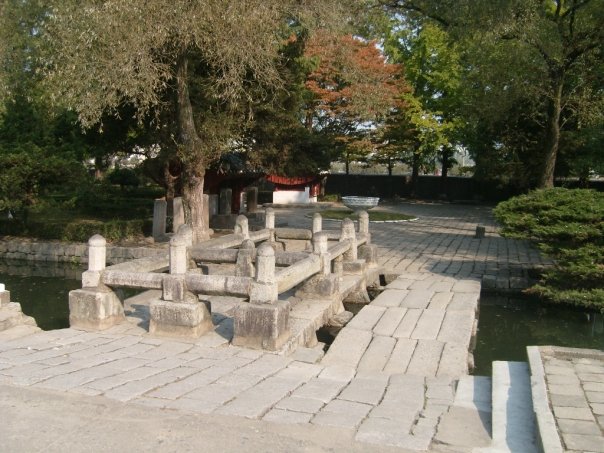
In April 1392 Jeong was killed at a riverside bridge in an incident that has been interpreted as political murder tied to the transition from Goryeo to the new Joseon regime. Agents associated with the rising faction led by Yi Seong-gye carried out the attack; among those commonly associated with the deed is Yi Bang-won (later King Taejong). Jeong's death removed a prominent voice opposing a dynastic change and has been seen as a pivotal episode that cleared the way for the founding of Joseon.
Works, reputation and cultural legacy
Jeong's literary output includes poems and memorials that emphasize integrity and the Confucian ideal of loyal service. A short lyric often attributed to him became emblematic of unswerving loyalty and has been cited in later Korean moral discourse. Over subsequent centuries he has been commemorated in biographies, shrines and local rituals as an exemplar of fidelity to a lawful sovereign and of personal rectitude in public life.
Memorials and distinctions
Sites associated with Jeong—his grave, memorial pavilions and the location of his killing—became focal points for remembrance and historical reflection. Scholars and the public continue to discuss his life as a case study in the tensions between personal loyalty and political change, and he remains a frequent subject in Korean education and cultural memory.
- Key roles: high civil official, scholar, poet, last Goryeo prime minister (1390–1392)
- Common themes: Confucian ethics, loyalty, moral courage
- Legacy: symbol of principled resistance to dynastic usurpation
Related articles
Author
AlegsaOnline.com Jeong Mong-ju (1337–1392): Goryeo statesman, Confucian scholar, and symbol of loyalty Leandro Alegsa
URL: https://en.alegsaonline.com/art/49929
Sources
- commons.wikimedia.org : Jeong Mongju
- 100.naver.com : 100.naver.com/100.nhn?docid=136035
- koreandb.nate.com : koreandb.nate.com