
Jazz blues
Jazz blues is a style that blends the harmonic vocabulary and improvisation of jazz with the forms, phrasing, and feeling of the blues, often using 12-bar patterns enriched with jazz chords.
Overview
Jazz blues refers to a musical approach that fuses the expressive vocabulary of blues with the harmonic complexity and improvisational emphasis of jazz. At its core it uses blues forms and motifs while expanding them with jazz harmony, extended chords and soloing techniques. The term sits at the intersection of two traditions: the blues lineage and the broader jazz family.
Image gallery
2 Images
Characteristics
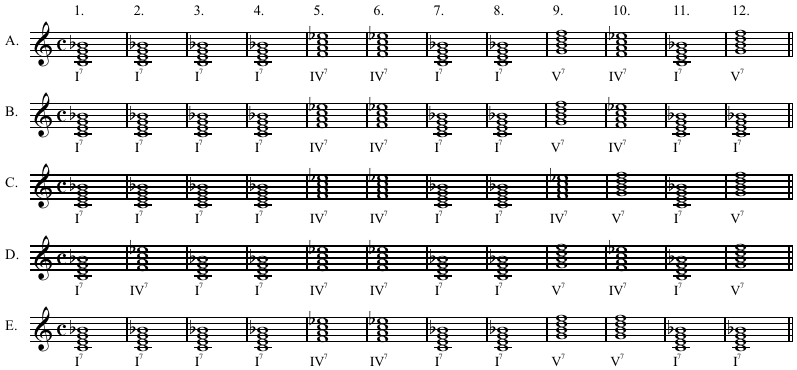
Although varied in practice, jazz blues commonly features a 12-bar structure as a foundation, but performers often alter chords, rhythms and voicings. Typical traits include:
- Use of blues scales and blue notes as melodic material.
- Extended and altered chords (9ths, 11ths, 13ths) and ii–V substitutions.
- Swing or shuffle rhythmic feel and walking bass lines.
- Emphasis on improvisation over repeating harmonic cycles.
- Turnarounds and altered cadences that lead back into the form.
History and development
The style grew as jazz musicians absorbed the blues early in the 20th century, treating its simple forms as vehicles for more elaborate harmonic and rhythmic exploration. Bebop and later modern jazz expanded blues changes by inserting faster chord movement and complex substitutions. At the same time, some artists preserved a more direct, earthy blues feeling while applying jazz phrasing and instrumental technique.
Examples and notable uses
Jazz blues appears across small-group combos and big bands, and it is central to jam-session repertoire. Examples from the jazz canon include straightforward blues tunes, bebop blues with denser changes, and modal blues that emphasize scale modes. Pieces often used for teaching improvisation are drawn from this repertoire because the form balances repetition with freedom.
Distinctions and influence
Jazz blues is distinct from electric or rural blues styles that center vocal storytelling and simpler harmonic movement. It also differs from mainstream jazz standards by retaining the blues pulse and call‑and‑response phrasing. The style has influenced rock, R&B and contemporary improvised music and remains a common platform for musicians to develop phrasing, feel and harmonic fluency. For further reading on related genres see genre overview and entries on blues.
Note: Specific tunes and artist interpretations vary widely; the labels "jazz blues," "bebop blues" or "minor blues" describe approaches rather than rigid categories.
Related articles
Author
AlegsaOnline.com Jazz blues Leandro Alegsa
URL: https://en.alegsaonline.com/art/49684