
Jan Kochanowski — Polish Renaissance Poet and Playwright (1530–1584)
Jan Kochanowski (1530–1584) was a leading Polish Renaissance poet, translator and playwright whose lyrical and elegiac works—especially the Fraszki and the Laments—helped shape the Polish literary language.
Jan Kochanowski (1530–1584) is recognized as a central figure of the Polish Renaissance: a respected poet, skilled translator and an influential playwright. Writing in the vernacular at a moment when classical models were being rediscovered, he produced verse that combined classical forms, humanist learning and personal feeling. His work remains a cornerstone of Polish literature.
Born to the lesser nobility, Kochanowski studied in Poland and continued his education abroad, absorbing classical and humanist currents common to the Renaissance. He spent much of his adult life on his estates, active in the cultural life of the Commonwealth and in correspondence and patronage networks that connected writers, scholars and magnates. His training and contacts helped him adapt Latin and Greek models to a Slavic language environment.
Image gallery
7 Images


Major works
His output spans short poems, lyrical cycles, translations and drama. Notable items include:
- Fraszki — a large collection of short, often witty epigrams and occasional poems that show stylistic variety and social observation.
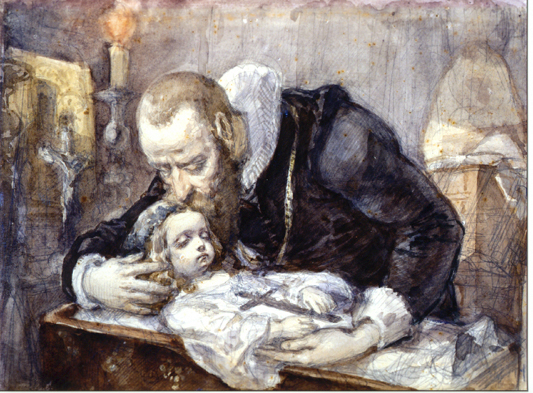
- Treny (The Laments) — a sustained sequence of elegies mourning the death of his young daughter; widely admired for its emotional depth and philosophical reflection.
- Pieśni (Songs) — lyric pieces that draw on classical and folk motifs.
- Odprawa posłów greckich (The Dismissal of the Grecian Envoys) — a tragedy that demonstrates his engagement with dramatic forms and public themes.
Beyond original poems, Kochanowski produced translations and adaptations of Latin and Greek texts and Biblical passages, helping to introduce and naturalize classical ideas in Polish letters. His practice of rendering complex rhetorical and metrical effects into Polish advanced the language's expressive range and set standards for later writers.
Style and influence
Kochanowski combined humanist erudition with attention to the sound and rhythm of Polish: his verses range from playful epigrams to serious philosophical and moral reflections. The personal grief of the Laments and the polished economy of the Fraszki illustrate his versatility. Because he chose to write in the national language rather than only in Latin, he is often credited with helping to establish a literary Polish suitable for a wide array of subjects.
Scholars and readers have long studied his work for its formal innovation and cultural importance. Contemporary editions, translations and critical studies keep his poems in print, while commemorations and references in later writing attest to his lasting place in Central European letters. For introductions and authoritative overviews see a general biography and surveys of the Renaissance context.
Related articles
Author
AlegsaOnline.com Jan Kochanowski — Polish Renaissance Poet and Playwright (1530–1584) Leandro Alegsa
URL: https://en.alegsaonline.com/art/49360
Sources
- culture.pl : "Jan Kochanowski"
- poemhunter.com : "Jan Kochanowski"
- britannica.com : Jan Kochanowski at Enciclopaedia Britannica.
- sciaga.pl : "Biografia Jana Kochanowskiego"
- fp.amu.edu.pl : "Bilingualism in the Writings of Jan Kochanowski"
- info-poland.buffalo.edu : "Jan Kochanowski (1530 - 1584)"