
Juche Tower
A 170 m monument in Pyongyang commemorating the Juche idea and Kim Il‑Sung, noted for its torch, symbolism and role in North Korean civic space and tourism.
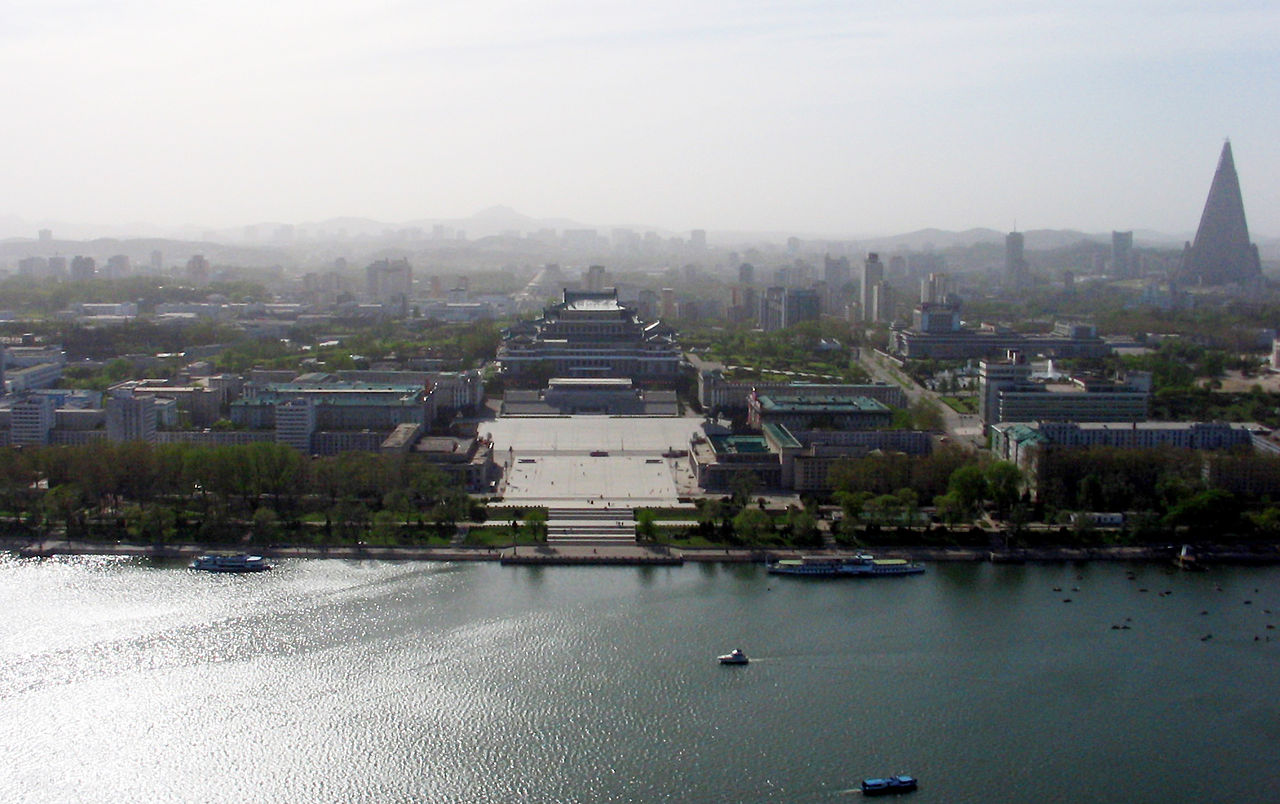
The Juche Tower is a prominent monument on the eastern bank of the Taedong River in central Pyongyang. Erected in 1982, it was unveiled as a commemorative structure linked to the leadership of Kim Il‑Sung and the state philosophy known as Juche. The tower occupies a visible position opposite Kim Il‑Sung Square and functions both as a symbol of national ideology and as a civic landmark frequently mentioned in descriptions of North Korea.
Image gallery
10 Images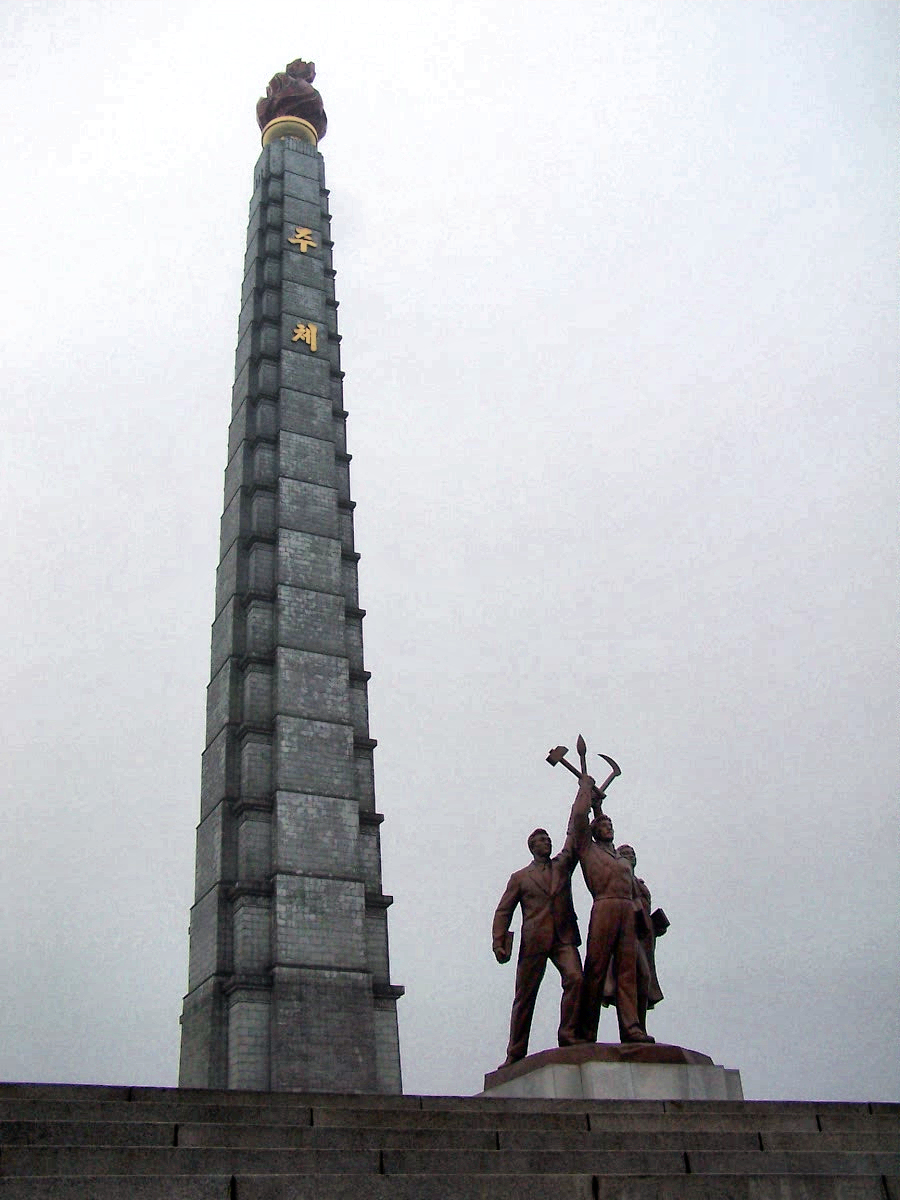


Design and physical description
The tower rises to approximately 170 metres and is notable for a glowing torch that caps the shaft. The main shaft is clad in white stone and is often described in reports as composed of many individual blocks arranged in a pattern intended to carry symbolic meaning. According to widely reported accounts, the structure includes a large number of dressed blocks and a multi‑metre torch made from a heavy, reflective material. Visitors can reach observation levels inside the tower to look across the Taedong River toward the central city.
Symbolism and surrounding features
At the base of the tower stands a group statue featuring three larger‑than‑life figures bearing a hammer, a sickle and a writing brush—symbolizing the worker, the peasant and the intellectual. Around the site there are landscaped pavilions, fountains and a wall of plaques reportedly presented by foreign supporters or partner organizations. The composition of the monument and its immediate surroundings was planned to express political themes: self‑reliance, the unity of social classes under the ruling ideology, and the exaltation of revolutionary leadership.
History, dedication and claims
The Juche Tower was completed and formally opened in 1982 in association with a milestone birthday of Kim Il‑Sung; contemporary statements tied its inauguration to that commemoration. Some official and secondary sources attribute the tower's design to Kim Jong‑il and describe unusually rapid construction phases, though such claims are reported with qualifiers in outside descriptions. The tower's name refers directly to the Juche idea—the guiding political doctrine of the state—and the monument is sometimes called the Tower of the Juche Idea or Juche Ideology Tower.
Visiting, interpretation and reception
For residents and visitors the site functions both as a place of civic ceremony and as a tourist destination. Guided tours often include an ascent to the observation platform and examination of the sculptural program at the base. Commentators outside the country discuss the tower in the context of monumental architecture used to promote political narratives, and some attention has been paid to the tower's engineering, the materials of the torch and the numerical symbolism reportedly encoded in its blockwork. While it is a focal point of national pageantry, opinions about its aesthetic and political significance vary widely.
Quick facts
- Location: eastern bank of the Taedong River, opposite Kim Il‑Sung Square (1982 inauguration reported).
- Height: commonly cited as about 170 m, with a multi‑metre torch atop the shaft.
- Statues and features: three‑figure worker‑peasant‑intellectual group, plaques and landscaped areas.
- Ideological link: named for the Juche principle (Juche).
- Attribution and construction: sometimes credited to Kim Jong‑il in official narratives; reports describe rapid construction phases.
The Juche Tower remains one of the most photographed and cited monuments associated with modern North Korean state identity, serving as both a literal marker on Pyongyang's riverfront and as a physical embodiment of the political doctrine it commemorates. For further visual material or visitor information see regional guidebooks and photographic collections maintained by institutions that document East Asian architecture and public monuments. Learn more about its placement and description, or consult materials that contextualize the tower within broader urban and ideological landscapes.
Questions and answers
Q: What is the Juche Tower?
A: The Juche Tower is a monument located in Pyongyang, North Korea.
Q: When was it completed?
A: It was completed in 1982.
Q: Where is it located?
A: It is located on the eastern bank of the Taedong River, opposite the Kim Il-Sung Square.
Q: Who designed the tower?
A: It is claimed that the tower was designed by Kim Jong-il.
Q: What does the tower symbolize?
A: The tower was made to celebrate the anniversary of Kim Il-Sung's 70th birthday, and it is named after the principle of Juche developed by Kim Il-Sung.
Q: How tall is the tower and what is it made of?
A: The tower is 170 meters (560') tall and is made up of 25,550 blocks dressed in white stone with seventy dividers. It is also capped with a 20-meter high, 45-ton shining torch allegedly made out of 'special materials.'
Q: What other features are there near the tower?
A: In front of the tower is a 30-meter high statue consisting of three figures: one with a hammer, one with a sickle, and one with a writing brush (an idealized worker, a peasant, and a "working intellectual"). There is also a wall of 82 friendship plaques apparently from foreign supporters, pavilions, and water features.
Related articles
Author
AlegsaOnline.com Juche Tower Leandro Alegsa
URL: https://en.alegsaonline.com/art/51397