
Islamic terrorism
Violent acts carried out by individuals or groups who claim Islamic motivations or goals; distinct from Islam as a religion and widely rejected by mainstream Muslim authorities.
Overview
Islamic terrorism refers to violent actions by individuals or organized groups who assert that their attacks are motivated by Islam or by a particular interpretation of Islamic teaching. The term is commonly used in media and policy discussions to describe violent extremist campaigns that adopt religious language and symbols to justify violence. It is important to distinguish between the religion of Islam as practiced by the majority of Muslims and the small minority who adopt militant ideologies.
Image gallery
3 Images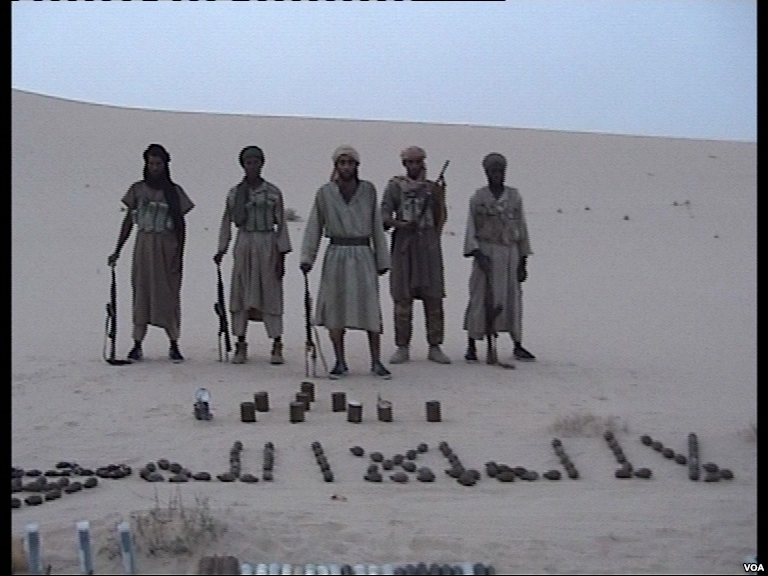


Characteristics and common features
Groups and actors described as Islamic terrorists typically combine political aims with a radical religious ideology. Their stated goals can include overthrowing governments, expelling foreign forces, creating a state governed by their interpretation of Islamic law, or provoking sectarian conflict. Methods often include suicide bombings, armed assaults, hostage-taking, targeted assassinations, and improvised explosive devices. Perpetrators frequently use selective readings of scripture and historical narratives to legitimize violence, while many scholars and religious leaders reject those interpretations as flawed or illegitimate.
Examples and notable organizations
Several well-known organizations have been identified by governments and researchers as engaged in Islamist extremist violence. Examples often mentioned are Al-Qaeda, the group behind the 2001 attacks in the United States; the self-styled Islamic State known for its insurgency and territorial claims in Iraq and Syria and often referred to as ISIL or ISIS (Islamic State); and Boko Haram, active in parts of West Africa (Boko Haram). Reporting and analyses of these groups frequently appear alongside broader discussions of terrorism and the political contexts in which it arises.
Historical context and development
Violent movements that have invoked Islam as part of their rhetoric have diverse origins and trajectories. Some emerged in the late 20th century amid anti-colonial, Cold War, and regional conflicts; others formed in reaction to foreign military interventions, authoritarian governance, or social grievances. Major turning points include transnational networks forming in the 1980s and 1990s and the expansion of violent groups in failed or war-torn states. The rise of online communication and social media has also changed recruitment and propaganda methods.
Debates, terminology, and distinctions
Scholars and commentators debate labels: some prefer "Islamist terrorism," "violent Islamist extremism," or "terrorism by groups claiming Islamist motives" to avoid equating a religion with violent acts. Many Muslim scholars, community leaders, and civil society organizations emphasize that mainstream Islamic teaching condemns the killing of innocents and that most victims of Islamist violence are themselves Muslim. Discussions often note that grievances driving violence are as much political, economic, and social as they are theological.
Impact and responses
The impact of Islamist-motivated violence is global: it affects security policy, refugee flows, intercommunal relations, and international law. Responses include law enforcement and intelligence operations, military campaigns against armed groups, and non-military measures such as community engagement, counter-messaging, education, and rehabilitation or deradicalization programs. Effective responses typically combine security actions with efforts to reduce the underlying conditions that can fuel radicalization.
Further reading
- Background on how terrorism is defined and studied: terrorism
- Religion and interpretation: religion and scripture debates in modern contexts
- Information about Islam and mainstream teachings: Islam
- Profiles of major groups: Al-Qaeda, Islamic State, Boko Haram
Related articles
Author
AlegsaOnline.com Islamic terrorism Leandro Alegsa
URL: https://en.alegsaonline.com/art/48411